They're Gr-r-reat!
“Why do I always marry stinkers?”
–Marjorie Merriweather Post
Hillwood Estate: Museum & Gardens (opened 1977)
Washington, D.C.
What madeleines did for the French Marcel Proust is what cereal does for Americans: it calls back yesterday. Because millions were “Cuckoo for Cocoa Puffs,” (in Seinfeld, Jerry had seventeen types of cereals on his kitchen shelf), cereal heiress Marjorie Merriweather Post could afford her own Xanadu: Hillwood Estate.
The woman, whose life was, for the most part, as sweet as the sugary concoctions behind her stratospheric wealth, was born in 1887 in Springfield, Illinois, to Charles William Post, the creator of cereal classics and Ella, née Merriweather. Seeking a cure for his physical and mental breakdown, Charles checked into Dr. Kellogg’s sanatorium in Battle Creek, Michigan, where he relocated with his family. On the barn’s two-burner stove, Charles concocted Elijah’s Manna, renamed Post Toasties, that transformed into the Post Cereal Company.
Eight-year-old Marjorie joined him in a hayloft where she glued labels on packages; sixty years later, she still recalled the taste of the glue. With the money rolling in, Charles kept his daughter grounded. When Marjorie wanted a moleskin coat for her doll, he made her set traps to catch the moles. Afterwards, she had to skin, tan, cure, and sew the fur. Two years later, Marjorie accompanied her father to board meetings and family factories.
Charles had gifted his only child shares of Postum that were worth $3 million by the time she was sixteen. Despite her wealth, Charles was concerned over her extravagant clothing. In 1904, when Marjorie insisted on buying new furs, he wrote to his daughter who was a student in Washington, D.C.’s elite Mount Vernon Seminary for Girls, “You have more than double the clothes, shoes, & stuff that any girl no matter how rich should have at 17. Now make some of the furs you have do & don’t order more dresses or clothes before you return… Dad wants you sensible, so go slow.” His daughter did not think he was sensible when he divorced Ella to marry his secretary, Leila Young, twenty years his junior.
With the heiresses’ beauty, brains, and beaucoup bucks, the world was her oyster, one which she wanted to share with a man she loved. At age eighteen, Marjorie wed Edward Bennett Close, a New York lawyer from old Greenwich money, and they honeymooned-along with Charles- in Egypt and Italy. Crack lines formed in the Closes’ relationship due to Edward’s love of the cocktail hour, something Marjorie’s religion frowned upon. Further tension arose when Charles realized that his son-in-law had no interest in running the Postum Cereal Company.
Along with marital problems, in 1914, Marjorie suffered the greatest trauma of her life when Charles ended his life with a shotgun blast in his mouth. Speculation was he had to the come to the proverbial end of his rope due to ill health and depression. Another contributing factor was Leila’s affair with Lawrence Montgomery who she subsequently wed. His death left his only child with a $2o million inheritance that she would parlay into a billion dollars in contemporary currency. At a time when women could not vote, the intrepid Marjorie ran Postum, a reversal of the times when the man made the money which the Missus spent. When asked the reason behind her business acumen, Marjorie responded, “My father.”
With her fortune, Marjorie wore the tiara of an American royal. Her floating palace, her 316-foot yacht, Sea Cloud, was the world’s largest privately owned vessel that could hold 400 passengers. The Duke and Duchess of Windsor were among the ships’ glitterati guests. Upon viewing the Sea Cloud’s Louis XVI master suite, Queen Maud of Norway remarked, “Why, you live like a queen, don’t you?”
On the surface, Edward appeared a doting husband who spent $5,000 decorating his wife’s private Pullman car with orchards. However, Marjorie worried his wandering eye had wandered to her French maid. She ordered their valet to dust the floor of Edward’s bedroom with talcum powder to check how many footprints appeared. The incriminating evidence was something hubby could not refute. After fourteen years, and children Adelaide and Eleanor, the couple divorced. Edwards’s second marriage produced granddaughter actress Glenn Close.
In 1919, Marjorie married Manhattan stockbroker Edward F. Hutton with whom she had her third daughter, actress Dina Merrill. At Edward’s urging, Post became a public corporation with 200,000 shares on the New York Stock Exchange; it also merged with Maxwell House Coffee, Sanka, and Jell-O. However, a literal goose laid the golden egg for the Huttons. While on their yacht, a waiter served them a goose that had previously been frozen. Intrigued, Marjorie visited Clarence Birdseye who had discovered the freeze-dried process. She bought his plant for $20 million and changed her company’s name to General Foods Corporation. Six years later, Marjorie froze out her second spouse.
The third trip down the aisle was with diplomat Joseph E. Davies. When President Roosevelt appointed Joseph ambassador to the Soviet Union, Marjorie used her yacht to transport twelve lockers of Birds Eye frozen foods, 2,000 pints of pasteurized cream, and twenty-five refrigerators to avoid the austerity of Stalin’s rule. In Moscow, the consummate connoisseur gobbled up priceless art. Her penchant for collecting had begun as a child with silver teaspoons; as an adult her penchant was for objects with imperial ties. The heiress owned pear-shaped diamond earrings that Marie Antoinette had sewn into her pocket before her arrest at Varennes, a diamond necklace Napoleon had gifted to the Empress Marie Louise, and Empress Alexandra’s diamond wedding crown. 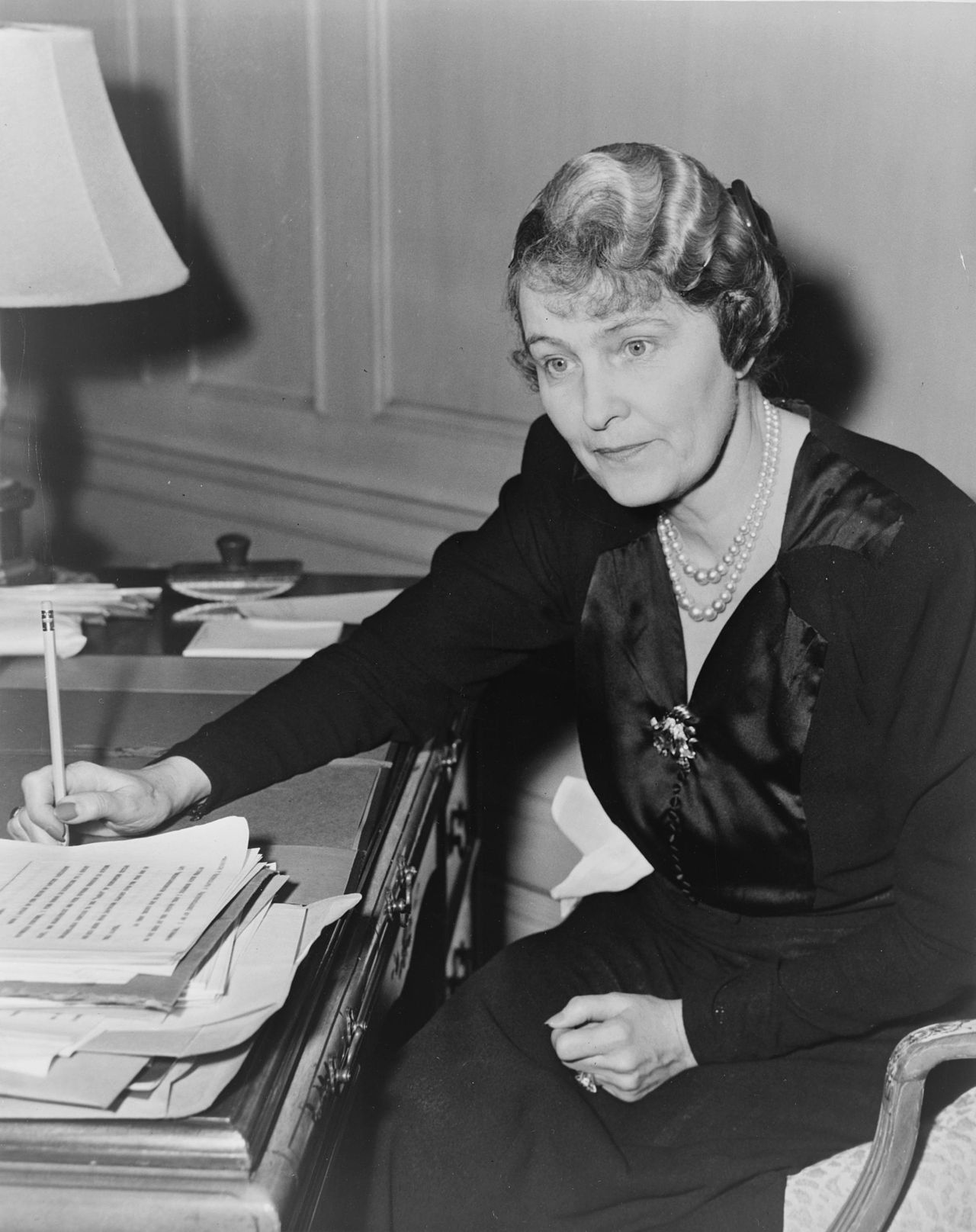
Husband number four was Herbert A. Mays, a union that ended after Marjorie saw nude photographs of hubby cavorting with young men at their swimming pool. The damning pictures reminded her of a dinner in Montmartre where Herbert had “seemed unduly interested in the waiters.” When Marjorie asked her attorney why all her relations had snapped, crackled, and popped, he responded, “The reason is you try to make them all Mr. Post.” After the fourth fiasco, Marjorie resumed her maiden name.
The heiress took to heart the biblical admonition “To whom much has been given much is expected,” and during World War I she furnished the Red Cross hospital at Savenay, France, with 2,000 beds. Half a century later, Marjorie gave receptions in Washington for veterans wounded in Vietnam. She personally oversaw a Salvation Army feeding station in New York that served 1,000 per day. Her largesse included a $100,000 grant to the National Cultural Center in Washington that became the John F. Kennedy Center for the Performing Arts. The National Symphony received a donation of $1.5 million.
Wilhelm I of Prussia was visiting a castle in Ferrieres, just outside Paris, when someone complimented him on his magnificent estate. The Prussian royal responded, “No king could afford to live here, only a Rothschild.” The same scenario could have applied to the Post palaces. One of Marjorie’s real estate crown jewels was her vacation home, the current property of President Donald J. Trump, situated between a lagoon and the Atlantic Ocean–that inspired the name Mar-a-Lago, Spanish for Sea-to-Lake. Viennese architect, Joseph Urban, who had designed the Metropolitan Opera House had been behind the blueprints for the 115-room-Palm Beach pink palazzo. The living room had a thirty-four-foot ceiling on whose walls Marjorie displayed silk needlework tapestries that had once graced a Venetian palace. A 4,000-pound ballroom length marble table, inlaid with semiprecious stones, bore a likeness to one in Florence’s Uffizi gallery. Edward’s quip to overawed guests, “Marjorie said she was going to build a little mansion by the sea. Look what we got!”
Hillwood Estate: The home closest to the heiress’ heart was Hillwood whose catalogue states of its founder, “In her lifelong pursuit of beautiful and finely made objects she shared a common taste with the royalty and nobility of 18th- and 19th -century Europe and Russia.” Hillwood possesses the greatest collection of Russian imperial art outside the Soviet Union. The marbled entrance hall showcases a painting of Catherine the Great in royal regalia; the walls by the staircase feature portraits of various Romanovs, reunited in a foreign land. Plum Hillwood possessions are Catherine the Great’s Fabergé Easter Eggs and a chandelier that once cast light from her palace’s ceiling. Other royal displays are a diamond-studded crown worn by Empress Alexandra at her wedding to Czar Nicholas II. The Icon Room holds a large pink Fabergé egg, encased with gold, diamonds, emeralds, and pearls Nicholas II gifted his mother in 1914. Other historic treasures are the nineteenth-century red Aubusson rug that Napoleon III bequeathed to the doomed Emperor Maximilian of Mexico. Lore holds that William Randolph Hearst, another American with a castle complex, was the carpet’s one-time possessor. Miscellaneous objects: a walking stick with a handle of gold, diamonds, and rubies, a silver ashtray decorated with quartz that never held an ash. The home’s maintenance was left to a staff of eighty.
Hillwood’s grounds was where ten gardeners worked on its upkeep that enhanced the grandeur of the estate. Shogo Myaida, who designed the Brooklyn Botanical Garden and those in the 1939-40 World’s Fair, was the master planner of the formal Japanese garden. The French garden holds Marjorie’s remains in a three-foot pink stone pedestal topped by a ten-foot column. Her ashes are near a putting green with a sign: “This ivy is from Buckingham Palace, London, England.”
The estate museum is a prestigious venue for events, one of which was the 2011 “Wedding Belles: Bridal Fashions from the Marjorie Merriweather Post Family: 1874-1958.” The bridesmaids for Marjorie and her three daughters made quite the commitment as the Post heiresses took several trips down the aisle: Marjorie-four, Adelaide-three, Eleanor-six, Nedenia-three. The exhibition incorporated all Marjorie’s wedding dresses and one from each of her daughters. Among the display was the “Hapsburg veil” that Princess Stéphanie of Belgium wore for her 1881 nuptial to Crown Prince Rudolf of Austria. Although Marjorie adored possessions with royal provenance, she might have reconsidered the wedding veil if she had known of its history. The heir to the Austro-Hungarian throne met his end through a gunshot wound while he was staying at his hunting-lodge in Mayerling, a small village southwest of Vienna. Beside him lay the naked body of the seventeen-year-old Baroness Maria Vetsera. If Kellogg’s Tony the Tiger had visited his company’s rival, after gazing on the wonders of Hillwood, he would have roared, “They’re Gr-r-reat!”
The Window of Her World: A third Hillwood garden holds four statues representing the seasons surrounded by a profusion of magnolia, cherry, and dogwood trees. In the center of the lawn is a black Italian marble plaque embossed with words from Tsarina Alexandra Feoderovna, the last empress of Russia, “Friendship outstays the hurrying flight of years and aye abides through laughter and through tears.”
What madeleines did for the French Marcel Proust is what cereal does for Americans: it calls back yesterday. Because millions were “Cuckoo for Cocoa Puffs,” (in Seinfeld, Jerry had seventeen types of cereals on his kitchen shelf), cereal heiress Marjorie Merriweather Post could afford her own Xanadu: Hillwood Estate.
The woman, whose life was, for the most part, as sweet as the sugary concoctions behind her stratospheric wealth, was born in 1887 in Springfield, Illinois, to Charles William Post, the creator of cereal classics and Ella, née Merriweather. Seeking a cure for his physical and mental breakdown, Charles checked into Dr. Kellogg’s sanatorium in Battle Creek, Michigan, where he relocated with his family. On the barn’s two-burner stove, Charles concocted Elijah’s Manna, renamed Post Toasties, that transformed into the Post Cereal Company.
Eight-year-old Marjorie joined him in a hayloft where she glued labels on packages; sixty years later, she still recalled the taste of the glue. With the money rolling in, Charles kept his daughter grounded. When Marjorie wanted a moleskin coat for her doll, he made her set traps to catch the moles. Afterwards, she had to skin, tan, cure, and sew the fur. Two years later, Marjorie accompanied her father to board meetings and family factories.
Charles had gifted his only child shares of Postum that were worth $3 million by the time she was sixteen. Despite her wealth, Charles was concerned over her extravagant clothing. In 1904, when Marjorie insisted on buying new furs, he wrote to his daughter who was a student in Washington, D.C.’s elite Mount Vernon Seminary for Girls, “You have more than double the clothes, shoes, & stuff that any girl no matter how rich should have at 17. Now make some of the furs you have do & don’t order more dresses or clothes before you return… Dad wants you sensible, so go slow.” His daughter did not think he was sensible when he divorced Ella to marry his secretary, Leila Young, twenty years his junior.
With the heiresses’ beauty, brains, and beaucoup bucks, the world was her oyster, one which she wanted to share with a man she loved. At age eighteen, Marjorie wed Edward Bennett Close, a New York lawyer from old Greenwich money, and they honeymooned-along with Charles- in Egypt and Italy. Crack lines formed in the Closes’ relationship due to Edward’s love of the cocktail hour, something Marjorie’s religion frowned upon. Further tension arose when Charles realized that his son-in-law had no interest in running the Postum Cereal Company.
Along with marital problems, in 1914, Marjorie suffered the greatest trauma of her life when Charles ended his life with a shotgun blast in his mouth. Speculation was he had to the come to the proverbial end of his rope due to ill health and depression. Another contributing factor was Leila’s affair with Lawrence Montgomery who she subsequently wed. His death left his only child with a $2o million inheritance that she would parlay into a billion dollars in contemporary currency. At a time when women could not vote, the intrepid Marjorie ran Postum, a reversal of the times when the man made the money which the Missus spent. When asked the reason behind her business acumen, Marjorie responded, “My father.”
With her fortune, Marjorie wore the tiara of an American royal. Her floating palace, her 316-foot yacht, Sea Cloud, was the world’s largest privately owned vessel that could hold 400 passengers. The Duke and Duchess of Windsor were among the ships’ glitterati guests. Upon viewing the Sea Cloud’s Louis XVI master suite, Queen Maud of Norway remarked, “Why, you live like a queen, don’t you?”
On the surface, Edward appeared a doting husband who spent $5,000 decorating his wife’s private Pullman car with orchards. However, Marjorie worried his wandering eye had wandered to her French maid. She ordered their valet to dust the floor of Edward’s bedroom with talcum powder to check how many footprints appeared. The incriminating evidence was something hubby could not refute. After fourteen years, and children Adelaide and Eleanor, the couple divorced. Edwards’s second marriage produced granddaughter actress Glenn Close.
In 1919, Marjorie married Manhattan stockbroker Edward F. Hutton with whom she had her third daughter, actress Dina Merrill. At Edward’s urging, Post became a public corporation with 200,000 shares on the New York Stock Exchange; it also merged with Maxwell House Coffee, Sanka, and Jell-O. However, a literal goose laid the golden egg for the Huttons. While on their yacht, a waiter served them a goose that had previously been frozen. Intrigued, Marjorie visited Clarence Birdseye who had discovered the freeze-dried process. She bought his plant for $20 million and changed her company’s name to General Foods Corporation. Six years later, Marjorie froze out her second spouse.
The third trip down the aisle was with diplomat Joseph E. Davies. When President Roosevelt appointed Joseph ambassador to the Soviet Union, Marjorie used her yacht to transport twelve lockers of Birds Eye frozen foods, 2,000 pints of pasteurized cream, and twenty-five refrigerators to avoid the austerity of Stalin’s rule. In Moscow, the consummate connoisseur gobbled up priceless art. Her penchant for collecting had begun as a child with silver teaspoons; as an adult her penchant was for objects with imperial ties. The heiress owned pear-shaped diamond earrings that Marie Antoinette had sewn into her pocket before her arrest at Varennes, a diamond necklace Napoleon had gifted to the Empress Marie Louise, and Empress Alexandra’s diamond wedding crown.
Husband number four was Herbert A. Mays, a union that ended after Marjorie saw nude photographs of hubby cavorting with young men at their swimming pool. The damning pictures reminded her of a dinner in Montmartre where Herbert had “seemed unduly interested in the waiters.” When Marjorie asked her attorney why all her relations had snapped, crackled, and popped, he responded, “The reason is you try to make them all Mr. Post.” After the fourth fiasco, Marjorie resumed her maiden name.
The heiress took to heart the biblical admonition “To whom much has been given much is expected,” and during World War I she furnished the Red Cross hospital at Savenay, France, with 2,000 beds. Half a century later, Marjorie gave receptions in Washington for veterans wounded in Vietnam. She personally oversaw a Salvation Army feeding station in New York that served 1,000 per day. Her largesse included a $100,000 grant to the National Cultural Center in Washington that became the John F. Kennedy Center for the Performing Arts. The National Symphony received a donation of $1.5 million.
Wilhelm I of Prussia was visiting a castle in Ferrieres, just outside Paris, when someone complimented him on his magnificent estate. The Prussian royal responded, “No king could afford to live here, only a Rothschild.” The same scenario could have applied to the Post palaces. One of Marjorie’s real estate crown jewels was her vacation home, the current property of President Donald J. Trump, situated between a lagoon and the Atlantic Ocean–that inspired the name Mar-a-Lago, Spanish for Sea-to-Lake. Viennese architect, Joseph Urban, who had designed the Metropolitan Opera House had been behind the blueprints for the 115-room-Palm Beach pink palazzo. The living room had a thirty-four-foot ceiling on whose walls Marjorie displayed silk needlework tapestries that had once graced a Venetian palace. A 4,000-pound ballroom length marble table, inlaid with semiprecious stones, bore a likeness to one in Florence’s Uffizi gallery. Edward’s quip to overawed guests, “Marjorie said she was going to build a little mansion by the sea. Look what we got!”
Hillwood Estate: The home closest to the heiress’ heart was Hillwood whose catalogue states of its founder, “In her lifelong pursuit of beautiful and finely made objects she shared a common taste with the royalty and nobility of 18th- and 19th -century Europe and Russia.” Hillwood possesses the greatest collection of Russian imperial art outside the Soviet Union. The marbled entrance hall showcases a painting of Catherine the Great in royal regalia; the walls by the staircase feature portraits of various Romanovs, reunited in a foreign land. Plum Hillwood possessions are Catherine the Great’s Fabergé Easter Eggs and a chandelier that once cast light from her palace’s ceiling. Other royal displays are a diamond-studded crown worn by Empress Alexandra at her wedding to Czar Nicholas II. The Icon Room holds a large pink Fabergé egg, encased with gold, diamonds, emeralds, and pearls Nicholas II gifted his mother in 1914. Other historic treasures are the nineteenth-century red Aubusson rug that Napoleon III bequeathed to the doomed Emperor Maximilian of Mexico. Lore holds that William Randolph Hearst, another American with a castle complex, was the carpet’s one-time possessor. Miscellaneous objects: a walking stick with a handle of gold, diamonds, and rubies, a silver ashtray decorated with quartz that never held an ash. The home’s maintenance was left to a staff of eighty.
Hillwood’s grounds was where ten gardeners worked on its upkeep that enhanced the grandeur of the estate. Shogo Myaida, who designed the Brooklyn Botanical Garden and those in the 1939-40 World’s Fair, was the master planner of the formal Japanese garden. The French garden holds Marjorie’s remains in a three-foot pink stone pedestal topped by a ten-foot column. Her ashes are near a putting green with a sign: “This ivy is from Buckingham Palace, London, England.”
The estate museum is a prestigious venue for events, one of which was the 2011 “Wedding Belles: Bridal Fashions from the Marjorie Merriweather Post Family: 1874-1958.” The bridesmaids for Marjorie and her three daughters made quite the commitment as the Post heiresses took several trips down the aisle: Marjorie-four, Adelaide-three, Eleanor-six, Nedenia-three. The exhibition incorporated all Marjorie’s wedding dresses and one from each of her daughters. Among the display was the “Hapsburg veil” that Princess Stéphanie of Belgium wore for her 1881 nuptial to Crown Prince Rudolf of Austria. Although Marjorie adored possessions with royal provenance, she might have reconsidered the wedding veil if she had known of its history. The heir to the Austro-Hungarian throne met his end through a gunshot wound while he was staying at his hunting-lodge in Mayerling, a small village southwest of Vienna. Beside him lay the naked body of the seventeen-year-old Baroness Maria Vetsera. If Kellogg’s Tony the Tiger had visited his company’s rival, after gazing on the wonders of Hillwood, he would have roared, “They’re Gr-r-reat!”
The Window of Her World: A third Hillwood garden holds four statues representing the seasons surrounded by a profusion of magnolia, cherry, and dogwood trees. In the center of the lawn is a black Italian marble plaque embossed with words from Tsarina Alexandra Feoderovna, the last empress of Russia, “Friendship outstays the hurrying flight of years and aye abides through laughter and through tears.”
The woman, whose life was, for the most part, as sweet as the sugary concoctions behind her stratospheric wealth, was born in 1887 in Springfield, Illinois, to Charles William Post, the creator of cereal classics and Ella, née Merriweather. Seeking a cure for his physical and mental breakdown, Charles checked into Dr. Kellogg’s sanatorium in Battle Creek, Michigan, where he relocated with his family. On the barn’s two-burner stove, Charles concocted Elijah’s Manna, renamed Post Toasties, that transformed into the Post Cereal Company.
Eight-year-old Marjorie joined him in a hayloft where she glued labels on packages; sixty years later, she still recalled the taste of the glue. With the money rolling in, Charles kept his daughter grounded. When Marjorie wanted a moleskin coat for her doll, he made her set traps to catch the moles. Afterwards, she had to skin, tan, cure, and sew the fur. Two years later, Marjorie accompanied her father to board meetings and family factories.
Charles had gifted his only child shares of Postum that were worth $3 million by the time she was sixteen. Despite her wealth, Charles was concerned over her extravagant clothing. In 1904, when Marjorie insisted on buying new furs, he wrote to his daughter who was a student in Washington, D.C.’s elite Mount Vernon Seminary for Girls, “You have more than double the clothes, shoes, & stuff that any girl no matter how rich should have at 17. Now make some of the furs you have do & don’t order more dresses or clothes before you return… Dad wants you sensible, so go slow.” His daughter did not think he was sensible when he divorced Ella to marry his secretary, Leila Young, twenty years his junior.
With the heiresses’ beauty, brains, and beaucoup bucks, the world was her oyster, one which she wanted to share with a man she loved. At age eighteen, Marjorie wed Edward Bennett Close, a New York lawyer from old Greenwich money, and they honeymooned-along with Charles- in Egypt and Italy. Crack lines formed in the Closes’ relationship due to Edward’s love of the cocktail hour, something Marjorie’s religion frowned upon. Further tension arose when Charles realized that his son-in-law had no interest in running the Postum Cereal Company.
Along with marital problems, in 1914, Marjorie suffered the greatest trauma of her life when Charles ended his life with a shotgun blast in his mouth. Speculation was he had to the come to the proverbial end of his rope due to ill health and depression. Another contributing factor was Leila’s affair with Lawrence Montgomery who she subsequently wed. His death left his only child with a $2o million inheritance that she would parlay into a billion dollars in contemporary currency. At a time when women could not vote, the intrepid Marjorie ran Postum, a reversal of the times when the man made the money which the Missus spent. When asked the reason behind her business acumen, Marjorie responded, “My father.”
With her fortune, Marjorie wore the tiara of an American royal. Her floating palace, her 316-foot yacht, Sea Cloud, was the world’s largest privately owned vessel that could hold 400 passengers. The Duke and Duchess of Windsor were among the ships’ glitterati guests. Upon viewing the Sea Cloud’s Louis XVI master suite, Queen Maud of Norway remarked, “Why, you live like a queen, don’t you?”
On the surface, Edward appeared a doting husband who spent $5,000 decorating his wife’s private Pullman car with orchards. However, Marjorie worried his wandering eye had wandered to her French maid. She ordered their valet to dust the floor of Edward’s bedroom with talcum powder to check how many footprints appeared. The incriminating evidence was something hubby could not refute. After fourteen years, and children Adelaide and Eleanor, the couple divorced. Edwards’s second marriage produced granddaughter actress Glenn Close.
In 1919, Marjorie married Manhattan stockbroker Edward F. Hutton with whom she had her third daughter, actress Dina Merrill. At Edward’s urging, Post became a public corporation with 200,000 shares on the New York Stock Exchange; it also merged with Maxwell House Coffee, Sanka, and Jell-O. However, a literal goose laid the golden egg for the Huttons. While on their yacht, a waiter served them a goose that had previously been frozen. Intrigued, Marjorie visited Clarence Birdseye who had discovered the freeze-dried process. She bought his plant for $20 million and changed her company’s name to General Foods Corporation. Six years later, Marjorie froze out her second spouse.
The third trip down the aisle was with diplomat Joseph E. Davies. When President Roosevelt appointed Joseph ambassador to the Soviet Union, Marjorie used her yacht to transport twelve lockers of Birds Eye frozen foods, 2,000 pints of pasteurized cream, and twenty-five refrigerators to avoid the austerity of Stalin’s rule. In Moscow, the consummate connoisseur gobbled up priceless art. Her penchant for collecting had begun as a child with silver teaspoons; as an adult her penchant was for objects with imperial ties. The heiress owned pear-shaped diamond earrings that Marie Antoinette had sewn into her pocket before her arrest at Varennes, a diamond necklace Napoleon had gifted to the Empress Marie Louise, and Empress Alexandra’s diamond wedding crown.
Husband number four was Herbert A. Mays, a union that ended after Marjorie saw nude photographs of hubby cavorting with young men at their swimming pool. The damning pictures reminded her of a dinner in Montmartre where Herbert had “seemed unduly interested in the waiters.” When Marjorie asked her attorney why all her relations had snapped, crackled, and popped, he responded, “The reason is you try to make them all Mr. Post.” After the fourth fiasco, Marjorie resumed her maiden name.
The heiress took to heart the biblical admonition “To whom much has been given much is expected,” and during World War I she furnished the Red Cross hospital at Savenay, France, with 2,000 beds. Half a century later, Marjorie gave receptions in Washington for veterans wounded in Vietnam. She personally oversaw a Salvation Army feeding station in New York that served 1,000 per day. Her largesse included a $100,000 grant to the National Cultural Center in Washington that became the John F. Kennedy Center for the Performing Arts. The National Symphony received a donation of $1.5 million.
Wilhelm I of Prussia was visiting a castle in Ferrieres, just outside Paris, when someone complimented him on his magnificent estate. The Prussian royal responded, “No king could afford to live here, only a Rothschild.” The same scenario could have applied to the Post palaces. One of Marjorie’s real estate crown jewels was her vacation home, the current property of President Donald J. Trump, situated between a lagoon and the Atlantic Ocean–that inspired the name Mar-a-Lago, Spanish for Sea-to-Lake. Viennese architect, Joseph Urban, who had designed the Metropolitan Opera House had been behind the blueprints for the 115-room-Palm Beach pink palazzo. The living room had a thirty-four-foot ceiling on whose walls Marjorie displayed silk needlework tapestries that had once graced a Venetian palace. A 4,000-pound ballroom length marble table, inlaid with semiprecious stones, bore a likeness to one in Florence’s Uffizi gallery. Edward’s quip to overawed guests, “Marjorie said she was going to build a little mansion by the sea. Look what we got!”
Hillwood Estate: The home closest to the heiress’ heart was Hillwood whose catalogue states of its founder, “In her lifelong pursuit of beautiful and finely made objects she shared a common taste with the royalty and nobility of 18th- and 19th -century Europe and Russia.” Hillwood possesses the greatest collection of Russian imperial art outside the Soviet Union. The marbled entrance hall showcases a painting of Catherine the Great in royal regalia; the walls by the staircase feature portraits of various Romanovs, reunited in a foreign land. Plum Hillwood possessions are Catherine the Great’s Fabergé Easter Eggs and a chandelier that once cast light from her palace’s ceiling. Other royal displays are a diamond-studded crown worn by Empress Alexandra at her wedding to Czar Nicholas II. The Icon Room holds a large pink Fabergé egg, encased with gold, diamonds, emeralds, and pearls Nicholas II gifted his mother in 1914. Other historic treasures are the nineteenth-century red Aubusson rug that Napoleon III bequeathed to the doomed Emperor Maximilian of Mexico. Lore holds that William Randolph Hearst, another American with a castle complex, was the carpet’s one-time possessor. Miscellaneous objects: a walking stick with a handle of gold, diamonds, and rubies, a silver ashtray decorated with quartz that never held an ash. The home’s maintenance was left to a staff of eighty.
Hillwood’s grounds was where ten gardeners worked on its upkeep that enhanced the grandeur of the estate. Shogo Myaida, who designed the Brooklyn Botanical Garden and those in the 1939-40 World’s Fair, was the master planner of the formal Japanese garden. The French garden holds Marjorie’s remains in a three-foot pink stone pedestal topped by a ten-foot column. Her ashes are near a putting green with a sign: “This ivy is from Buckingham Palace, London, England.”
The estate museum is a prestigious venue for events, one of which was the 2011 “Wedding Belles: Bridal Fashions from the Marjorie Merriweather Post Family: 1874-1958.” The bridesmaids for Marjorie and her three daughters made quite the commitment as the Post heiresses took several trips down the aisle: Marjorie-four, Adelaide-three, Eleanor-six, Nedenia-three. The exhibition incorporated all Marjorie’s wedding dresses and one from each of her daughters. Among the display was the “Hapsburg veil” that Princess Stéphanie of Belgium wore for her 1881 nuptial to Crown Prince Rudolf of Austria. Although Marjorie adored possessions with royal provenance, she might have reconsidered the wedding veil if she had known of its history. The heir to the Austro-Hungarian throne met his end through a gunshot wound while he was staying at his hunting-lodge in Mayerling, a small village southwest of Vienna. Beside him lay the naked body of the seventeen-year-old Baroness Maria Vetsera. If Kellogg’s Tony the Tiger had visited his company’s rival, after gazing on the wonders of Hillwood, he would have roared, “They’re Gr-r-reat!”
The Window of Her World: A third Hillwood garden holds four statues representing the seasons surrounded by a profusion of magnolia, cherry, and dogwood trees. In the center of the lawn is a black Italian marble plaque embossed with words from Tsarina Alexandra Feoderovna, the last empress of Russia, “Friendship outstays the hurrying flight of years and aye abides through laughter and through tears.”

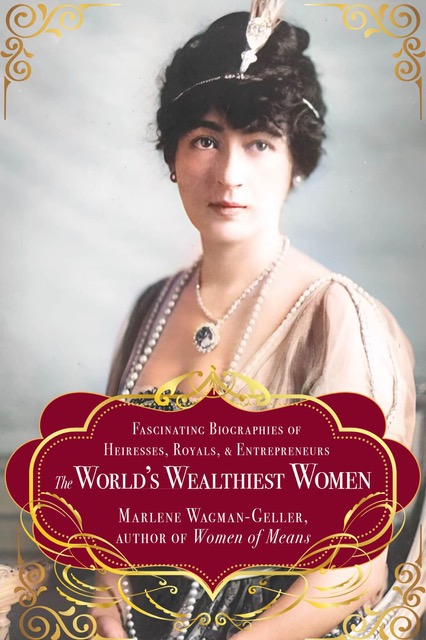
To pre-order my newest book, The World's Wealthiest Women: Fascinating Biographies of Heiresses, Royals, Entrepreneurs, and Entertainers, please click one of the links below.
- Amazon.com: amazon.com
- IndiePubs: indiepubs.com
- Bookshop: bookshop.org
- Amazon.co.uk
- Amazon.ca
- B&N: b&n.com
- Chapters Indigo (CA): indigo.com
- Books That Save Lives