The Shackle of Shanghai (1968)
“As for what other people think of me, I could worry about that every day, but choose not to.” –Wendi Deng Murdoch
In 1972, the group Hall and Oates released their song that carried the refrain, “You can rely on the rich man’s money.” The lyric could have applied to Wendi Deng whose “old man” was billionaire media mogul Rupert Murdoch. Their relationship could have made copy in the Austrian aristocrat’s tabloid.
Wendi Deng, whose legacy bookends a pie and a Prime Minister, was a legend to a group known as the Shanghai girls. Their hope of fleeing their communist country was a wealthy western man who would whisk them away to the land of milk and honey slash money. Wendi surpassed even their wildest dreams.
The mistress of reinvention was born Deng Wen Ge: Wenge translates to “cultural revolution” during Mao Tse-Tung’s dictatorship. As a teenager, she changed her name to Deng Wen Di, (Wendi) that translates to “cultural enlightenment.” Wendi grew up in Xuzhou, the polluted factory town of three million where hot water, telephones, televisions, and refrigerators were mirages. She never owned a doll or a toy. Her father, Dehui Deng, and her mother, Xue Qinie earned a combined monthly salary of $43.00. Their 500 square foot apartment housed her parents, three siblings, and aunt whose feet had been bound. New shoes arrived as a present for Chinese New Year. Her dream was to one day eat meat on a regular basis.
At five foot ten inches tall, (Amazonian among her peers), the athletic teen excelled at the local volleyball team whose coach, Wang Chongshen, remembered her competitive spirit. When her father transferred to Guangzhou, (formerly Canton), Wendi shared a bunk bed with her friend in her team’s dormitory. At age sixteen, to please her parents, Wendi enrolled in medical school. A motivation for Wendi to be part of the world beyond the Great Wall of China was the movie The Sound of Music in which the family escaped a brutal regime by trekking through the Alps.
The genie in the bottle appeared when Wendi met Jake and Joyce Cherry. One afternoon, the Cherrys’ interpreter asked if they would be interested in meeting a teenager who wanted to improve her English by conversing with native speakers. Joyce ended up volunteering to tutor the young woman. The lessons ended when Joyce returned to California to enroll her children in school. An infatuated Jake continued to see Wendi–and not to improve her communication skills. When Wendi shared her dream of studying in America, the Cherry’s served as her sponsors. She roomed with the family and shared a bunk bed in their San Fernando Valley home with their five-year-old daughter. After school, Wendi worked at the Sichuan Garden where she had as much soup as she wanted. She gained ten pounds.
The living arrangement imploded when Joyce discovered suggestive photos her husband had taken of Wendi in a Chinese hotel room. She evicted Wendi and was heartbroken when her husband moved in with his teenaged lover. To make an honest woman of his mistress–and provide her with a green card–Jake wed Wendi. Four months later, the newly minted Mrs. Cherry was canoodling with David Wolf, who, in his mid-twenties. Two years and seven months later–legal status under her belt– Wendi told the fifty-year-old Jake that he was a father figure. The couple divorced, leaving Jake crushed.
Soon Wendi was passing herself off as Mrs. Wolf, although that was not reflective of her marital status. She earned a bachelor’s degree in economics from California State University at Northridge; rumor had it that David and his mother paid Wendi’s tuition when she enrolled in a Master of Business Administration at Yale. Whatever sounded the death knell of their affair, David said it had left him “deeply wounded.”
To fulfill Yale’s requirement that students serve an internship, Wendi landed a coveted summer slot at Star TV, the Hong Kong station owned by Rupert Murdoch’s News Corp. The position not only fulfilled the ivy league requirement, it set the stage for the Shanghai girls’ permanent state of shock and awe.
Through her position, Wendi met media baron Rupert Murdoch, the possessor of a fortune estimated at between $11-$20 billion. His vast holdings included 21st Century Fox film studio, Fox News, the Times of London, National Geographic, New York Post, Harper Collins, and so forth. At this juncture, Rupert’s crusade was to institute free market television in China that would lure a billion new viewers. When questioned about the direction of his company, he responded, “China, China, China, and China.”
During a meeting in Star TV’s Hong Kong headquarters, as his employees posed safe questions to their boss, Wendi, in heavily accented English, asked one of the world’s greatest businessmen, “Why is your China strategy so bad?” Her lack of sycophancy, along with her beauty, proved an aphrodisiac. What also made Rupert susceptible was his marriage to his second wife, Anna, the mother of three of his four children, had reached an impasse. His mother, Dame Elisabeth Murdoch, age 90, told her son that if he left Anna he would fall prey to the first designing woman who crossed his gold-strewn path.
Soon Rupert was hot to trot for his intern and was shocked when Wendi spurned his advances, explaining she had no interest in becoming the other woman. Rupert reassured her with the four most beautiful words a billionaire could utter, “I will marry you.” A headline heralded, “Viagra-chomping Rupert Murdoch has been dating a Cantonese cutie.” A Murdoch employee stated, ‘The boss may be old enough to qualify for a bus pass, but they giggled like lovestruck teenagers.’”
Two weeks after his divorce, Rupert wed wife number III aboard the Murdoch yacht moored in New York Harbor. Gathered for the ceremony were eighty-two guests such as Russian billionaire Boris Berezovsky. For entertainment, Rupert had flown in the Welsh singing sensation Charlotte Church. The groom toasted his barefoot bride and promised he “loved her and would take care of her, forever.”
The press had a field day and an article in The Washington Post eviscerated Wendi, especially in the manner she had amputated the joy from Joyce. Anna confided to an interviewer, “I began to think that the Rupert I loved died a long time ago. The Rupert I fell in love with could not have behaved this way.” To lessen the sting of terminating his three-decade long marriage, he provided Anna with $1.7 billion in assets and $110 million in cash. His mother vowed she would never meet the scheming siren.
While the Austrian former nun, Maria von Trapp, said that her favorite things were raindrops on roses, the Chinese former volleyball player’s favorite things were far more exotic as Wendi favored couture, yachts, and jet-setting. Through in vitro, the couple had daughters Grace and Chloe. The Murdochs christened their girls on the banks of the Jordan River in approximation of the spot where Jesus had undergone the same ceremony. In attendance were godparents Queen Rania, Nicole Kidman, Hugh Jackman, and British Prime Minister Tony Blair. While the media head honcho has been called “the big, bad, bastard” Murdoch the Munificent gave his six children $100 million in shares of his News Corporation empire. The sale of his media empire to Disney provided each child $2 billion. 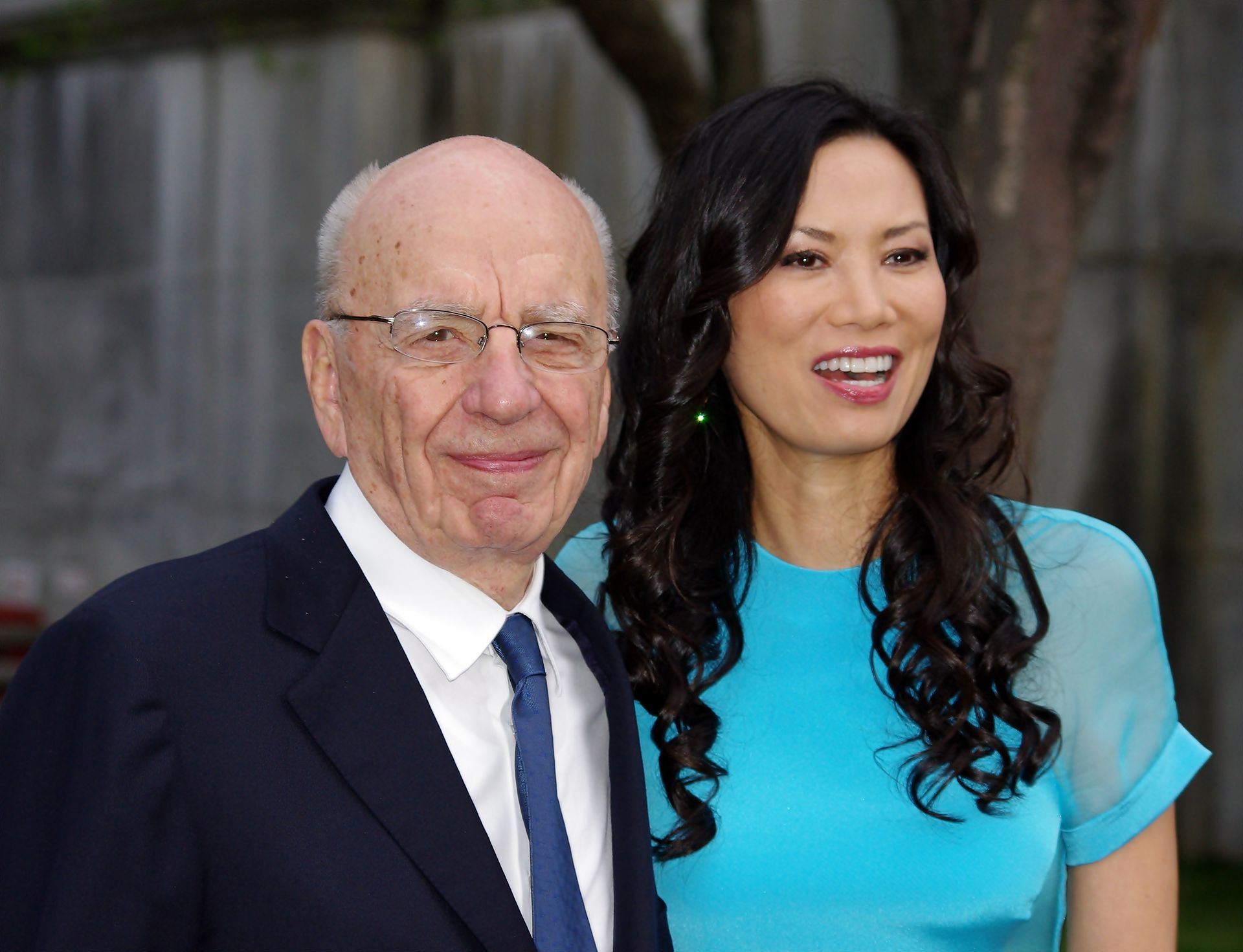
Although Wendi’s Mt. Everest of disposable income could buy almost anything that struck her fancy, she could not always find acceptance in the economic stratosphere. Several of the mothers whose children attended the same school as Chloe and Grace made fun of Wendi’s heavily accented Chinese accent. They mocked her nouveaux riche pronouncements delivered in rapid-fire speech, “Rockefeller apartment, fifty-point-eight million. But we had to put twenty million into it. Gut renovation.” Another of her oft repeated comments, “Look at my daughters! So beautiful and so rich!” During the occasions when the Murdoch sisters arrived in a chauffeur-driven car in the company of their nanny, the mean-lady moms turned the screw, “Those poor things. They never see their parents.”
The Shanghai girls must have shrieked, “Dang Deng!” as they mythologized the Chinese Cinderella who had undergone a metamorphosis from Wen Di Deng to Wendi Murdoch. Their Manhattan base was a $44 million Fifth Avenue triplex, once the property of Laurance S. Rockefeller that held twenty rooms and 4,000 square feet of terraces overlooking Central Park. Other American beauties were in the zip codes of Beverly Hills and Carmel. The Murdochs also owned properties in London and Melbourne. As a love token, the uxorious husband purchased a mansion near the former imperial palace in China’s Forbidden City. Described as “fit for an emperor,” the estate consisted of 21, 500 square feet, and featured an underground swimming pool, golf course, and billiard room.
The Murdochs socialized with the world’s glitterati who the Chinese call guanxi, “connections.” Place settings bore names of David Geffen, Larry Ellison, Bono, Diane von Furstenberg, Barbara Walters, Vera Wang, and Arianna Huffington. When the Murdochs lived in a condo in Trump Park Avenue, they were friendly with neighbors Jared Kushner and Ivanka Trump. Their daughter, Arabella, practiced her Mandarin with Grace and Chloe. Ivanka invited the Murdochs for Sabbath dinners where Wendi enjoyed “braided bread”. On one occasion the Murdochs met with Queen Elizabeth II. In St. Barth’s where they sailed on their 180-foot sailboat, Wendi informed her husband she preferred cruising with Roman Abramovich, (the Russian oligarch), as he had a bigger boat. When Rupert balked at buying an upgraded model, Wendi sniped, “His whole family like this. They so cheap.” To reach their innumerable homes and international playgrounds, the Murdochs’ Boeing 737, stood on standby.
Marriage to Wendi resulted in a tycoon metamorphosis: Rupert darkened his hair and traded his suit and ties for black slacks and turtlenecks. However, marriage did not change Rupert as greatly as it did Wendi, a fact she revealed when she and Arianna Huffington cohosted a book release party for Kathy Freston’s weight-loss book, The Lean, to which they invited Martha Stewart and Harvey Weinstein. In deference to Kathy’s vegetarianism, the caterers served hors d’oeuvres of tofu, quinoa, and kale. Wendi toasted her guests, “I grew up so poor in China that one day I aspired to have meat regularly. Now that I can have meat three times a day, Kathy tells us we can’t have any meat at all.”
In 2011, Wendi garnered the spotlight when Rupert testified before a British parliamentary subcommittee that was investigating the illegal phone hacking of his The News of the World. While Rupert’s 20th Century Fox had produced The Devil Wears Prada, Wendi wore Chanel–a pink blazer along with a black pencil skirt. Seated behind her husband, Wendi noticed a man hurl a shaving-cream pie at her husband. Switching to tiger-wife mode, channeling her youthful volleyball skills, she sprung from her chair and delivered a right-handed hook at Jonathan May-Bowles, known by his stage name Jonnie Marbles. The image of Wendi literally leaping to her tycoon’s defense transformed her from harridan to heroine.
Whether from their age difference or divergent childhoods–Rupert was brought up in wealth in Australia–the couple began to lead separate lives. While he often retired early to bed, Wendi was at the Oscars, the Met Gala, or the White House at a dinner for Chinese president Hu Jintao. Wendi produced the movie Snow Flower and the Secret Fan, based on a Lisa See novel. The plot centered on two women, (laotong which means old friends), who find in each other the connection lacking in their marriages at Parisian fashions shows, sheathed in Chanel, Wendi sat beside Anna Wintour, the editor of Vogue, and dined with Karl Lagerfeld, Chanel’s head honcho.
Cracks formed in the Murdoch marriage when rumors circulated that Wendi had embarked on affairs with Chris De Wolfe, the founder of Myspace, and Eric Schmidt, the former CEO of Google. What really set tongues wagging was when former British Prime Minister Tony Blair, who had business dealings with Rupert, dropped by when only the missus was at home. Because Tony always arrived accompanied by his security detail, he could not slip unobtrusively though the back door. Rupert’s private humiliation became public when the police investigated his newspaper’s phone hacking allegations. To counter the charges, Rupert’s employees sifted through millions of emails where they found one from Mrs. Murdoch, “Oh, shit, oh, shit. Whatever why I’m so so missing Tony. Because he is so so charming and his clothes are so good. He has such good body and he has really really good legs Butt… And he is slim tall and good skin. Pierce blue eyes which I love. Also I love his power on the stage... and what else and what else and what else...” The email also gave way to press scrutiny: Was the “Butt” a misspelt pronoun or an allusion to the politician’s’ backside?”
In response to the smoking-gun email, the eighty-year-old Rupert ended his association with Tony and filed for divorce. He confided to his oldest son, Lachlan, marrying Wendi had been a mistake. Forever had come with an expiration date. The tycoon’s attorney was Ira E. Garr whose previous high profile client had been Ivana Trump. From New York to Los Angels to Washington to London, the tabloids indulged in a feeding frenzy. One could imagine the horrified whispers of the Shanghai girls. In the divorce settlement, Wendi received the Manhattan triplex, ($60-$70 million), the Beijing home ($10-40 million), and a cash settlement of $14 million, one for each year of the Murdoch marriage, jewelry, yacht, and art.
Wendi never remarried though she relationships such as the British violinist Charlie Siem who accompanied her to a Parisian fashion show. When the press asked if he was her date, Wendi replied, “Why not? Am I supposed to be shy?” At age forty-eight, she had a two-year affair with a twenty-one-year-old hunky Hungarian model, with whom she cavorted on a St. Barts beach.
Wendi is a polarizing figure. Is she a Machiavellian Murdoch whose prey is men she uses as steppingstones? Her detractors labelled her the contemporary Yellow Peril and an Olympian opportunist. Celebrity blogger Hung Huang stated that those who cast aspersion are best described by the Chinese phrase, “xianmu-jidu-hen,” which translates to “envy-jealousy hatred.”
The 1969 Bobbie Gentry song “Fancy,” encapsulates the angst of a girl whose only exit from her New Orleans shack was capitalizing on male lust. Her mother’s plea, “Lord, forgive me for what I do/But if you want out, it’s up to you.” Can one sit in judgment on Wendi Deng who used whatever means at her disposal to escape the shackle of Shanghai?

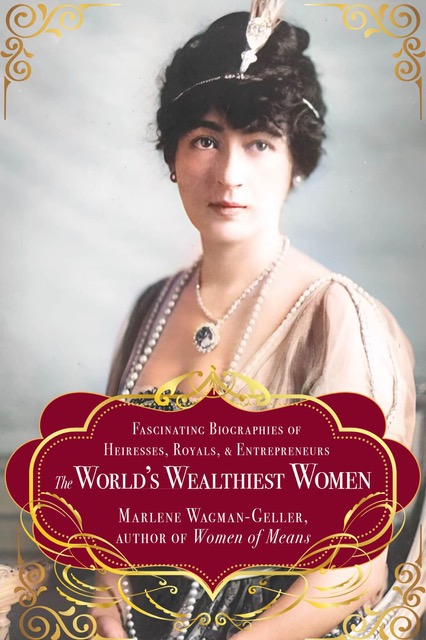
To pre-order my newest book, The World's Wealthiest Women: Fascinating Biographies of Heiresses, Royals, Entrepreneurs, and Entertainers, please click one of the links below.
- Amazon.com: amazon.com
- IndiePubs: indiepubs.com
- Bookshop: bookshop.org
- Amazon.co.uk
- Amazon.ca
- B&N: b&n.com
- Chapters Indigo (CA): indigo.com
- Books That Save Lives