Count No Man Happy (1985)
“ “
No one ever mastered tragedy quite like the ancient Greeks-especially when they mined the arena of dysfunctional families. Medea, history’s angriest betrayed wife, wreaked vengeance on her husband Jason by murdering their two sons, then serving him their remains in a stew. Oedipus inadvertently killed his father and married his mother with whom he had four doomed children. Upon his return from the Trojan War, Agamemnon’s wife, Queen Clytemnestra, along with her lover Aegisthus, stabbed the hapless king. The legacy of billionaire heiress Athina Onassis could well have sprung from the B.C. Aegean world. 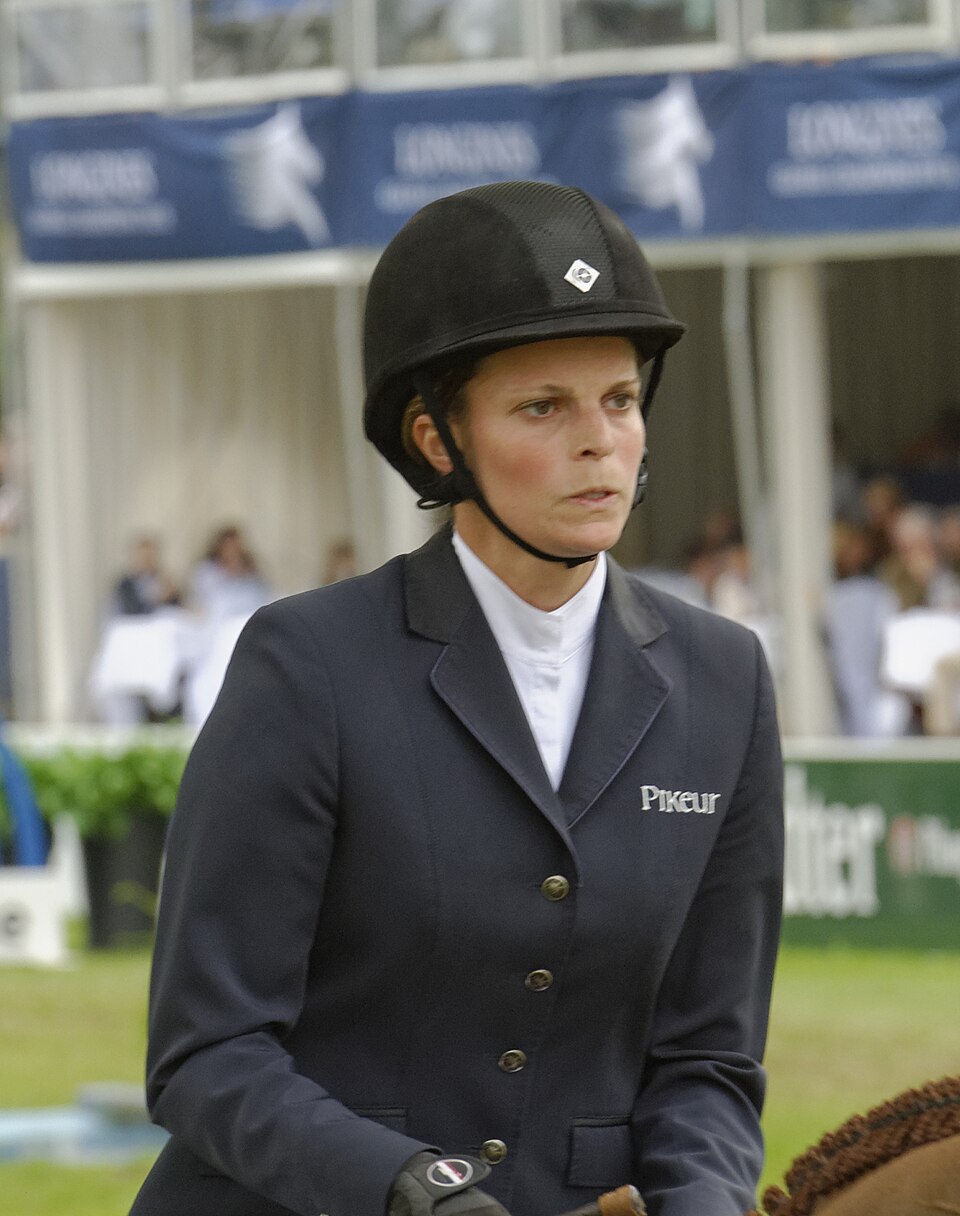
Dramas deal with suffering and sorrow, but the pain is not due to the whims of the three weaving sisters, the Hellenic embodiment of fate. Rather, the players inherit fallout from the past-oftentimes stemming from an ancestor’s hubris. A twentieth century saga began with Aristotle Socrates Onassis. The man who ended his life as a Greek tragedy had once been the embodiment of an epic fairytale. He had arrived on the docks of Buenos Aires, Argentina, with sixty dollars that he parlayed into a multi-billion-dollar shipping empire. His Midas Touch earned him the epithet “the Golden Greek.” Aristotle made his values manifest with his pronouncement, “All that really counts these days is money.” Based on that maxim, Aristotle was king of kings. It’s the people with money who are the royalty now.” His first wife, Athina (Tina) Livanos, the daughter of a fellow-Greek shipping magnate, imploded when she discovered him in a compromising situation on his yacht with opera singer Maria Callas. He broke the diva’s heart when he abandoned her for Jacqueline Kennedy, who, upon their marriage, became Jackie O.
His prize plaything was the world’s most luxurious ship, the Christina, that displayed art masterpieces, an indoor swimming pool, and bathroom embellished with Siena marble along with gold-plated faucets. In the 1950s and 1960s, aboard his floating palace, Aristotle feted the world’s rich and famous. Black and white photographs showcased guests such as the British Prime Minister Winston Churchill chatting with the Yugoslavian leader, Josip Broz Tito, at the height of the Cold War. The tycoon embodied the precept, “Living well is the best revenge,” until his revels ended. Schadenfreude-inherent to human nature as it has existed since the days of the gladiators- went into overdrive with the Onassis dynasty.
Aristotle bequeathed his heirs his larger-than-life legacy: a fabulous fortune-and a family curse. His daughter, Christina, the essence of the poor little rich girl, was an expert at looking for love in all the wrong places. She had been smitten with the French-born Thierry Rosseau who had been smitten with her bank account. Writer Taki Theodoracopulos described Thierry as, “the most successful gigolo in the world” for his conquest of Miss Midas. The pregnant Christina held on to her husband even after he had also impregnated his long-time mistress, the Swedish model, Marianne “Gabby” Landhage, with whom he had son Erik. The heiress’ breaking point arrived when Gaby delivered her second child, Sandrine. (They also had third child, Johanna). Tired of serving as her husband and his lover’s cash cow, Christina filed for divorce. Nevertheless, she begged her ex-husband to conceive another baby. For persuasion, she gave him a $160,000 Ferrari Testarossa sportscar and the promise of a $10 million bonus if she gave birth. With the loss of her family and her husband, Christina doted on her daughter Athena (she went by Athina) Hélène who had been born in the American hospital in Paris. The indulgent mother embellished her daughter’s nursery with dolls dressed in Dior, as well as a $12,500 toy Rolls Royce. As the toddler’s favorite nursery rhyme was “Baa, Baa, Black Sheep” she had a zoo with a flock of sheep watched over by a shepherd.
In the hope Buenos Aires would live up to its translation “Fair Winds” Christina planned to buy a ranch where she and Athina could live for several months of the year. At the time, she was undergoing monthly insemination with Thierry’s sperm. After four marriages of varying degrees of varying degrees of disappointment, Christina said, “My most fervent wish is that I shall meet a man who loves me for myself and not my money.” Concerning her dreams, the phrase “Man proposes, and God disposes,” came into play. Before tying the knot for the fifth time, Christina’s life ended in a bathtub, in a death that followed years of dieting, depression, and pills, in the city where her father had conceived his empire that launched his family’s tragic fate. She had been the last member of her nuclear family. Fifteen years earlier, her brother, Alexander, had perished in Athens at age twenty-four in a small plane accident. Losing their son had devastated Aristotle and Tina, both of whom passed away soon after.
Christina’s will had bequeathed her three-year-old child quite the piggy bank: $300 million in cash, and an impressive real estate portfolio that enriched her with two apartments in Paris, a vacation home in Spain, a house in Geneva, a compound in Ibiza that contained eight swimming pools along with a discotheque, seaside homes in Athens. The crown jewel in the real estate empire was the Greek island of Skorpios, her grandfather’s former fiefdom. The private island was in proximity to Lefkada where Odysseus once roamed. Seduced by the setting, Aristotle had built three luxurious residences, a helicopter landing pad, and a harbor to dock the Christina. His pink villa became paparazzi fodder when a photographer stalked out the premise and took a picture of Jackie Onassis sunbathing in the nude. Piped in classical music played for his cows in the hope it would increase milk production. The Aegean retreat provided the resting place for the Greek tycoon where he lies, alongside Alexander and Christina, in a private white chapel. The media coverage capitulated the child into the spotlight. People Magazine featured Athina on their cover with the caption: The Richest Little Girl in the World.
Thierry raised Athina with a complicated family dynamic. His children with Gabby had her Swedish light hair and eyes while his daughter with Christina reflected her Greek heritage. Another difference was although his son and two daughters with Gaby were hugely affluent-mostly due to the millions Christina had lavished on him, the heiress was a denizen of the one percent. Because of her exalted finances, whether attending her Swiss school, or riding her beloved horse, Arco de Valmont, bodyguards trailed her every move, rode behind her armor-plated limousine. Another unique aspect of Athina’s upbringing was her estate was in the hands of the Alexander S. Onassis Public Benefit Foundation. On one occasion, Thierry accused the foundation, who he referred to as “greybeards,” of sending former Israeli commandos to abduct his daughter. They countered they had merely hired the Israelis to check if Athina’s British bodyguards were providing sufficient protection. Due to the hovering danger of kidnapping, Athina lived under the sword of Damocles. The heiress had remarked, “If I burn the money, there will be no problem. No money, no problem.” Under Gaby’s influence, Thierry tried to raise his daughter to feel she was no different than her peers. He stated, "I want her to know that money is not everything, that it is not a gold statue that you must venerate." A low-key lifestyle was not in the cards as the Roussel’s owned two houses in Switzerland, three apartments in Paris, a fifty-eight-bedroom chateau in the French countryside, and a palatial estate in Marbella.
Another dynamic Athina faced was her exalted status in Greece; when her father agreed to take her to visit on the tenth anniversary of her mother’s death, although raised far from its shores, and unaware of its culture and history, Greece afforded her the status of an absentee royal. Fluent in French and English, she did not understand the shouts of “koukla!” “doll!” and “Chryso mou” “my gold”-the latter phrase a term of endearment Aristotle had used when speaking to Christina.
Four years later, at the urging of her father, Athina repudiated her Greek roots. Thierry’s motivation was his antipathy for the foundation with whom he battled for control of the Onassis gold. The two had faced off in Greek courts on ninety-five occasions. By encouraging his child to distance herself from her ancestral homeland, Thierry was in defiance of the stipulation he had signed when he assumed custody: to raise her in the Greek Orthodox Church and learn to speak Greek.
At age seventeen, the teen who preferred horses to the high life, in a surprising move for the unassuming Athina, dropped out of her Swiss high school near Lake Geneva and enrolled in a Brussels equestrian school. In her adopted city she met Alvaro de Miranda Neto with whom she bonded over their shared passion for riding. His friends called him Doda; Thierry called him "my worst nightmare." Doda was a Brazilian two-time Olympic bronze medal winner who had garnered trophies in the Atlanta and Sydney Olympics. The cat was out of the bag when Athina and Doda vacationed in Thailand where a Greek tourist took their photograph and leaked it to the press. The couple maintained their relationship had only begun after Doda had separated from his wife, Cibele-a Brazilian Playboy cover girl with whom he shared daughter Viviane. From her São Paulo home, the wife scorned raged that Athina had destroyed her marriage, that her estranged husband was hypnotized by the Pied Piper of the Onassis billions. To publicize her pain, she sent a “J’accuse!” letter to the editor of leading Brazilian magazine, CARAS, FACES where she ranted, "She can buy him horses and I can’t. We were happy together until he met her. Our only problem was money and Doda is useless with money. What he earns, he spends. He is a charismatic, persuasive man. She will hang on his every word but she will learn, as I have." She also granted a telephone interview to a journalist at the Greek television station STAR where she poured out her heartache that she had to relinquish Vivienne to Doda and Athina.
Thierry was highly suspicious of the Brazilian man, twelve years older than his daughter. To exert his control, Thierry cut back on Athina’s $9,000 a month allowance. Rather than capitulate, likely encouraged by Doda, Athina embarked on a legal duke-out with her dad. On her eighteenth birthday, followed by an entourage of ten former SAS bodyguards, Athina drove in a bullet-proof black limousine to a home she had lived in for her first three years. Her destination was La Villa Crystal Boislande, an eighteen—room mansion, a blip on her inheritance, where she signed documents that changed her surname from Rousseau to Onassis. She also severed the ties that had separated her from her billion plus dollar inheritance, a move that made her the world’s richest teenager. In addition to cash and contemporary castles, Athina received million ounces of gold and several Rodin sculptures, 217 bank accounts, companies in Argentina, Uruguay, Brazil, Japan and Iran, a Latin American airline, a tower on Fifth Avenue, a hotel in Monte Carlo. To prevent protracted litigation and acrimony, Thierry received an $85 million settlement. With the stroke of a pen, Athina’s fortune surpassed that of Britain’s Queen Elizabeth II.
Free of paternal autonomy, Athina joined an Athenian equestrian club, Avlona, with the aspiration of competing in international competitions, including the 2008 Beijing Olympics, where she would display the blue and white of the Greek flag. Her ever-present shadow was the six-foot-two-inch Doda.
In a world far from the pristine beauty of the Alps, and the Ionian turquoise waters, Athina followed Doda to São Paulo, a megalopolis whose skyscrapers rival Manhattan’s. Their residence was the $5.8 million Chateau Margaux overlooking Parque de Ibirapuera, the city’s version of Central Park. To visit their horses, they rented $1,300-an-hour helicopters that whisked them to their country farm. The doting Athina treated Doda to a $320,000 cow, Esperanca, (Portuguese for Hope), for his cattle farm, a present the press likened to the forty-carat-Henry Winston diamond ring with which Aristotle delighted Jacqueline that sold at a 1996 Sotheby auction for $2.58 million. Christina had gifted her third husband, Sergei Kauzov, a Russian who was an alleged spy for the KGB, two oil tankers for his birthday. The couple were joint owners of AD Sport Horses in Fleurus, Belgium. Also included in their real estate portfolio was their $12 million 5.6-acre estate horse estate in Florida. She forked over an additional $12 million for a nearby twenty-stall barn, padlock and all-weather ring, complete with grooms’ accommodation, sitiated on more than five acres of land. Athina celebrated her twenty-eighth birthday at the nearby International Polo Club in Palm Beach, the horsey haunt of other daughters of fortune such as Jessica Springsteen (daughter of musician Bruce) and Georgina Bloomberg (former New York City Mayor and billionaire Michael Bloomberg’s youngest daughter.)
Perhaps related to disparaging comments made my Doda’s ex, or through her husband’s urging, soon after arriving in her new South American home, Athina underwent a physical metamorphosis that included bleaching her hair blonde and losing weight. She underwent abdominal and derrière liposuction, a procedure performed by Dr. Ricardo Lemos, known for making Brazilian women thong-ready. Although she exited through the clinic’s garage, journalists snapped a photograph of the heiress, boyfriend, and bodyguard.
The couple initially considered marrying in Skorpios where her grandfather had wed Jacqueline Kennedy thirty-seven years earlier. A staff of ten live-in staff maintained the island retreat in readiness in case their famous daughter ever visited-something that had only occurred four times in seventeen years. Fearing the venue would result in a media circus, and that security would not pass muster, in 2005 the couple exchanged vows in a big fat Brazilian wedding. The Roman Catholic ceremony took place in in São Paulo’s Maria Luiza and Oscar Americano Foundation, a garden and museum situated a few miles from the city’s notorious slum. The cost of the venue was equivalent to 415 times the Brazilian minimum monthly wage. The garden décor depicted a pastural scene; the air reverberated with the strains of a forty-piece orchestra. Singer Debora D’Oliveira performed, “O mio babbino caro” by Puccini and Gounod’s “Ave Maria.” Another source of entertainment was the little-known rock band, Jukabala, one of whose members was Doda's brother Nando, whose romantic song was 'Nos Dois (Us Two.)' The bridal gown was a pearl-colored, bare-shouldered gown, embroidered with flowers, Chantilly lace, and fifteen-foot train. Complementing the dress was a Spanish-style mantilla headdress, and low Chanel shoes. Designer and family friend Valentino had created the 1968 white lace dress that Jacqueline Kennedy wore when she married Athina's grandfather. Valentino stated, “I’ve known Athina since she was a child. Her greatest wish is to create a happy family with Alvaro, away from intrusive eyes.” The groom was resplendent in gold and white. Six-year-old Viviane was the maid of honor while stepsister Sandrine carried the rings. Doda’s longtime friend and fellow jumping rider, Rodrigo Pessoa, served as best man.
.
The security operation was worthy of a pope or a president: 400 guards infiltrated the grounds. For the lavish event, 1,300 guests from around the world attended; staff ferried them to the gala in fleets of limousines that had to undergo two security checkpoints. Cells phones and cameras were verboten. For those who security allowed to enter, they indulged in 1,000 bottles of Veuve Cliquot champagne, 2002 Bordeaux, and Brazilian Caipirinha cocktails. The cuisine offered chilled soup, salmon, shrimp in artichokes, and veal on risotto. An individual not present: -Thierry. The groom’s father gave the bride away. Athina and Doda requested guests to contribute to charity in lieu of gifts. The vows took place at 10 p.m. at which time the groom whispered to his twenty-year-old bride, “You are everything to me.” The party continued until 4 a.m. In Switzerland, Thierry must have felt his worst nightmare had indeed transpired. In Greece, the marriage was not viewed as a source of celebration. As the daughter of the dynasty took her vows far from her ancestral shores, the prospect of Athina bestowing her money on her new husband and his six-year-old daughter, fueled fears that her union was a quest to gorge on the Grecian’s golden goose. Most of Athenian society, including church leader Archbishop Chysostomos, were, like Thierry, left off the guest list. As a long-standing Onassis family friend stated, “It's sad, she's placing all her eggs in one basket and giving up everyone who ever stood by and supported her in the past. We all wish her well, but frankly the whole thing's a mess.” The Greeks were further aghast that Athina, free of Thierry’s grasp, rather than embracing the country of her forefathers, preferred São Paulo and Brussels. Alexis Mantheakis, author of Athina Onassis: In the Eye of the Storm, remarked, "In the last five years she has spent precisely two days in Greece. Holding an event here in memory of her mother is nice, but what would make the Greek people happy is if she went to Skorpios every now and then and lit a candle for her mother, grandfather and other relatives who are buried there." What solidified her break with her family’s ancestral land is when she did not attend the funeral of Kalliroe Patronicola, her favorite aunt, the last surviving sister of Aristotle Onassis.
Post nuptials, the newlyweds stayed in a São Paulo hotel and honeymooned in Uruguay’s Punta d’Este resort. The reclusive heiress, known as Athina Onassis de Miranda, settled in her adopted city where she was more immune to the cult of celebrity than in Europe. She immersed herself in learning Portuguese, watching Brazilian soap operas, and frequenting health spas.
Alas, as wealth does not provide an all-encompassing armor, shadows hung over the newlyweds. Doda’s Marriage had made Athina the stepmother of Viviene and Fernando, Cibele’s son from a previous relationship. Suffering from the traumas of her broken marriage, loss of custody, and drug addiction, Cibele’s boyfriend died in a car accident and left her hospitalized for three months. Her next relationship was with the television personality, Gilberto Scarpa. Distraught over his drug habit, Gilberto jumped from the window of Cibele’s seventh story São Paulo apartment. Two months later, Cibele hurled herself from the same window. She left behind a suicide note of apology to her two children, and a damning letter against Doda.
Perhaps in a bid to divest herself of the unhappy fate that befell her maternal grandparents, uncle, and mother, in 2008 Athina arranged for the sale of forty-four items of jewelry that had belonged to Christina. Under the hammer of Christie’s Auction House was a thirty-eight-carat D color flawless diamond originally part of a necklace, a 4.15 carat diamond ring with a vivid yellow pear-shaped diamond, and a rare Buddha, made by Carl Fabergé, once prominently displayed in the family yacht. The auction netted $13.3 million. She also divested herself of emotion-laden real estate. In 2006, she bid adieu to her fifteen-room Paris residence that her grandfather had purchased in the 1960s. The penthouse had sweeping views of the Arc de Triomphe and the Eiffel Tower, a romantic ambience that helped seduce Maria Callas and Jacqueline Kennedy. It was also where the tycoon spent his final days before his death at the American Hospital in nearby Neuilly-sur-Seine, where he passed away in 1975. A decade later, his daughter, the new chatelaine of Number 88 Avenue Foch, lavished every luxury on her little girl. Athina had a three-room suite that her mother had decorated with $600,00 in gold leaf. The toddler had ample room to house her toys that included a diamond-studded rocking horse, dolls dressed in Chanel, and a mini–Rolls Royce. The Monet masterpiece that once hung on the estate’s walls also sold, as well as Christina’s villa in St. Moritz. Athina’s Brazilian marital home sold for $20 million.
Another tie severed from the House of Onassis occurred when Athina parted with Skorpios. Earlier unsuccessful bidders were Giorgio Armani, Bill Gates, and Madonna. The buyer, equestrian Ekaterina Rybolovleva, was the twenty-four-year-old daughter of Russian oligarch, Dmitry Rybolovleva, owner of the AS Monaco football club-and far more-who snaps up trophy properties. The Russian heiress is no stranger to high end properties: for her student digs she purchased a Manhattan apartment for $88 million. The price tag for the paradisical private island of Skorpios: $125 million. Due to a clause in Aristotle’s will that stipulated Skorpios had to remain in his family, the transfer of ownership is a ninety-nine-year lease. The proposed plan is to develop the land into an exclusive resort that will be a mecca for the international jet set.
However, not all was well in horse heaven. Despite the optimistic-sounding name of the prize cow, Esperanca, tremors of marital troubles dogged the couple, a source of innuendo during the 2015 winter jumping season. Rumor held that Doda was seeing the sister of another equestrian. When the Onassis security detail caught Doda in bed at their Florida home with a blonde, he explained it had been a meaningless one-night stand, that it should not mean the death knell of their marriage. Her lawyers begged to differ, and revealed proof that Doda had been straying within months of his wedding. The Onassis legal eagles prepared 100 pages of evidence that delineated a nine-year affair that Doda had carried on with “Nicky,” a Belgium call girl, the daughter of a French military official. The affair came to light after Doda dumped her; however, what made Nicky more than the mistress scorned was she never asked for money for her bombshell revelation. She said she just wanted Athina to know the truth and provided smoking guns: airline tickets bearing their names on shared flights, VIP passes to horse shows, and text messages exchanged via their Instagram accounts codenamed Romeo and Princess Charlotte.
Athina departed their Florida horse farm and hired Manhattan celebrity attorney, Robert Cohen, (who had represented Ivana Trump), to represent her in her divorce. Cohen boarded a plane for Belgium, his heiress client’s main residence. Initially, Doda declared her would “fight until the end” to win back his lost love. He told the Brazilian magazine, Epoca, “I am really in the midst of a storm. But I will not give up on my love.” The piles of proof against Doda negated his claim that as an abandoned husband he merited $10,000 a day alimony. When he realized Athina would not take him back, Doda demanded $300,000 a month in alimony and $11 million in cash, as outlined in their prenuptial agreement. The couple settled in a confidential divorce agreement. Four months later, Doda stopped licking his wounds when he fell for a blonde Brazilian TV star who he married in a lavish ceremony in Portugal.
What final words the Greek chorus will chant as it shadows the last descendent of the Onassis dynasty remains in the murky world of tomorrow. Whatever transpires, hanging over Athina’s destiny are the words of Sophocles in Oedipus Rex, “Now as we keep our watch and wait the final day, count no man happy till he dies, free of pain at last.”

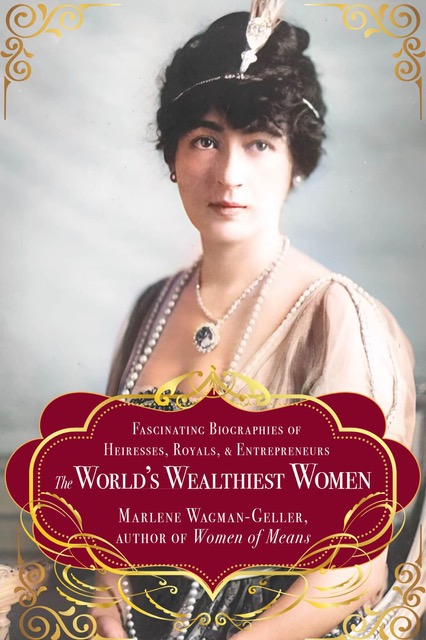
To pre-order my newest book, The World's Wealthiest Women: Fascinating Biographies of Heiresses, Royals, Entrepreneurs, and Entertainers, please click one of the links below.
- Amazon.com: amazon.com
- IndiePubs: indiepubs.com
- Bookshop: bookshop.org
- Amazon.co.uk
- Amazon.ca
- B&N: b&n.com
- Chapters Indigo (CA): indigo.com
- Books That Save Lives