Coming Up Roses (1911)
“Men aren’t attracted to me by my mind. They’re attracted by what I don’t mind.”
Henry VIII pronounced his fifth wife, Catherine Howard, “A rose without a thorn.” Alas, love can prove fickle; after charging her with adultery, he ordered her decapitation. In contrast, an American rose-due to steel encased backbone-evaded the chopping block.
The stage mother of all stage mothers was Mama Rose who made Joan Crawford seem nurturing. At the age of fifteen, straight out of convent school, Rose wed newspaperman John Hovick. Louise was born during a Seattle storm, and two years later, second daughter June arrived. Mama’s parenting modus operandi was to raise the girls as generals girded for battle: against men, against her, against each other.
After John went AWOL, Rose was hell-bent on turning her two girls into vaudeville stars. Regarding legality as a frivolity, she forged birth certificates, making Louise and June appear three years older in order to circumvent child labor laws. The sisters did not learn their actual ages until 1949; another autobiographical tidbit they unearthed was Rose had christened them both Ellen June. 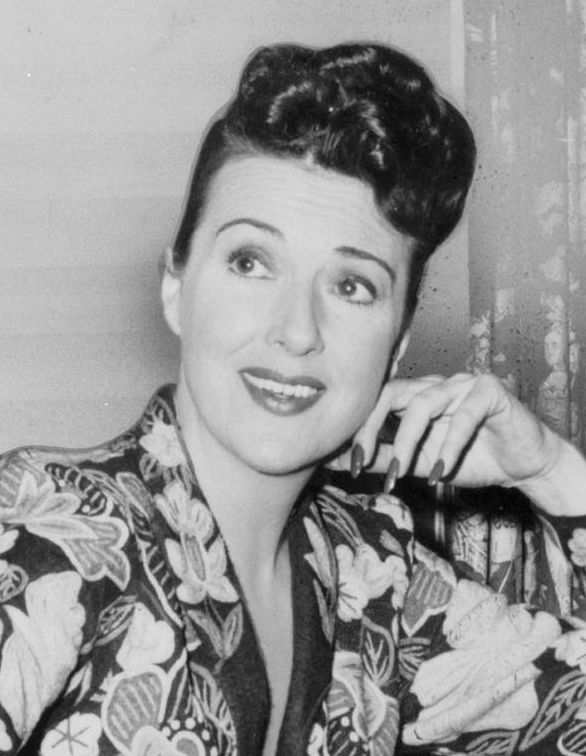
When Louise was four, the Hovicks departed for Hollywood where Rose formed a children’s act; as Louise was pudgy, Rose focused on the prettier, talented sister. She also entered into two quick, and quickly over, marriages. While money was always high on Rose’s priorities, school was not, and her daughters’ education ended when they went on tour. Nevertheless, Louise became a voracious reader and immersed herself in the works of Boccaccio, Rabelais, and Shakespeare. Never a domestic diva, Rose doled out a $1.00 a day to the girls for food, which usually entailed pie for breakfast. In an act that instilled fear in her offspring-Rose pushed a hotel manager out a window that resulted in his death. The jury bought her claim of self-defense.
At age “thirteen,” June married fellow performer, Bobby Reed; the couple took off in the middle of the night despite the freezing snow. Fearful her paycheck had eloped, Rose summoned the police who brought Bobby to the station. When he went to shake his mother-in-law’s hand, she took out her gun and twice pulled the trigger. Fortunately for Bobby, the safety latch was on. The police, figuring June was safer with hubby than her mother, released the shaken young man. Her sister’s take on her sibling’s hidden husband was relief that June had set her sights on Bobby, not Stanley, the boy with whom Louise had shared her first kiss.
With June’s defection and the onslaught of the Great Depression, mother and daughter devised a battle plan. While legitimate producers could not fill Broadway seats at $5.00 a ticket, owners of the burlesque houses, such as those owned by the Minsky brothers, packed in patrons for a fifth of that price. Classy they were not, what with the men in the audience holding empty milk cartons and raw liver, concealed under newspaper. Madame-Mama Rose declared that flesh always sold, and as Louise had morphed into a five-foot-nine-inch, long-legged brunette beauty, she found her niche in stripping. As a novice, Louise met the older Tessie the Tassel Twirler who advised, “In burlesque, you’ve got to leave em hungry for more. You don’t dump the whole roast on the platter.”
Eschewing the word stripper, Louise referred to her new position by the Upper East slang “ecdysiast.” Putting the tease in striptease, her signature move was to slowly drop her shoulder-strap. Foregoing the name on her birth certificate, as well as her doctored one, she reinvented herself as Gypsy Rose Lee. She received renown as the stripper with a brain, as often photographed holding a book as lounging in a bubble bath, sometimes concurrently with both. Her routine consisted of removing her clothes while plucking out dress-maker pins and dropping them into a tuba, whereby the suggestive sound elicited laughs. At the close of her performance, she snuggled into the stage’s velvet curtain, tossing her gown to the floor. Never nude, she purred, “Oh, boys, I can’t take that off. I’ll catch cold.”
From 1929 to 1934, Gypsy worked at Minksy’s Burlesque in New York City refining her act while offstage she indulged in Turkish cigarettes, brandy-laced coffee, and sex. When the police raided the burlesque house on the grounds of immorality, her picture appeared on the front pages of the tabloids. Her quip to the newspapers, “I wasn’t naked. I was completely covered by a blue spotlight.” Louise enjoyed the camaraderie of the paddy wagon, and the ensuing notoriety was good for business.
Despite Rose’s mantra, “Men will take everything they can get and give as little as possible in return,” Louise had an affair with Rags Ragland, a comic and consummate womanizer. Another dalliance was with mobster Waxey Gordon who doubled as her Sugar Daddy: he paid to have her teeth capped, and in return, he expected more than a flash of her pearly whites.
Raised in the School of Rose, Louise dipped her finger in someone else’s pie. Dwight Fiske, a piano player at the ritzy Savoy-Plaza, sang risqué lyrics for his white-tie clientele. She departed Minsky’s for the Irving Place Theater-the Metropolitan Opera of Burlesque-where her salary increased from $500 a week to $1,000- and “borrowed” Fiske’s music for background ambience. While using his lines, she affected a posh accent, “I’m a lonesome little Eve/All I do is sit and grieve./ Like Eve I carry round this apple every night/Looking for an Adam with an appetite.” Louise was over the moon at Irving Place where the clientele included columnist Walter Winchell, café high society, and British aristocrat, the Earl of Gosford. A reporter for The New Yorker wrote, “We had to admit we went for Miss Lee, so to speak.” Riding the crest of popularity, Louise, appeared at a Waldorf Astoria Hotel charity function clad in a leotard covered with leaves, the latter of which she auctioned. Patrician patrons refused to accept the money made off the garment from a stripper.
One who did not scorn Louise was Eddie Braun despite there being a Mrs. Braun. He showered Louise with diamonds and attended her matinee performances. Understanding the art of self-promotion, Louise appeared at the opera in a cape encrusted with orchids. Tired of being the other woman, and looking for a way out of burlesque, Louise set out for Hollywood. However, she discovered she could not shed her reputation as easily as she did her clothes. The Hays Office, the morality police against smut, did not allow Zanuck to use a stripper as a headliner for the 1937 film You Can’t Have Everything, and the director received 4,000 letters of protest. The studio stripped her of her stage name; she was once again Louise Hovick.
Unfulfilled, Louise decided to try her hand at wedlock and married Arnold “Bob” Mizzy, a dental supplies manufacturer; the marriage barely outlasted the honeymoon. An impediment to the relationship was Rose’s habit of brandishing a gun at her son-in-law. Following in her mother’s marital missteps, Louise took vows three times, although she had the distinction of having a chimpanzee as a ring bearer for one of her ceremonies.
Divorced, out of work, Mama “mia” Rose came to the rescue when she introduced Louise to Chicago based Michael Todd. He produced shows for the 1939 World’s Fair in New York for his film The Streets of Paris and decided on Louise as his star. He stated of his choice, “That’s a no-talent broad worth a million bucks on any midway. I would give my right ball to get her into a show of mine.” One of the show’s fans, First Lady Eleanor Roosevelt, sent her a telegram, “May your bare ass always be shining.” Louise cashed in municipal bonds of $80,000 and acquired a piece of the show, and together they made several films. Not averse to the trappings of fame, Louise arrived for a club date in Las Vegas, in a specially built maroon and gray Rolls-Royce that held twenty-seven pieces of luggage, five Siamese cats, a guinea pig, and two turtles.
A Renaissance woman, Louise joined the ranks of Brooklyn Bohemia through February House, a commune whose members included W. H. Auden, Carson McCullers, Salvador Dali, Leonard Bernstein, Richard Wright, and other stars in the artistic firmament. In a leap from the lascivious to the literary, Louise published the G-String Murders, a thriller set-unsurprisingly-in a burlesque house that became a best seller that used backstage slang (breasts were referred to as “Bordens.”) Authors Carson McCullers, Janet Flanner, Carl Van Doren championed Louise, the self-anointed “America’s Leading Literary Figure.”
With money from The Streets of Paris, ($4,000 a week), Louise purchased a 63rd Street mansion once owned by a Vanderbilt, (since owned by Spike Lee,) that showcased a mink-covered toilet seat, Picassos on the walls, a vintage Rolls in the garage. Along with the mistress of the manor and her Chinese crested dogs, other residents included June and her daughter, April. Another occupant was Erik, Louise’s illegitimate son with famed director Otto Preminger. For the sake of domestic tranquility, Mama Rose had her own digs. Realizing her sexual appetite was not satiated by men, Rose ran a lesbian boarding-house in a ten-room apartment financed by Louise, and she also managed a lesbian farm in her country home in Highland Mills. As old habits die hard, at a party, Rose pulled her gun on a female guest; her daughter’s connections covered up the murder. Rose used terrorist tactics to extract money from her girls and wore rags to the theater where Louise performed to exhort further funds. As added persuasion, Rose threatened to write a tell-all book. In 1954, on her deathbed, Rose unleashed her hatred on Louise, “You’ll never forget how I’m holding you right this minute, wishing with all my heart I could take you all the way with me-all the way down!” Move over, Medea. June wrote a memoir aptly titled Early Havoc; Louise entitled her foray into the confession Gypsy that became a Broadway musical starring Ethel Merman. The actress lost out to Mary Martin in the Tony Awards for The Sound of Music but shrugged it off, “How are you going to buck a nun?”
In 1961, on a trip to California, Louise purchased a 17-room house on a hill, an Italian Renaissance mansion she described as “early Gloria Swanson.” There she traded her stripper gloves for gardening gloves, at last an Eve not dependent on an Adam. Erik chanced upon his mother working in her garden; she wore a rag around her head, a bikini top, and two aprons-one in front to hold tools and the other in the back, as she said, “to keep the cops away.” A serpent appeared in her Eden when she came down with cancer which she declared was a posthumous present from Rose. Despite a life filled with thorns, for the woman who added class to the age-old practice of stripping, her indefatigable outlook-to borrow a lyric from the musical Gypsy- “Everything’s coming up roses.”
The stage mother of all stage mothers was Mama Rose who made Joan Crawford seem nurturing. At the age of fifteen, straight out of convent school, Rose wed newspaperman John Hovick. Louise was born during a Seattle storm, and two years later, second daughter June arrived. Mama’s parenting modus operandi was to raise the girls as generals girded for battle: against men, against her, against each other.
After John went AWOL, Rose was hell-bent on turning her two girls into vaudeville stars. Regarding legality as a frivolity, she forged birth certificates, making Louise and June appear three years older in order to circumvent child labor laws. The sisters did not learn their actual ages until 1949; another autobiographical tidbit they unearthed was Rose had christened them both Ellen June.
When Louise was four, the Hovicks departed for Hollywood where Rose formed a children’s act; as Louise was pudgy, Rose focused on the prettier, talented sister. She also entered into two quick, and quickly over, marriages. While money was always high on Rose’s priorities, school was not, and her daughters’ education ended when they went on tour. Nevertheless, Louise became a voracious reader and immersed herself in the works of Boccaccio, Rabelais, and Shakespeare. Never a domestic diva, Rose doled out a $1.00 a day to the girls for food, which usually entailed pie for breakfast. In an act that instilled fear in her offspring-Rose pushed a hotel manager out a window that resulted in his death. The jury bought her claim of self-defense.
At age “thirteen,” June married fellow performer, Bobby Reed; the couple took off in the middle of the night despite the freezing snow. Fearful her paycheck had eloped, Rose summoned the police who brought Bobby to the station. When he went to shake his mother-in-law’s hand, she took out her gun and twice pulled the trigger. Fortunately for Bobby, the safety latch was on. The police, figuring June was safer with hubby than her mother, released the shaken young man. Her sister’s take on her sibling’s hidden husband was relief that June had set her sights on Bobby, not Stanley, the boy with whom Louise had shared her first kiss.
With June’s defection and the onslaught of the Great Depression, mother and daughter devised a battle plan. While legitimate producers could not fill Broadway seats at $5.00 a ticket, owners of the burlesque houses, such as those owned by the Minsky brothers, packed in patrons for a fifth of that price. Classy they were not, what with the men in the audience holding empty milk cartons and raw liver, concealed under newspaper. Madame-Mama Rose declared that flesh always sold, and as Louise had morphed into a five-foot-nine-inch, long-legged brunette beauty, she found her niche in stripping. As a novice, Louise met the older Tessie the Tassel Twirler who advised, “In burlesque, you’ve got to leave em hungry for more. You don’t dump the whole roast on the platter.”
Eschewing the word stripper, Louise referred to her new position by the Upper East slang “ecdysiast.” Putting the tease in striptease, her signature move was to slowly drop her shoulder-strap. Foregoing the name on her birth certificate, as well as her doctored one, she reinvented herself as Gypsy Rose Lee. She received renown as the stripper with a brain, as often photographed holding a book as lounging in a bubble bath, sometimes concurrently with both. Her routine consisted of removing her clothes while plucking out dress-maker pins and dropping them into a tuba, whereby the suggestive sound elicited laughs. At the close of her performance, she snuggled into the stage’s velvet curtain, tossing her gown to the floor. Never nude, she purred, “Oh, boys, I can’t take that off. I’ll catch cold.”
From 1929 to 1934, Gypsy worked at Minksy’s Burlesque in New York City refining her act while offstage she indulged in Turkish cigarettes, brandy-laced coffee, and sex. When the police raided the burlesque house on the grounds of immorality, her picture appeared on the front pages of the tabloids. Her quip to the newspapers, “I wasn’t naked. I was completely covered by a blue spotlight.” Louise enjoyed the camaraderie of the paddy wagon, and the ensuing notoriety was good for business.
Despite Rose’s mantra, “Men will take everything they can get and give as little as possible in return,” Louise had an affair with Rags Ragland, a comic and consummate womanizer. Another dalliance was with mobster Waxey Gordon who doubled as her Sugar Daddy: he paid to have her teeth capped, and in return, he expected more than a flash of her pearly whites.
Raised in the School of Rose, Louise dipped her finger in someone else’s pie. Dwight Fiske, a piano player at the ritzy Savoy-Plaza, sang risqué lyrics for his white-tie clientele. She departed Minsky’s for the Irving Place Theater-the Metropolitan Opera of Burlesque-where her salary increased from $500 a week to $1,000- and “borrowed” Fiske’s music for background ambience. While using his lines, she affected a posh accent, “I’m a lonesome little Eve/All I do is sit and grieve./ Like Eve I carry round this apple every night/Looking for an Adam with an appetite.” Louise was over the moon at Irving Place where the clientele included columnist Walter Winchell, café high society, and British aristocrat, the Earl of Gosford. A reporter for The New Yorker wrote, “We had to admit we went for Miss Lee, so to speak.” Riding the crest of popularity, Louise, appeared at a Waldorf Astoria Hotel charity function clad in a leotard covered with leaves, the latter of which she auctioned. Patrician patrons refused to accept the money made off the garment from a stripper.
One who did not scorn Louise was Eddie Braun despite there being a Mrs. Braun. He showered Louise with diamonds and attended her matinee performances. Understanding the art of self-promotion, Louise appeared at the opera in a cape encrusted with orchids. Tired of being the other woman, and looking for a way out of burlesque, Louise set out for Hollywood. However, she discovered she could not shed her reputation as easily as she did her clothes. The Hays Office, the morality police against smut, did not allow Zanuck to use a stripper as a headliner for the 1937 film You Can’t Have Everything, and the director received 4,000 letters of protest. The studio stripped her of her stage name; she was once again Louise Hovick.
Unfulfilled, Louise decided to try her hand at wedlock and married Arnold “Bob” Mizzy, a dental supplies manufacturer; the marriage barely outlasted the honeymoon. An impediment to the relationship was Rose’s habit of brandishing a gun at her son-in-law. Following in her mother’s marital missteps, Louise took vows three times, although she had the distinction of having a chimpanzee as a ring bearer for one of her ceremonies.
Divorced, out of work, Mama “mia” Rose came to the rescue when she introduced Louise to Chicago based Michael Todd. He produced shows for the 1939 World’s Fair in New York for his film The Streets of Paris and decided on Louise as his star. He stated of his choice, “That’s a no-talent broad worth a million bucks on any midway. I would give my right ball to get her into a show of mine.” One of the show’s fans, First Lady Eleanor Roosevelt, sent her a telegram, “May your bare ass always be shining.” Louise cashed in municipal bonds of $80,000 and acquired a piece of the show, and together they made several films. Not averse to the trappings of fame, Louise arrived for a club date in Las Vegas, in a specially built maroon and gray Rolls-Royce that held twenty-seven pieces of luggage, five Siamese cats, a guinea pig, and two turtles.
A Renaissance woman, Louise joined the ranks of Brooklyn Bohemia through February House, a commune whose members included W. H. Auden, Carson McCullers, Salvador Dali, Leonard Bernstein, Richard Wright, and other stars in the artistic firmament. In a leap from the lascivious to the literary, Louise published the G-String Murders, a thriller set-unsurprisingly-in a burlesque house that became a best seller that used backstage slang (breasts were referred to as “Bordens.”) Authors Carson McCullers, Janet Flanner, Carl Van Doren championed Louise, the self-anointed “America’s Leading Literary Figure.”
With money from The Streets of Paris, ($4,000 a week), Louise purchased a 63rd Street mansion once owned by a Vanderbilt, (since owned by Spike Lee,) that showcased a mink-covered toilet seat, Picassos on the walls, a vintage Rolls in the garage. Along with the mistress of the manor and her Chinese crested dogs, other residents included June and her daughter, April. Another occupant was Erik, Louise’s illegitimate son with famed director Otto Preminger. For the sake of domestic tranquility, Mama Rose had her own digs. Realizing her sexual appetite was not satiated by men, Rose ran a lesbian boarding-house in a ten-room apartment financed by Louise, and she also managed a lesbian farm in her country home in Highland Mills. As old habits die hard, at a party, Rose pulled her gun on a female guest; her daughter’s connections covered up the murder. Rose used terrorist tactics to extract money from her girls and wore rags to the theater where Louise performed to exhort further funds. As added persuasion, Rose threatened to write a tell-all book. In 1954, on her deathbed, Rose unleashed her hatred on Louise, “You’ll never forget how I’m holding you right this minute, wishing with all my heart I could take you all the way with me-all the way down!” Move over, Medea. June wrote a memoir aptly titled Early Havoc; Louise entitled her foray into the confession Gypsy that became a Broadway musical starring Ethel Merman. The actress lost out to Mary Martin in the Tony Awards for The Sound of Music but shrugged it off, “How are you going to buck a nun?”
In 1961, on a trip to California, Louise purchased a 17-room house on a hill, an Italian Renaissance mansion she described as “early Gloria Swanson.” There she traded her stripper gloves for gardening gloves, at last an Eve not dependent on an Adam. Erik chanced upon his mother working in her garden; she wore a rag around her head, a bikini top, and two aprons-one in front to hold tools and the other in the back, as she said, “to keep the cops away.” A serpent appeared in her Eden when she came down with cancer which she declared was a posthumous present from Rose. Despite a life filled with thorns, for the woman who added class to the age-old practice of stripping, her indefatigable outlook-to borrow a lyric from the musical Gypsy- “Everything’s coming up roses.”

To pre-order my newest book, The World's Wealthiest Women: Fascinating Biographies of Heiresses, Royals, Entrepreneurs, and Entertainers, please click one of the links below.
- Amazon.com: amazon.com
- IndiePubs: indiepubs.com
- Bookshop: bookshop.org
- Amazon.co.uk
- Amazon.ca
- B&N: b&n.com
- Chapters Indigo (CA): indigo.com
- Books That Save Lives