So Long Lives This (1928)
“I have turned for comfort to the Giver of both good and evil and my faith has increased.” ~Jane Stanford in a letter from Florence, Italy
The Mrs. Robber Barons spent their years making good on the biblical pronouncement, “All is vanity.” Railroad heiress Jane Stanford trod a far different path-one that led to the establishment of a university and a century-old unsolved murder mystery.
The creators of colleges often leave their names and requisite statues to attest to their role. However, Leland Stanford Junior University has an even greater connection to its founders-including stone sphinx, weeping angel, and mausoleum.
An extraordinary life began under ordinary circumstances. Jane Elizabeth was born in Albany, New York, the third of seven children of Dyer and Jane Ann Lathrop. The family had affluence from Dryer’s successful business, and social prestige as they were descended from the first wave of New England colonists. Through Dyer, the driving force behind Albany’s Orphan Asylum, Jane understood the importance of giving back to her community. She attended the Albany Female Academy, the oldest girls’ day school in the country. However, what loomed largest in her horizon was marriage and motherhood. 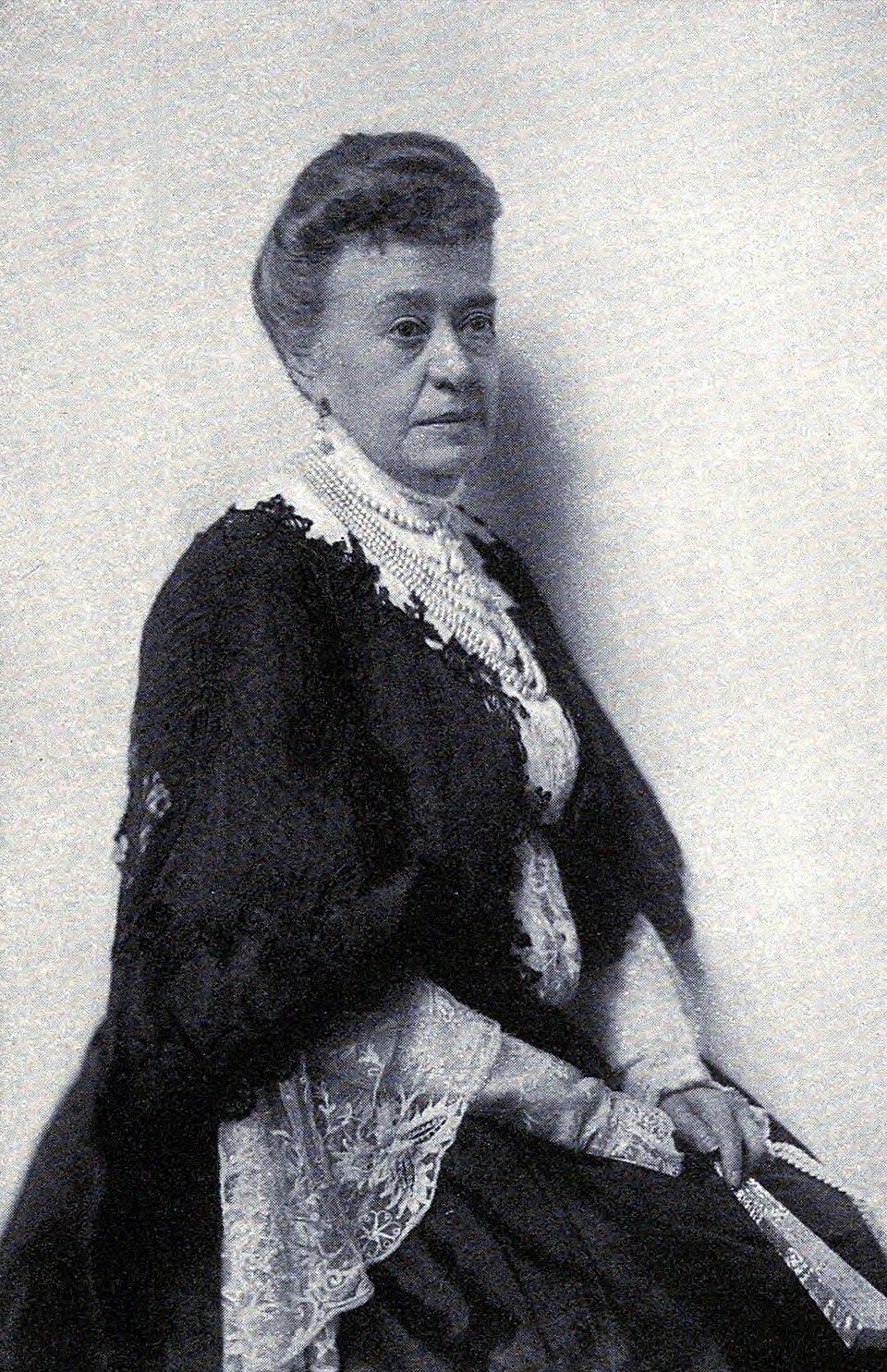
Jane found her great love with Amasa Leland Stanford, whose father Josiah owned a tavern, the Bull’s Head, on the outskirts of Albany. Ostensibly, his daily visits to the Lathrop home was to visit his friend Daniel; however, his real motive was to spend time with Jane. To earn spending money, Leland delivered firewood. Anxious at encountering Jane in the Leland carriage while he was wearing work clothes and holding logs, he always took the back roads. Just as Leland had rejected his first name Amasa, he did the same with Jane, whom he called Jennie. Her parents were not thrilled with the budding romance: Leland was a lackluster student who had dropped out of a succession of schools. One of these was an involuntary removal after his expulsion brought on when Leland complained over having to dine with black students. However, Dyer gave his blessing after Leland’s prospects improved. After spending two years clerking for an attorney in Port Washington, Wisconsin, he received a certificate to practice law. Leland distinguished himself-not as a competent lawyer-but as an individual who could drink anyone under the table.
In 1850, Leland returned to Albany where he married his Jennie at the North Pearl Baptist Church. Although the couple was happy in their small brick home, Leland’s practice faltered. Port Washington was mainly comprised of German immigrants, and they gave their business to lawyers with whom they could converse in their native language. Two years later, a fire consumed his Franklin Street office that equated to the death knell of his practice. Destitute and disheartened, the couple returned home.
Disappointed his son had returned penniless, Josiah arranged for Leland to join his four brothers in Sacramento where they had opened a general store to capitalize on the Gold Rush. He arranged for Leland’s passage to the West Coast that involved sailing around Cape Horn; at the time, a sea passage was cheaper and less fraught with danger than transversing the country by horse. Because her parents felt that Leland could not support their daughter and they wanted her as caregiver for her ill father, they insisted she remain in Albany. Jane was miserable: Rather than living with her adored husband, she was back in her childhood bedroom. Moreover, the word around town was she was the local Miss Havisham whose husband had abandoned her shortly after their wedding. Her solace was Leland’s letters.
After three years, upon Dyer’s passing, Leland retrieved his Jennie to take her to the West Coast. While it is not known whether Leland carried his belated 5’8 inches bride over the threshold of their small home, but what is known is Jane helped build a dining room table out of boxes. What she found hard were the lonely hours while her husband was trying to better their finances and to break into politics. The children that would have brightened their lives never arrived, either because of miscarriages of trouble conceiving. To counter Jane’s solitude, Jane’s sister, Anna Maria, moved in with the couple.
Leland made good on his aspiration to become rich through the Stanford Brothers’ store, and as the proprietor of a saloon that doubled as a gambling parlor. When considering how to invest his wealth his wife served as muse: her seasickness on their trip from Albany to San Francisco via the Isthmus of Panama led to his aspiration to build a transcontinental railroad. For his enterprise, he went into business with three other shopkeepers from the East Coast: Collis Potter Huntington, Mark Hopkins, and Charles Crocker. Calling themselves “”the Associates,” though the press referred to them as the Big Four, in 1861, the partners formed the Central Pacific Railroad Company of California. As president of the railroad and as a rising star in the Republican party, Leland, along with his wife, received an invitation for President Lincoln’s Inaugural Ball. The following year, Leland became California’s eighth and youngest governor, an event that coincided with the Great Sacramento flood. One of the casualties of the disaster was the Leland home and barn that necessitated the governor-elect and his wife to travel to his inauguration on a rowboat. Upon their return, the water was so deep they had to enter their home through a second-story window. One of the cows had ended up in their drawing-room. First Lady Jane proved a wonderful hostess and entertained dignitaries such as William H. Seward, President Lincoln’s Secretary of State, and President Hayes. As governor, Leland misappropriated tax dollars and manipulated the press. He displaced so many Native Americans from their ancestral lands that journalist Ambrose Bierce referred to Leland as “Stealand Landford.”
When Jane and Leland were dating in Albany, little did they fathom they would live in California, that they would become its governor and First Lady, that they would be the possessors of one of the greatest fortunes of the Gilded Age. Yet their greatest joy awaited. In 1868, during a dinner party, a waiter placed a large, silver platter at the center of the table. As he lifted the lid to reveal his baby lying on rose petals, he said, My boy.” They named their son Leland DeWitt (in honor of his paternal uncle) Stanford; at age nine, to honor his father, he asked for his name to be legally changed to Leland Stanford Junior. After the baby’s birth in their Sacramento upstairs bedroom, for the first time Jane saw her husband on his knees in prayer. He told his wife, “I wanted to thank God that you were doing so well, Jenny. And for giving us such a fine boy.” As she was thirty-nine, and after eighteen years of a childless marriage, Junior was their North Star.
As with other heirs of a Gilded Age fortune, Junior lived in a world of silver and servants, pamper and privilege. Leland had to leave California shortly after his son’s birth to head to Salt Lake City for railroad business with Mormon leader Brigham Young. The following year, Leland drove the “last Spike” ceremony that joined the Central Pacific and the Union Pacific rails. Jane and the one-year-old Junior-the first baby to make the trip across the continent on the transcontinental railroad.
When the Southern Pacific moved its headquarters to the Bay Area, Jane and Leland purchased a fifty-room, 19,000 square-foot mansion on Nob Hill-a name derived from “nabob” an Anglo-Indian word for an ostensibly wealthy man-with panoramic views of San Francisco. A prominent portrait showcased Jane dressed in silk and fine lace she had purchased in Belgium. On her rested a tiara, accentuated by a sapphire and diamond necklace. The gems had been a twenty sixth wedding present from her husband who had purchased them from Tiffany & Co and had once been part of the Spanish crown jewels. Another of her jewels with a royal association was a four-strand pearl necklace that had belonged to Empress Eugenie. Their neighbors were the other Big Three tycoons. Jane refused to talk to Huntington’s wife, Arabella, as she had been his mistress prior to marriage and had given birth to an illegitimate son. Junior loved collecting curiosities from his travels, such as two rife balls from the battle of Waterloo, Egyptian bronzes, and Greek vases. The entire third-floor room of the mansion served as the depository of his treasures. He told Luigi Palma di Cesnol, the director of New York’s Metropolitan Museum of Art, where his father was a patron, that his aspiration when he grew up was to establish an archaeological museum in San Francisco . Two years later, the couple purchased a Palo Alto horse farm where Junior had his own pony, and a miniature train ran on a 400-foot track from the main house to the stables. After purchasing adjoining land, the Farm grew to encompass 8, 400 acres.
As Jane and Leland loved to travel, they often went overseas where they exposed Junior to continental culture. In France, they examined the Egyptian wing of the Louvre, and met the country’s leading painters. In Italy, they visited Mount Vesuvius where they viewed a birthday parade in honor of King Hubert’s birthday. The Standfords had an audience in the Vatican with Pope Leo XIII. When Jane came down with one of her chronic headaches, her son assured her that she would soon feel better “as he had mounted the Holy Steps on his knees, saying a prayer for her recovery on each step.” A devoted son, when the headaches kept Jane in her bed, Leland sat with her and shared all the sights she had missed.
When Leland was in his teens, his parents were already making plans for his enrollment at Harvard. Apprehensive over having their son on the opposite coast, the Stanfords rented the Vanderbilt mansion on Fifth Avenue to prepare their son for life on the East Coast. They also planned a return trip to Europe as they might not have extended family time in the future.
Their next trip was to be of a yearlong duration, where they would visit Europe, the Middle East, and Russia. In Athens, they met with the world-renowned archaeologist Dr. Heinrich Schliemann who invited them to his private museum to show them artifacts from ancient Troy. A pall on the trip was Junior felt ill, and a doctor in Rome diagnosed him with typhoid fever. Panicked, the Stanfords left for Florence in the hope its climate would prove restorative and summoned their American physicians to join them. At the Hotel Bristol, Junior’s fever spiked, and for three weeks he was delirious. Doctors, assisted by nuns, wrapped Junior’s body in ice-cold wet sheets. Two months before his sixteenth birthday, Leland Stanford Junior passed away.
Leland Stanford, as president of the Central Pacific Railroad, governor, and Robber Baron, would have remained a mostly forgotten footnote, had an event not occurred the night of his beloved boy’s death. Beside herself with grief, Jane hired an artist to create a death mask. After three tortured weeks, with their son’s coffin in the adjoining room, Leland had a dream in which he had delivered a request: his parents’ must soldier on for the good of humanity. In the morning, he told his wife, “The children of California shall be our children.” They founded the Leland Stanford Junior Memorial University on the site of their horse farm. The logo derived from the El Palo Alto (Spanish for tall tree) redwood on the property; under it is the Latin words, “Semper verdant” “always verdant.
Two years later, Leland also passed away leaving Jane with only one cause to help her carry on: as mother of Sanford University. Father and son lay entombed in the Stanford campus in a mausoleum constructed for the cost of $100,000, ($2.3 million today.) Inside were three giant sarcophagi; the last bore the inscription engraved in marble: “Jane L. Stanford. Born in Mortality, August 25, 1828. Passed to Immortality…” Standing as sentries were four Greek sphinxes; as Jane felt the sexually suggestion bosoms on the stone lion/women too suggestive, she moved two to the back of the tomb while two androgynous ones stood at the entrance.
To maintain the university-the memorial to her child-Jane girded for many a battle. The first arrived when the U.S. Department of Justice sued the Stanford estate for $15 million: the thirty-year loans for the construction of the railroad had come due. With her husband’s estate tied up in probate, Jane donated the court’s monthly stipend of $10,000 a month to the university. In addition, the trustees established The Jewel Fund after Jane sold her jewels for $500, 000 to keep Stanford afloat-$20 million in today’s currency.
Another issue was university president David Starr Jordan was as rational as Jane was mystical. Jane viewed the university as a monument to her deceased loved ones and prioritized it as a museum that held a replica of Junior’s bedroom with his collections, baby shoes, and death mask. She constructed a memorial church that displayed a host of angels transporting her son to heaven. In contrast, Jordan felt faculty salaries more important than memorials and was incensed over having to follow directives who took her cue from the dead. She stated, “My husband and son are with me all the time. They never come together, but in turns.” Jordan was aghast at Jane’s séances arranged to converse with her husband and son and published articles that painted mediums as frauds. Another conflict was Jane, who had earlier championed a co-ed campus, began to feel female students were a threat to “her boys’ chastity” and stipulated no more than 500 female students could attend at one time to prevent Stanford from becoming the Vassar of the Pacific Coast. Susan B. Anthony, who had been indebted to Jane for her contribution of $200 to the suffragist cause, wrote the benefactor, “This sends chills over me-that this limitation should come through a woman.” However, as Jane held the purse strings- and as the richest women in San Francisco her word was Stanford law. In retaliation, Jane made known her plans to fire Jordan, who, in turn, confided to students how Stanford would be far better without Mrs. Stanford.
In 1905, while in her Nob Hill mansion, Jane drank from a bottle of Poland Spring Water; her secretary, Bertha Berner, helped her through the violent bout of vomiting. Someone had tried to poison her with rat poison. Frantic after the attempted murder, Joan left for Japan. Six weeks later, at a stopover at the Moana Hotel in Honolulu she took a dose of bicarbonate of soda that resulted in extreme convulsions. Realizing she had been poisoned once more, Bertha heard her cry out, “Is my soup prepared to meet my dear ones? This is a horrible death to die.” Three doctors participated in Jane’s autopsy, and eight days later a coroner delivered a verdict: Death by poison conclusive.”
The next day, Jordan arrived in Honolulu and countered the verdict Dr. Ernest C. Waterhouse who claimed she had had overeaten at lunch that had caused gas which had resulted in a fatal heart attack. Jordan’s version became the official Stanford one and remained so for the next century. The Who Done It? remains unsolved though the two likely suspects are Bertha who had the motive of her exhaustion at living under Jane’s tyranny and the fact that Jane’s will left her , present at both poisonings, or Jane’s nemesis, Jordan, who could have hired an assassin. If the later holds true, in 2020, Jane had posthumous satisfaction. The university expunged Jordan’s name from the campus due to his advocacy of eugenics; visitors now approach Memorial Court along the Jane Stanford Way.
William Shakespeare’s “Sonnet 18” conferred immortality on his lover in the same fashion as Stanford University did with the mother of the university, “So long as men can breathe or eyes to see/So long lives this, and this gives life to thee.”

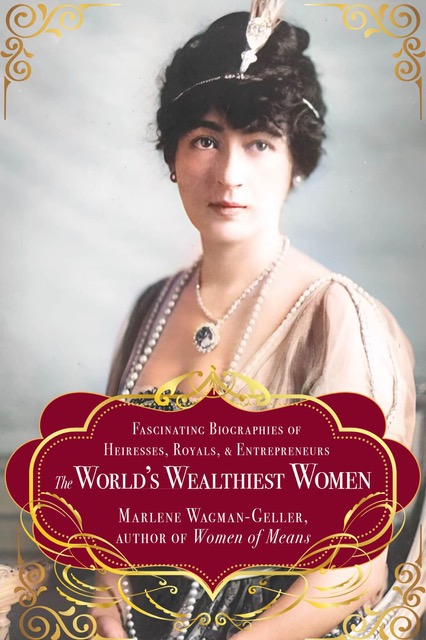
To pre-order my newest book, The World's Wealthiest Women: Fascinating Biographies of Heiresses, Royals, Entrepreneurs, and Entertainers, please click one of the links below.
- Amazon.com: amazon.com
- IndiePubs: indiepubs.com
- Bookshop: bookshop.org
- Amazon.co.uk
- Amazon.ca
- B&N: b&n.com
- Chapters Indigo (CA): indigo.com
- Books That Save Lives