Polish Pandora Box: Sabbath Candles Talisman
For cereal aficionados such as Jerry Seinfeld, Lucky Charms denotes sugary marshmallows awash in milk. In 1964, General Mills introduced the “breakfast of champions” whose mascot, Lucky the Leprechaun, wears a hat sporting a four-leaf clover.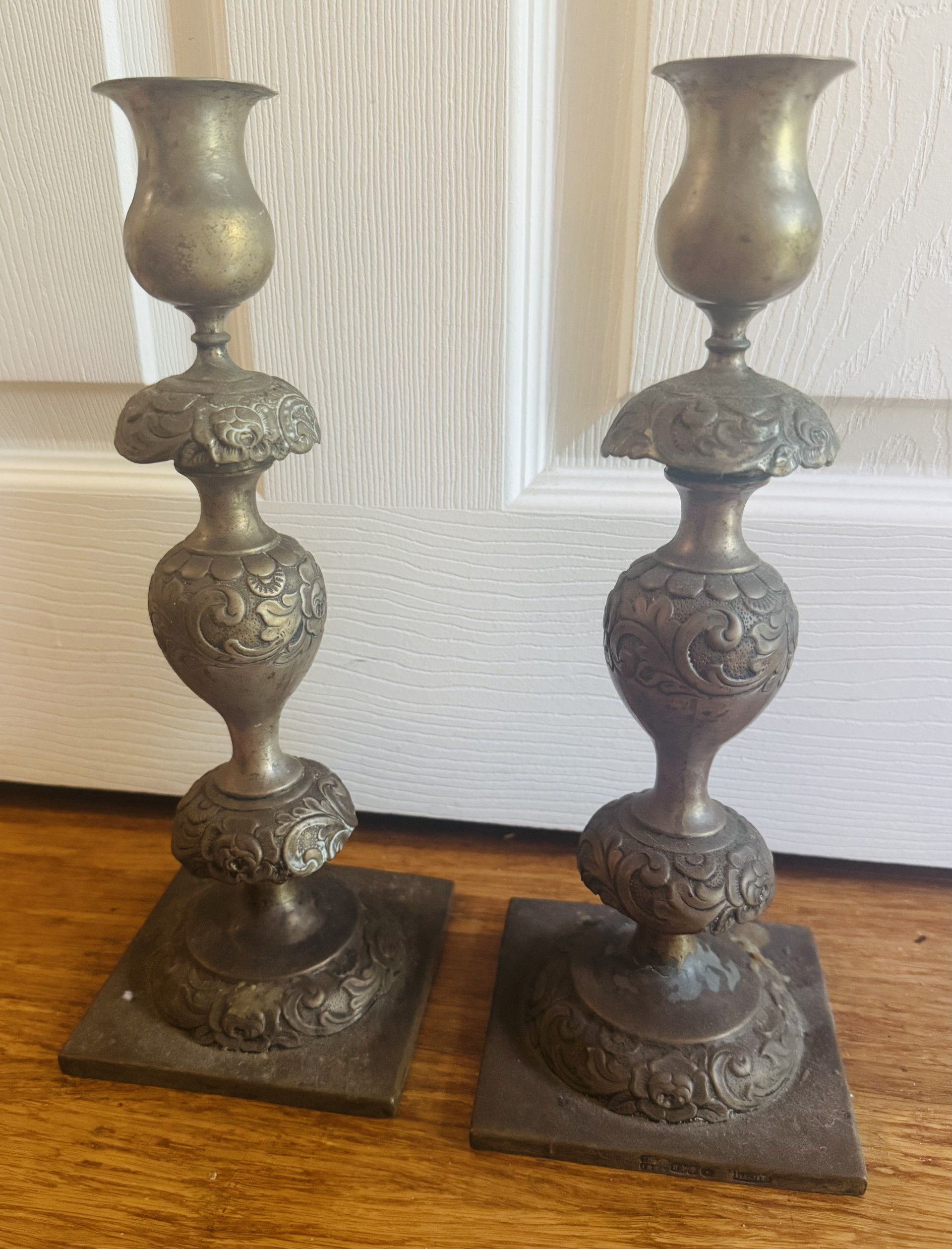
The Irish good luck charm has a niche in the pantheon of objects allegedly endowed with positive power. According to lore, Eve carried a clover from Eden, a talisman to navigate life post expulsion from paradise. And if anyone ever needed help, it was Eve. Genesis explained her punishment for the temptation of Adam, “In pain you shall bring forth children, yet your desire shall be for your husband, and he shall rule over you.”
On the deserted heath three witches tossed items into their cauldron including a lizard’s leg and a howlet’s wing to create a “charm of powerful trouble.” The objects did not prove good news for Macbeth. The British Lord Nelson, despite having a horseshoe nailed to the mast of his HMS Victory, met his end through a bullet from a French musket. Nobel-prize winning author, Ernest Hemingway, penned A Moveable Feast, a memoir that recounted his years in nineteen twenties Paris. He wrote, “For luck you carried a horse chestnut and a rabbit’s foot in your right pocket. The fur had been worn off the rabbit’s foot long ago and the bones and the sinews were polished by wear. The claws scratched in the lining of your pocket, and you knew your luck was still there.” His youthful optimism ended in his sixties when he committed suicide.
However, some charms delivered positive results. During Theodore Roosevelt’s 1905 inauguration, he wore a gold ring that held a lock of President’s Lincoln’s hair. Seven years later, while campaigning in Milwaukee, John Schrank fired a bullet into Roosevelt’s chest. The fifty-five-year-old survived as the shot had landed in his shirt pocket that contained his fifty-page speech. Despite his injury, he spoke for one-and-a-half-hours while the blood seeped through his shirt. Roosevelt improvised, “I don’t know whether you fully understand that I have just been shot. But it takes more than that to kill a Bull Moose!”
When she was a child, the Belgium-born Diane von Furstenberg father gifted her a gold coin that he had worn in his shoe during World War II. The golden object worked overtime as she married a prince, created the iconic wrap dress, and in her later years bagged a billionaire. (Diane carries the gold coin to every fashion show.)
Gymnastic great Simone Beals brings along a figurine of St. Sebastian (the patron saint of athletes) before competitions. The talisman has its pride of place as much as do her four Olympic gold medals that adorn her mantle.
New England poet, Edna St. Vincent Millay, wrote, “The golden brooch my mother wore/She left behind for me to wear;/I have no thing I treasure more...” The thing I treasure most is a pair of silver-plated Shabbat candles, engraved with the date 1884, one of my only family heirlooms. The original owner was my great grandmother who lived in a shtetl in Opatów, Swietokrzskie, an area long fought over in a tug-of-war between Poland and the Empire of Russia. When Tsar Alexandre III unleased his periodic pogroms, my great-great grandmother grabbed the candlesticks and sheltered in a nearby forest till the anti-Semitic purge ended. Upon her passing, she gave them to my great grandmother, Zlata Karbel.
The third generation to own the Shabbat candlestick was my grandmother, Dreisel. In the 1920s, when she immigrated to Rio de Janeiro, Brazil, she brought them along, a memento of her lost world. Although she had evaded the antisemitism of Poland, she was miserable in Brazil. She missed her family, hated the hot weather, and, as she only spoke Yiddish, was unable to communicate with her neighbors. The synagogue had been the center of her life. When she lit the candles on Friday nights, in its flame she envisioned those she would never see again. Her pain would have been unimaginable had she known those she left behind would, a decade later, perish in Auschwitz.
At age eighteen, my mother Golda, desperate to escape poverty, accepted an arranged marriage with a man in Toronto, Canada. I only remember his surname was Train. Before she left, her mother gifted her the candlesticks, her last act of love to the daughter she would never again set eyes upon.
Upon arriving in Toronto, rather than the handsome fiancé my mother had fallen for, she realized Train had sent photographs of his older brother. My mother experienced the concept of caught between the proverbial rock and a hard place. She did not want to return home and live under the rules of her Orthodox father, with a future devoid of promise. In Canada, she had to contend with freezing weather, the fact she did not speak English, that she was a stranger in a strange land.
Casting her lot with her adopted country, she lived in a rooming house and found a job wrapping presents in Eaton’s, a Toronto department store. She took solace when she lit the candles on Friday nights. In the orange flames she hoped against hope for a better tomorrow.
Train had accepted my mother’s rejection; however, his mother did not. She felt my mother had used her son as a ticket to Canada and contacted immigration. Facing deportation, she married my father. He was wealthy and they could communicate in Yiddish. I still remember she covered her hair on Friday nights and gestured with her hands to usher in the Sabbath by lighting the thick, white candles. Those were the good old days, before the cold war with my father, before she lost the fight against the crippling bipolar that consumed her life.
In Seinfeld there was an episode about a woman in a film who “had a long journey from Milan to Minsk.” The silver candlesticks similarly had a meandering journey. In 1986, I left to start a new chapter in San Diego. Before my departure, my mother gifted me her heirloom.
My candlesticks represent a personal scrapbook: from Poland, to Brazil, to Canada, to America. Although they have been eyewitness to tragedy, I still consider them my good luck talisman-the treausure I would grab in case of fire. They represent the courage to endure, my connection with my ancestors, a connection with my Jewish roots. The silver-plated candlesticks symbolize that, no matter what, there still exists what remains in my Polish Pandora Box.

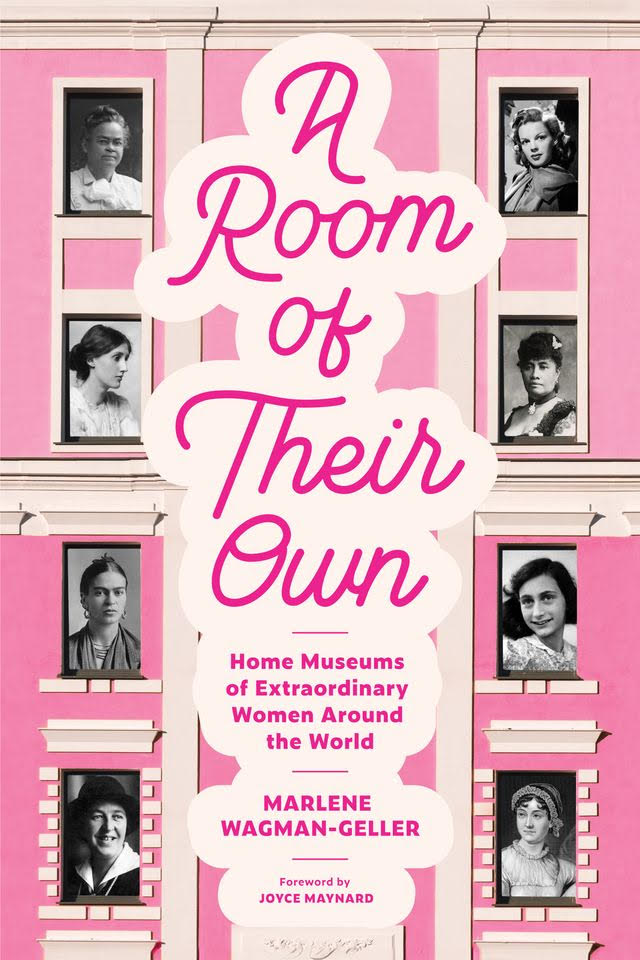
To purchase my newest book, A Room of Their Own Home: Museums of Extraordinary Women Around the World, please click one of the links below.
- Amazon.com: amazon.com
- IndiePubs: indiepubs.com
- Bookshop: bookshop.org
- Amazon.co.uk: amazon.co.uk
- Amazon.ca: amazon.ca
- B&N: b&n.com
- Chapters Indigo (CA): indigo.com
Recent Blogs