MUMTAZ MAHAL (1850)
““You can obtain such self-control that no loss no disappointment can make you suffer, you can give up anything.” ~Arabella Huntington
The triple pillars of The Four Hundred-Mrs. Astor, Mrs. Fish, Mrs. Vanderbilt-achieved their stratospheric status via marriage. However, Gilded Age gal Arabella (Belle) Huntington-through an abundance of beauty, brains, and pheromones-was a siren who ensnared the heart of two tycoons.
The nonfictional Becky Sharp-the social-climbing protagonist of Vanity Fair- and Arabella were both heirs to a hard-knock life. Passionate about camouflaging her past, Arabella did her utmost to destroy evidence of her early years. She was born in Union Springs, Alabama, to Catherine and factory machinist Richard Milton Yarrington. Her father provided his wife with a subsistence lifestyle, as well as five children. In the futile hope to raise their standard of living, Richard relocated his family to Richmond, Virginia. When Arabella was nine, with the death of her father from cholera, existence became even grimmer. The widow scraped together enough funds to purchase a rundown boarding house on Shockoe Bottom along the flood-prone James River. The seedy neighborhood was the site of slave auctions, gambling parlors, and brothels.
For her family’s salvation, Catherine turned to Arabella, the family beauty: she had waist-length auburn hair, a Scarlet O’Hara waist, and blue eyes that her Pince-Nez glasses partially obscured. A century later, Bobbie Gentry wrote a song that echoed Catherine’s situation: a mother capitalized on her teenaged daughter, Fancy, as an escape from their New Orlean’s shack. A lyric stated, “Here’s your one chance, Fancy, don’t let me down/Lord, forgive me for what I do/ But if you want out it’s up to you…” Driven by desperation, Arabelle took a job with John Archer Worsham who ran one of the few businesses that hired women-in his faro parlor, (illegal gambling house.) Her tasks were to serve liquor, play the piano, and cater to the male clientele. Her outfit was a low-cut, off the shoulder purple gown; Johnny did not allow her to wear her glasses. Her shift that lasted till the early hours of the morning, in rooms heavy with cigar fumes, proved grueling. Yet the Yankee dollars John doled out fed her family.
In July 1869, an encounter made Arabella a persona dramatis of the Gilded Age. On that evening, the six-foot-four, 200 plus pounds Collis Huntington stopped by the gambling parlor where the forty-eight-year-old met the teenaged Arabella. Despite their economic and age differences, they shared the commonality of hard- scabble backgrounds. Collis was born in the aptly named Poverty Hollow, on the edge of a Connecticut swamp, one of thirteen children of a poor farmer. After the discovery of gold at Sutter’s Mill, Collis headed west. With the fortune he made selling supplies to the miners, he was instrumental in founding the transcontinental Central Pacific Railroad.
The towering tycoon had left his home in Manhattan to travel to Washington, D.C. to lobby for federal support to extend his railroad empire across the South. He succeeded in pulling the wool over congressional eyes by providing doctored maps of California. The topography illustrated several nonexistent mountain ranges that increased his allotment as tracks over mountain were more costly than those installed on flat land. Although he got away with the deceit, the San Franciso Examiner exposed the railroad baron “as ruthless as a crocodile.” To celebrate his success, although Collis neither smoked or drank, he liked to gamble which is how he met Arabella. As there was something else Collis liked to do, the smitten swain called on Belle at her boardinghouse. Because the farlo parlor offered the sexual favors of its female employees, Belle was no blushing Southern belle and one purported lover was its married proprietor. Arabella likely shared a commonality with the future Wallis Simpson who, from her visits to Peking brothels with her first husband, had picked up erotic tips. Rumor had it she had seduced the future King Edward VIII as she had “the ability to make a matchstick feel like a cigar.” With her youth, beauty, and sexual repertoire the aptly nicknamed Belle was cut from a far different cloth than Collis’s middle-aged wife, Elizabeth, who was prone to headaches. However, as much as the tycoon was putty in Arabella’s hands, he refused to leave his spouse who had been with him from his penniless years. Another impediment to divorce, other than the scandal, was he did not want to hurt his daughter, Clara.
Collins was a man who went after what he wanted, and what he wanted was another Virginia coup-Arabella Yarrington. And what Arabella wanted was a railroad ride out of grinding poverty and demeaning job. While their relationship seemed built on the exchange of sex for cash, it had roots on the bedrock of mutual regard. The Robber Baron and the faro worker shared the commonality of unpopular principles regarding their antipathy to racism. Collis was an unabashed abolitionist who employed black laborers and provided them with equal treatment to his white workers.
Unwilling to leave Arabella behind when he returned to Manhattan, Collis offered to set her up in a luxurious Manhattan home. She agreed with the addendum her mother and siblings would be part of the package. John Worsham was also part of the mix: Arabella was pregnant, and she wanted to present herself as a pregnant wife rather than a pregnant mistress. For a hefty price, John agreed though that meant leaving his wife, Annette, and children behind. In New York, Mrs. Worsham gave birth to her eleven-pound baby, Archer Milton Worsham. A year later, John returned to the South leaving his widow and son. Because Arabella had physical relations with both men, Archer’s paternity remains a matter of conjecture. Archer later held his own take on his background: he claimed that Collis took his mother to New York to care for his invalid wife where the two fell in love that led to his birth.
Ensconced in a Collis’ property on Lexington Avenue near Grammercy Park, in proximity of the Morgans, Vanderbilts, and Astors, the house had one of the first residential elevators in the city. Arabella could have spent her time partaking in the attractions of New York City, but she shared another commonality with Collins: the desire and brains to better herself. In the 1870s, Arabella immersed herself in obtaining an education that had eluded her in her youth and studied French, architecture, and art history. In a desire to be economically autonomous, as insurance in case Collins’ eye roved elsewhere-Arabella borrowed money from him that she used to flip Manhattan real estate. During her transactions, the woman who had started life in Shokoe Bottoms vied with William H. Vanderbilt and John D. Rockefeller for plum real estate pies. By the end of the decade, with her own money, she purchased a house on 54th Street, just off Fifth Avenue. Afterwards, she bought lots on either side of her property for a price of $331,500-$19.2 million today.
The estate was a love nest where Collis arrived for trysts with the woman he loved. The bedroom bore a Moorish décor that resembled an exotic/erotic harem with a queen-sized canopied bed topped with red velvet throws. Her dressing rooms (undressing room to her paramour) walls held symbols of cupids, bells in a nod to Belle, and lions’ heads. (The dressing room is on exhibit at the Metropolitan Museum of Art.) Although living a fantasy that surpassed any of her youth dreams, sorrow came to call. Over the years, Arabella and Archer had bumped into Elizabeth and Clara, something the wife scorned could not tolerate. Not only was Archer the fruit of her husband’s adultery, he also was the child she had not been able to conceive.
Clara had been born in Sacramento, the youngest of five children of Edwin and Clara Prentice. After Edwin drowned in a flood, left with straitened circumstances, the widow gave her sister, Elizabeth Huntington, her sister’s twelve-month-old baby. The result was Clara grew up with an aunt she called mother, and siblings she called cousins. Another result was she had gone from a penniless family to a railroad heiress. Under pressure from Elizabeth, Collis convinced Arabella to leave her son in the care of her sister Emma who lived in San Marcos, Texas. Collis wrote a check for a much-needed repair of her ranch. Archer took with him a large slice of his mother’s heart. 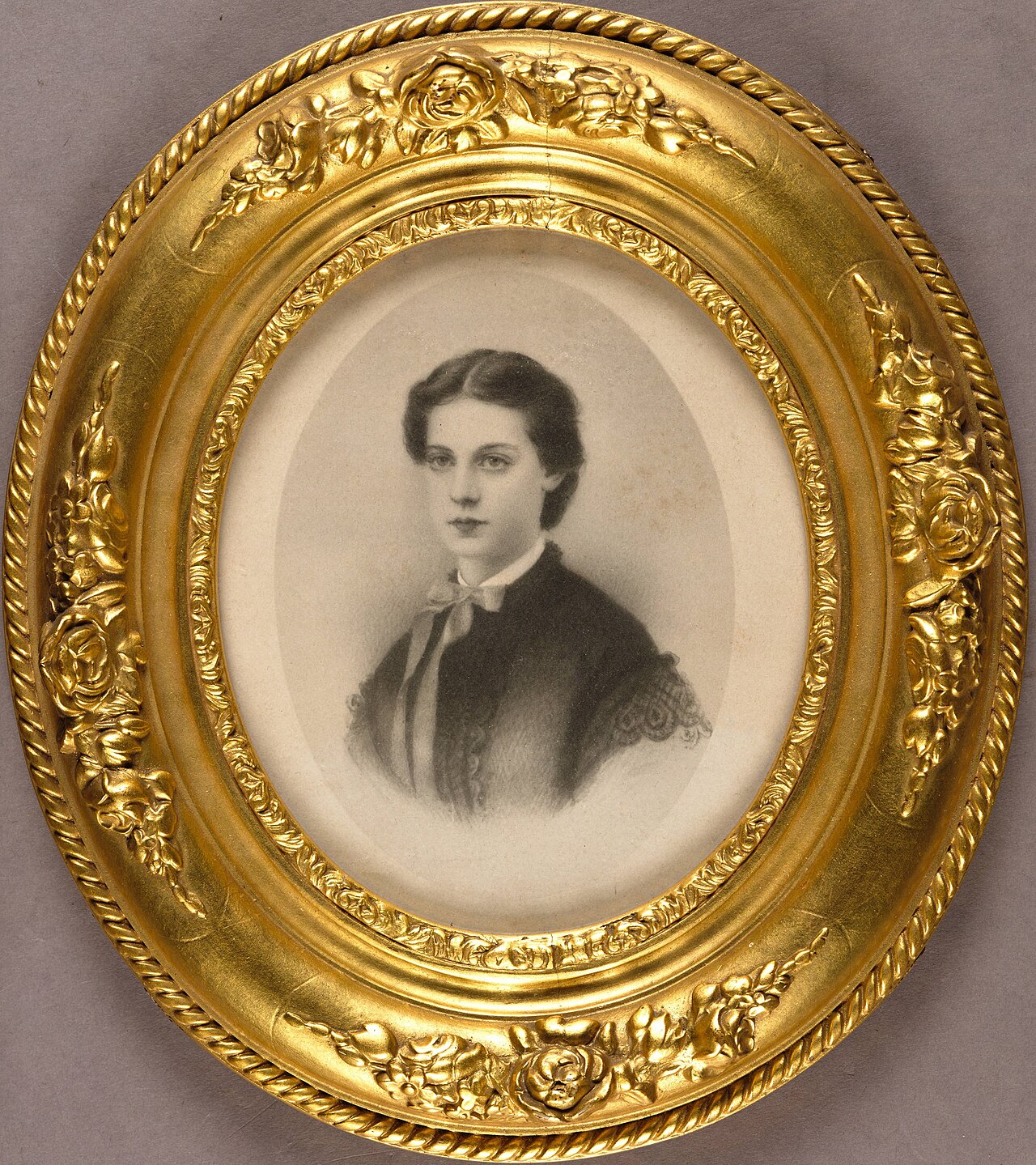
After Elizabeth’s death from cancer, Collis was finally able to make an honest wife of his Belle, and they married in 1884. The ecstatic groom handed four $1,000 bills to Reverend Henry Ward Beecher (the brother of Harriet Beecher Stowe, the author of Uncle Tom’s Cabin) who conducted the wedding ceremony. The Reverend, who maintained a string of mistresses who came to his church every Sunday to hear him preach, could not cast aspersion on Collis. Collis legally adopted Archer whose name changed from Worsham to Huntington. For their marital home, the Huntingtons purchased an eighteenth-century Fifth Avenue mansion. Eventually, they sold the property (now the site of the Museum of Modern Art) to John D. Rockefeller who left it intact except for the addition of a skating rink. The newlyweds moved to a Park Avenue mansion, (currently the site of Tiffanys & Co) where the chatelaine installed a marble bathtub whose waters mingled with her favorite perfume. The couple maintained a staff of eleven including three butlers, an elevator operator, and a footman. An avid shopper, perhaps born of her earlier poverty or desire to outdo the Four Hundred who spurned her, Belle was insatiable in her desire for luxury. Before he had met his Belle, Collis had stated that he had never spent more than $200 0n “personal adornment.” In contrast, he showered his lover with jewels such as a glittering rope of 119 blue diamonds from Tiffany’s. She had more pearls, white and black, than anyone else in the Western world. One matching set, purchased in 1906, came with a price tag of $300,000-$10 million today. In 2010, Aranella splurged on $4,000 for lingerie from Paris, ($132,00 today.) Although Clare had suffered from her new stepmother’s affair with her father, the women buried the hatchet and travelled to Europe where Arabella Huntington was on the hunt for a blueblood husband for the young heiress.
Unable to be a part of Manhattan’s elite because of a past that did not bear too much scrutiny, Arabella, after introducing her uneducated husband to art, became an avid art collector that she showcased on her mansion’s walls. One of the most eminent canvases was by Rogier van der Weyden’s fifteenth century “Madonna and Child.” Arabella spent long periods of time in Europe where she shopped in Paris for Worth gowns and acquired paintings. In the States, most of the time they spent at Homestead, their country estate near the East River. Other properties were in Nob Hill, San Francisco, and in the Adirondack Mountains.
The fly in Arabella’s rarified life buzzed in on a Yosemite, California, afternoon when she met Edward Huntington, her husband’s nephew and fellow multi-million railroad tycoon, with whom the erotic sparks ignited. Not only was she his aunt, Henry was also the spouse of Mary Alice, Clare’s sister slash cousin. Shana Abe, in her novel An American Beauty: A Novel of the Gilded Age wrote that a future meeting between Henry and Arabella took place in one of the few venues someone shunned by the Four Hundred could attend-charitable events. At a fundraiser for the Metropolitan Museum of Art Technical School. After a very warm reception from Henry, and a very cold one from Mary Alice, a society matron delivered a barb meant to wound Arabella. She stated, “It is one thing to see the hetaeras depicted in art. It is another matter entirely to be forced to endure their presence in the flesh.” Looking at Mary Alice, Arabella explained that hetaeras was a reference to a courtesan.
In 1900, at age seventy-eight, the thirtieth wealthiest man in the United States, Collis suddenly passed away while on vacation in his Adirondack home. His widow wore black for the remainder of her life. Arabella received two thirds of her husband’s estate-$150 million, $3.1 billion today. The other third of the estate was left to Collis’ nephew, Edward Huntington, who had long been in love with Arabella, a fact that made her his wife’s least favorite person. (After a prolonged lawsuit, Clare received $6,000,000.) As the elite remained closed to her, Arabella left for Paris where she purchased a fourteen-bedroom Parisian palace. Perceiving the Dutch genius of artis Vermeer she acquired the artist’s Young Woman with a Lute, as well as Rembrandt’s, Aristotle with the Bust of Homer.
Like his uncle, Edward wanted what he wanted and after he divorced Mary Alice, he pursued Arabella; in her fifties, she was still the most desirable woman he had ever met. As part of his mating ritual, to lure Arabella to what was then a rough-hewn Los Angeles, Henry filled his 550-acre San Marino ranch with English masterpieces such as Gainsborough’s Blue Boy and stocked his library with the original copies of famous volumes of English literature. An impediment to his plan was had to testify in a lawsuit in the sensation New York trial of William D’Alton Mann, publisher of Town Topics, the National Enquirer of the Gilded Age. Mann had blackmailed the husband of future empress of etiquette, Emily Post, to keep their dalliance out of the press. Arabella’s role in the trial: She had paid $15,000 for the publisher to keep mum about her own past. Alerted to the situation by her lawyers, Arabella fled to Europe moments ahead of the process server. During this juncture, Henry occupied himself with amassing a fortune in California real estate and building a massive hydroelectric project northeast of Fresno while expanding his Pacific Railroad. The tycoon named his private car “The Alabama” in tribute to Arabella’s home state.
Unable to bear the separation from the woman he loved, Henry set said for the Continent. In 1913, Edward and his Belle were wed in Paris. She placed Henry’s ring next to the wedding band his uncle had placed on her finger three decades before. Archer did not share in the marital elation as he was enraged his “father” had left such a huge chunk of money to the man who would marry his widow. In contrast, the uxorious Edward exclaimed, “I am just beginning to live and life seems so very, very sweet.” The union of the Huntingtons united two railroad fortunes, and Arabella became one of the wealthiest women in America. Her new role as wife did not induce her to cast off her window’s weeds; depending on perspective, this was in respect to Collis or to showcase her magnificent white strands of pearls.
Six months later, the couple returned to San Marino; however, despite the art laden desert jewel of her estate, Arabella could not commit to California on a full-time basis. She limited her stays to two months a year, spending the remainder of the year in Paris and Manhattan. Although his soul’s sanctuary was his ranch, he followed his heart’s Pied Piper in her travels.
When Arabella passed away in 1924, Henry remained devoted. In four rooms of the west wing of his rare book library, the railroad king established the Arabella D. Huntington Memorial Art Gallery. For an amount of $31 million in today’s currency, Henry acquired gilded bronzes, enameled porcelains, and inlaid furniture in a suite with upholstered walls, crowned by a chandelier.
India’s enduring love story was the one between Shah Jahan and his wife, Mumtaz Mahal whose name translates to “ornament of the palace.” When the empress died giving birth to their fourteenth child, the Shah erected the world’s most magnificent mausoleum, a monument to their romance. The Californian tycoon also built a mausoleum to his beloved. He hired architect John Russel Pope, who later designed the Jefferson Memorial in Washington, D.C. to erect the “Temple of the Four Season” on the grounds of his San Marino estate a circular white marble temple amid his nonpareil garden, where he would one day lie next to the woman he loved. Competed in 1929, the memorial is an American Taj Mahal, a husband’s tribute to Belle, his own Mumtaz Mahal.

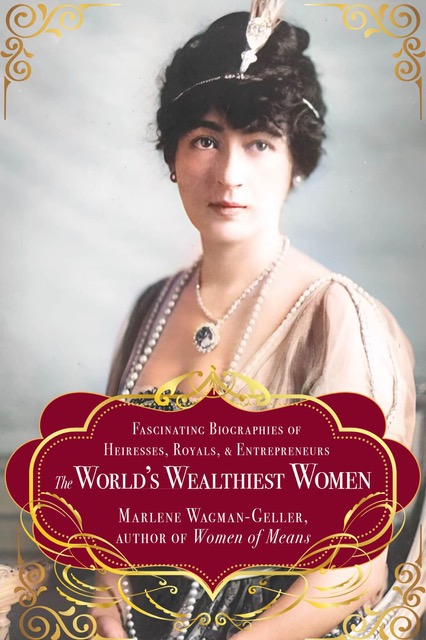
To pre-order my newest book, The World's Wealthiest Women: Fascinating Biographies of Heiresses, Royals, Entrepreneurs, and Entertainers, please click one of the links below.
- Amazon.com: amazon.com
- IndiePubs: indiepubs.com
- Bookshop: bookshop.org
- Amazon.co.uk
- Amazon.ca
- B&N: b&n.com
- Chapters Indigo (CA): indigo.com
- Books That Save Lives