A Nobel/Nobel Woman
.png)
A battle cry of feminism-one that launched a 1,000 tweets, t-shirts, and tattoos- appeared in 2017 when Republican Senator Mitch McConnell shushed Elizabeth Warren. Upon her refusal to be muzzled he stated, “She was warned. She was given an explanation. Nevertheless, she persisted.” The hashtag #LetLizSpeak began trending along with historic examples of powerful men silencing females: Rosa Parks, Susan B. Anthony, Malala. A century before a despot tried to annihilate a lady who not only persisted, she prevailed to become a Nobel Woman.
Old habits, as has been observed, die hard and even with the end of the Victorian era, sexism still stalked. In the first decade of the 20th-century, Italian girls not only had to contend with misogyny they also had to fight time-honored machismo. One who refused to conform into a sexist mold was born into an observant Jewish family in Turin. One of four children, Rita was the daughter of Adamo Levi, an electrical engineer and Adele Montalcini, a painter, Italian Jews who could trace their roots to Israelites who immigrated during the days of the Roman Empire.
The event that altered the trajectory of Levi-Montalcin’s life was the death of her governess, Giovanna, who had helped raise Rita, her twin Paola, and siblings Nina and Gino. Devastated at the loss, she determined to become a doctor and find a cure for the disease that had claimed the life of her second mother. However, in the early 1900s Italy decreed that girls’ primary goals were the domestic sphere. Because of the current zeitgeist, her parents sent their three daughters to an all-girls’ high school whose graduates did not meet the criteria for acceptance into university. This lack of education did not faze her sisters as Paola became a painter and Nina married and was a mother of three. In contrast, Gino, free from gender restraint, became a prominent architect and professor at the University of Turin.
Rita felt she lacked her mother’s and twin’s artistic talent-though she had an artistic temperament-and the thought of marriage held no appeal. Indeed, she would have taken umbrage with the term “maternal instinct” as she had no desire to populate the planet. “Babies did not attract me, and I was altogether without the maternal sense so highly developed in small and adolescent girls.” Although her father remained steadfast in his conviction that medical school was a man’s domain, he gave his grudging approval. After intensive studying to fill in the gaps of her education, Rita entered the University of Turin, one of 7 women in a class of 300. Her professor, Under the tutelage of Giuseppe Levi (no relation) Rita overcame the entrenched sexism, and in 1936, she graduated summa cum laude. In recognition of her achievement, Levi-Montalcini received a trip to a scientific conference in Sweden but returned to a brutal reception.
The best laid plans of mice and men-and an ambitious young woman- were waylaid when Benito Mussolini, issued the Manifesto per la Difesa della Razza, signed by 10 Italian scientists, that resulted in the banishment of non-Aryans in the academic and professional fields. To avoid the regime’s anti-Semitism, Rita fled to Belgium where she worked as a guest of a neurological institute. In 1940, on the eve of the Nazi invasion, she returned to Italy.
In a nod to you can’t keep a great woman down, Rita, with the help of her brother, converted her bedroom into a makeshift lab and filled it with the chicks she needed for research. Forced to be innovative she fashioned her own scientific instruments using, among other things, reshaped sewing needles and watchmakers’ tweezers. Discovery of her clandestine activities could have resulted in imprisonment or death, but she refused to let Il Duce sideline her passion. After the fascists dismissed Giuseppe from his post he ironically went to work as an assistant to his former pupil.
With the Allied bombing raining death on Turin, the Levi- Montalcini family fled to a retreat in Piemonte where Rita set up another lab. In order to carry on her investigation of nerve growth in chicken embryos, with eggs in short supply because of wartime shortages, she bicycled around the countryside searching for fertilized ones. To deflect suspicion, she explained to the farmers she wanted them because she felt they were more nutritious for her “babies.” As a bonus, she could later turn her experiments into omelets. Forced to go on the run once more, the family escaped to Florence where forged papers bore the surname Lupani and identified them as Catholic. In 1945 Mussolini, who fancied himself the contemporary Julius Caesar, along with his mistress Claretta Petacci, met their end through a firing squad of machine-gun fire. After the war, Dr. Levi-Montalcini joined the Allies as a volunteer physician in refugee camps where she treated patients suffering from typhoid and other infectious diseases.
In 1947 Rita received a letter from Viktor Hamburger, a German-born embryologist whose writings had sparked the idea for her bedroom lab experiments. He invited her to work with him at Washington University in St. Louis, offering a month-long fellowship. Not only did she accept the post, in 1958 she became a full-time Professor of Neurobiology, a position she held until her retirement at age 68. Rita never cared for the word retirement, insisting doing so only led to the decay of the brain. During her tenure, she collaborated with Stanley Cohen, a quiet, clarinet-playing biochemist; their goal- to prove the existence of the nerve- growth factor (NGF.) Their subsequent discovery improved the understanding of the processes involved in certain malformations that led to treatments for diseases such as breast cancer, Alzheimer’s, and senior dementia. Their findings also made inroads into the repair of damaged nerve cells. According to Pietro Calissano, who collaborated with Rita on an article for Scientific American, NGF may have played a role in allowing her to live until age 103. He explained she took the serum every day in the form of eye drops. In the same publication, Rita attributed the key to her staggering success-to “the absence of psychological complexes, tenacity in following the path I reputed to be right, and the habit of underestimating obstacles.”
After leaving St. Louis “the lady of the cells,” a term by which she was known, Rita returned to Italy where she lived with Paola, and maintained a much-marked appointment book. In addition to her duties as a teacher, she set up schools for female scientists and founded the Institute of Cell Biology of the Italian National Council of Research. Rita divided her time between her adopted country and the land of her birth but regardless of la professoressa’s time zone, in the words of Cohen, she “worked like a fiend:” five hours of sleep and one meal a day- at lunchtime- that consisted of soup and an orange. Why waste time eating when one can be working? Even in her nineties, Rita always appeared with white beautifully coiffed hair in a white lab coat accessorized with high heels wielding her instruments with manicured hands.
Like the Roman God Janus, Rita had two sides: one, the mathematical, the other, dramatic. With her artistic flair she illustrated many of her research papers with imaginative sketches and even designed her own jewelry. She was colorful when she spoke-in heavily accented Italian- sometimes too much so for the plain language of science. When one neuroscientist toned down their description of their findings in a joint paper, she accused him of turning her beautiful prose into boiled spinach. He countered by calling her a cross between Marie-Curie and Maria Callas. Rita also garnered a reputation of eccentricity; in the 1950s, she carried experimental mice in her handbag from St. Louis to Brazil. In Rio de Janeiro, she set up a research project in a state-of-the-art laboratory that had the facilities she required-a far cry from her youthful bedroom workstation.
An advantage of living to your seventh decade is you tend to have the last word. Dr. Levi-Montalcini saw her theories rebuffed throughout the 1950s and 1960s, but she received validation in 1986 when she won the Nobel Prize for Medicine, an award only four women had received. Wearing an elegant black velvet gown, she accepted, along with Stanley Cohen, the honor for their research on NGF. Her reaction to the astonishing news was that the award was “a great honor but there is no great thrill as the moment of discovery.” At one of the numerous celebrations, Rita claimed her brain was more vigorous than it had been four decades ago. She stated, “If I’m not mistaken I can say my mental capability is greater than when I was 20 because it has been enriched by so many experiences, in the same way that my curiosity and desire to be close to those who suffer has not diminished.” Her country spared no expense to honor their Nobel recipient-the only Italian woman who had achieved the world’s most prestigious prize in the field of science showering her with receptions and further honors. The one she appreciated above all others was a decision by a university to gift to her research institute a generous grant of 448,000 pounds. Proving that she harbored no ill feelings of her native land that had once driven her into hiding, “I say to the young, be happy that you were born in Italy because of the beauty of the human capital, both masculine and feminine, of this country.”
The elderly woman who had won the Nobel Prize launched untold interest in the diminutive doctor’s fascinating life, and consequently, the scientist turned author with her autobiography, In Praise of Imperfection. The title seemed a strange choice for the perfectionist, but Levi- Montalcini unraveled the mystery when she wrote, “It is imperfection-not perfection-that is the end result of the program written into that formidably complex engine that is the human brain, and of the influences exerted upon us by the environment and whoever takes care of us during the long years of our physical, psychological, and intellectual development.” With her words she praised her supportive family and beloved nanny.
As well as being an eminent scientist, Dr. Levi-Montalcini was active in cultural, political, and social affairs. She served as a goodwill ambassador for the United Nations, established, with her twin, the Levi-Montalcini Foundation, dedicated to their father, to assist young people in their career paths, and was the first female admitted to the Pontifical Academy of Sciences that advises the Vatican, a heady honor for a non—Catholic. In 2001, at age 92, the Italian parliament made her a senator for life, an honor bestowed on only the most revered. In that position, from 2005 to 2007, she played a vital role in supporting the center-left government.
Rita’s Nobel Prize remains a testimony to her brilliance; however, a comment she made showed she was also a noble woman. On Dr. Levi-Montalcini’s 100th birthday, she spoke in Rome at a ceremony in her honor. Rita, her white hair elegantly coiffed and wearing a tailored navy blue suit, raised a glass of sparkling wine in a toast to her longevity. Recalling the years Mussolini had forced her underground, she stated, “Above all, don’t fear difficult moments. The best comes from them.”

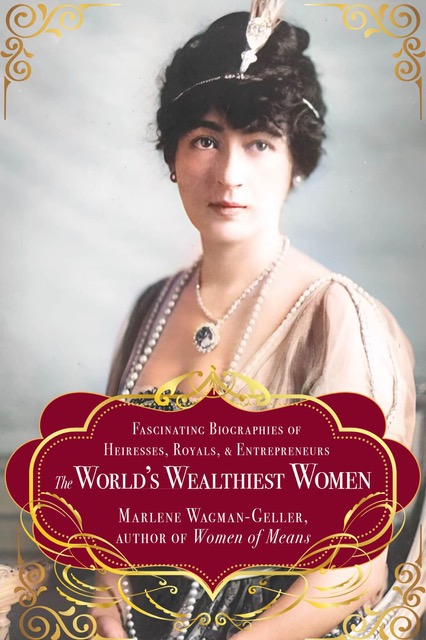
To pre-order my newest book, The World's Wealthiest Women: Fascinating Biographies of Heiresses, Royals, Entrepreneurs, and Entertainers, please click one of the links below.
- Amazon.com: amazon.com
- IndiePubs: indiepubs.com
- Bookshop: bookshop.org
- Amazon.co.uk
- Amazon.ca
- B&N: b&n.com
- Chapters Indigo (CA): indigo.com
- Books That Save Lives