Lovers and Lovers
Lovers and Lovers
“Please come down here soon. The house is full of pianists, painters,
pederasts, prostitutes and peasants…Great material.”
–Mabel Dodge Luhan in a letter to Gertrude Stein
The Mabel Dodge Luhan House (opened in 1996)
Taos, New Mexico
D. H. Lawrence slept in Los Gallos, “the Roosters,” (so named after its owner’s decorative Mexican ceramic roosters that still perch on its roof), as did Georgia O’Keeffe, Carl Jung, Martha Graham, and other luminaries. Mabel Evans Dodge Sterne Luhan, the eccentric heiress, summoned visitors to her Taos, New Mexico, adobe castle, nestled at the foot of the Sacred Mountain. If the walls of Los Gallos could talk, what tantalizing tales they would crow.
The future grande dame of a unique salon was Mabel, born in Buffalo in 1879, the daughter of Charles and Dara Ganson. She described herself as “not much to look at,” and though her childhood was financially privileged, she was emotionally deprived. She bobbed her hair before it was in style, much to her father’s chagrin. When Karl Kellogg Evans, heir to the Anchor Line Steamboat Co., pursued her despite having a fiancée, Mabel accepted his overtures after daddy dearest forbade her to see him again. In 1900, Karl and Mabel eloped; two years later, he died in a hunting accident, leaving a son of questionable paternity. During her marriage, she had engaged in an affair with Dr. Parmenter, her gynecologist, a fact that scandalized her mother, who, Mabel alleged, was also sleeping with him. Maternity bored Mabel, and for distraction, she set sail for Europe.
Aboard ship she met her second husband, the Boston architect Edwin Dodge. The couple moved to the magnificent Villa Caronia in Florence; the mansion transformed to a mecca for the art crowd such as Gertrude Stein, Arthur Rubinstein, Gertrude Stein, and Pen Browning, (son of acclaimed poets Robert and Elizabeth). Some of the glittering guests supplied Mabel with both culture and sex. The outsider to the salacious salon was Edwin. Mabel derided him for his “inferior sophistication,” (contemporary lingo, “vanilla tastes”), such as his demand that in his villa “certain forms of nonsense stop.” Jacques-Emile Blanche painted Mabel as a Renaissance principessa. The idylls of the principessa ended when weary of Europe, the Dodges returned to America.
In New York, Mabel exiled Edwin to the Brevoort Hotel as a preliminary to their divorce. She transformed her Greenwich Village apartment into a mecca for radicals such as Emma Goldman and Margaret Sanger, poet Edward Arlington Robinson, as well as sundry socialists and anarchists. Still harboring her affinity for art, she hosted a show of post-Impressionist paintings that introduced European modernism to the United States. She became involved with Maurice Sterne, a Jewish sculptor, the next to escort her down the aisle.
When three husbands did not serve as the proverbial charm, Mabel turned to psychoanalysis that she described as “a kind of tattle telling.” On the advice of her therapist, to distance herself from Maurice, she sent him to the Southwest under the pretext she wanted him to scout out new landscapes for his canvasses. Although not keen on a reunion, his letters piqued her interest, “Do you want an object in life? Save the Indians, their art-culture-reveal it to the world!” His words resonated as Mabel’s medium had foretold that Indians would one day play a role in her life. Moreover, she had experienced a dream where Maurice’s face had morphed into an indigenous visage.
Upon her arrival, Mabel became so excited by her first glimpse of the Southwest that she disembarked from her train and cried out, “Holy! Holy! Holy! Lord God Almighty! …I am Here.” To break with her old life, she cut her hair and donned a serape. Her first stop was at an adobe hut where a blanket-wearing Tony Luhan, from the local Tewa tribe, was beating on a drum and singing. Mabel was convinced his face was the one from her dream; Tony said he had also seen her in a vision. Over dinner, Tony claimed that he could make himself invisible, and that the fire in her grate was his good friend. Although he was married to a woman from his culture, he fell hard for Mabel and gave her peyote as a cure for dysentery. After attending a Corn Dance, Tony said, “I comin’ here to this teepee tonight, when darkness here. That be right?’ Who could blame Mabel for reisting such a proposal? The sexual shenanigan scenario proved the breaking point for Maurice, who slapped Mabel and took the next train east. The marriage of Mabel and Tony resulted in hostility from both the Indian and white community. Although she attributed her syphilis to Tony, she appreciated his ability to control her mood swings.
With her considerable wealth, Mabel set about building her dream home: a three story, seventeen room adobe estate. Initially, she christened her compound las Cruces in reference to the two crosses at the nearby “Morada” the meeting house for “the brotherhood of the Hispanic “penitenters.” However, when her mail ended up in the town of Las Cruces, Mabel renamed it Los Gallos after the brightly colored Mexican ceramic roosters she placed on her roof. “Mabeltown” also held five guesthouses, barns, and stables. By 1922, the two-story Big House included living and dining rooms. The décor was eclectic with French, Italian, and Oriental sofas and chairs. The accents included European paintings, Taos Indian blankets, and pottery, juxtaposed with Hispanic saints. Immune to the irony, Mabel praised the locals for their lack of materialism. In response, a local wrote to the Taos Star suggesting the heiress change places with him, “You drink muddy water which came down from the mountains, and my five children will drink nice clean water from your faucets.” 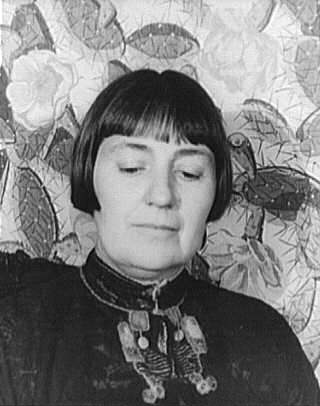
During the 1920s and 1930s, Mabel was one of the first to fight for legislation to protect the rights of Native Americans. She also spearheaded a writer’s colony where she hoped to entice creative types she referred to as “changers of the world.” Deeply desirous of D. H. Lawrence’s presence at Los Gallos, she used ESP, pleading letters, and an offering for his wife, Frida, of a necklace seeped in indigenous magic. They agreed and left England where they were participants and had ringside seats to a southwestern soap opera. Uma, the wife of guest Robinson Jeffers, a poet from Big Sur, California, upset with her husband’s affair with a younger woman–one Mabel had encouraged–attempted to shoot herself in the heart in one of Los Gallos’ bathrooms. D. H. Lawrence ended up painting the bathroom windows in colorful geometric and animal designs to deter prying eyes, an odd act considering his novel Lady Chatterley’s Lover was the subject of an obscenity trial. Other denizens of the desert hideaway: Aldous Huxley, Thornton Wilder, Ansel Adams, Greta Garbo, Martha Graham. Art collector Leo Stein, Gertrude’s brother, in a break from Europe’s modern art, left his calling card. Ansel Adams painted a portrait of Tony; Willa Cather reportedly used him for the character of Eusabio in Death Comes for the Archbishop. Not everyone was a fan of the mountain retreat. Thomas Wolfe arrived late one evening, inebriated, and took off the next day. Relations eventually soured between the Luhans and the Lawrences, and Mabel provided them with a mountain ranch seventeen miles north of Taos. The author died in Provence in 1930; five years later, Frida arranged for his ashes to return to Taos, for internment on their ranch.
When death came for the heiress in 1962, actor Dennis Hopper purchased the estate from her granddaughter. Under his occupancy, Los Gallos remained a who’s who of the counterculture with guests such as Bob Dylan, Leonard Cohen, Jack Nicholson, and Joni Mitchell. Part of Dennis’ interest was the home’s association with Lawrence, whom he called “the first freak.” He rechristened Los Gallos the Mud Palace and promptly married the singer Michelle Phillips from the Mamas and Papas in the solarium with the Sacred Mountain as witness. She left him a week later. Dennis managed to lower the bar of strangeness, and Mabel’s old home became a den of free love and drugs. The bathroom, the site of the aborted suicide and Lawrence’s artistry, appeared as the setting for a scene in American Dreamer that showed a nude Dennis in the bathtub with two Playboy bunnies. Mabel would have approved.
The Mabel Dodge Luhan House: Today, Los Gallos is a home-museum, guesthouse, literary shrine, and retreat. In The Taos News, writer Teresa Dovalpage wrote, “Declared a National Historic Landmark in 1991, the Mabel Dodge Luhan House is more than a historical place; it is a living, breathing haven for all creative types. Inspiration is everywhere.” After dinner, dancers and drummers from the pueblo would provide entertainment. Teachers include “transcendental painters” and Tibetan monks. The place where Mabel penned her memoirs retains its wooden beams, painted to resemble an Indian blanket. Her presence, who a friend likened to “an airplane laden with explosives,” yet looms. In her book, Winter in Taos, she wrote that her home “is a kind of treasure trove, but it is a treasure that needs a key, and I am the only one who has it.”
Mabel transferred ownership of her ranch to Lawrence, the only home he ever owned. In appreciation, he gifted her the original manuscript of Sons and Lovers. The deal did not work out in the Lawrence’s favor. The ranch was worth $1,000 whereas the original manuscript could have brought in $50,000. Considering the free love that flourished, another name for Los Gallos could be Sons and Lovers and Lovers.
The Window of Her World: Mabel was always taken with scene that greeted her from the third story solarium of Los Gallos, nestled by the Taos Mountains. From a second-floor room, she could see the D. H. Lawrence House and the desert environs that seduced Mabel at first sight.

To pre-order my newest book, The World's Wealthiest Women: Fascinating Biographies of Heiresses, Royals, Entrepreneurs, and Entertainers, please click one of the links below.
- Amazon.com: amazon.com
- IndiePubs: indiepubs.com
- Bookshop: bookshop.org
- Amazon.co.uk
- Amazon.ca
- B&N: b&n.com
- Chapters Indigo (CA): indigo.com
- Books That Save Lives