With Feathers (1960)
“I identified with them. I felt I could trust them the way I did not feel I could trust human beings.” Frieda Hughes
Ecclesiastes stated, “Let us now praise famous men.” In contrast, the children of famous parents often withhold praise as growing up in the spotlight usually entails collateral damage. That was the case with Frieda Hughes, daughter of the first couple of literature. In a life filled with loss, a magpie delivered healing, delivered hope.
 If the world of literature were a monarchy, Frieda Hughes would be the Princess Royal. She was the daughter of British poet laureate Ted Hughes, and American mother, The Bell Jar author, Sylvia Plath. To lose a relative to suicide unravels the fabric of one’s soul, thus one can hardly fathom Frieda’s angst at losing four family members to tragic circumstances.
The breaking point for her parents’ marriage occurred when Ted’s lover, Assia Guttman Wevill, called the Hughs’s home. An infuriated Sylvia tore the phone from the wall and unpoetic words followed. She took two-year-old Frieda and one-year-old Nicholas and left their Devon cottage for a London flat, once the residence of Irish poet W. B Yeats. The winter was the coldest in a century; the weather, the toll of being a single mother of two, and her husband’s betrayal wreaked havoc with Syliva’s ever fragile psyche. Another blow was Assia’s pregnancy. In 1963, trapped in her bell jar, Sylvia left milk and bread for her children, sealed the kitchen door with towels, and placed her head in her gas oven.
When Frieda was nine, in a horrific reenactment, Assia gave her two-year-old daughter, Alexandra Tatiana Elise, nicknamed Shura, sleeping pills, took her own washed down with whiskey, then turned on the gas of her stove. Her final act transformed Ted from a Byronic romantic to a bull’s eyes for feminists. His detractors felt he had metaphorically opened the oven that had ended with two wives’ suicide and the murder of his daughter. Vandals defiled Sylvia’s Yorkshire gravestone by scraping off the name Hughes.
The adjective Frieda uses to describe her childhood is peripatetic, “I felt as if the ground on which I stood was constantly changing and shifting because, following the suicide of my mother my father found it difficult to settle.” To escape his demons, and public condemnation, he constantly changed zip codes. By age thirteen, Frieda had attended twelve schools, and had no friends, at least, not real ones.
Frieda believed that if she owned a pet it would equate to a permanent home. Among the pets she loved and lost in her childhood was Peter, a Labrador puppy, a present from her Aunt Olwyn. Nick pulled Peter’s tail so hard that he bit her brother’s lip and her father gave the dog away to “the sound of my breaking heart.” A tabby cat named Tabby turned feral because before moving, Ted left it to the mercy of a neighbor, and a cat who vanished as Ted felt it brought back luck. There was also the “tadpoles that I kept in an enormous blue-and-white glaze bowl beneath my old iron bed.” Frieda set them free when they developed legs because “she couldn’t bear someone “vacuuming my bedroom and accidentally hoovering up half-developed frogs.”
Unsurprisingly, Frieda had her share of adolescent angst, and an impetuous-and brief-marriage to biker Desmond Dawe when she was nineteen. They divorced when they realized their own commonality was motor bikes. A second marriage to Clive Anderson also imploded. What proved lasting was her twin loves of painting and writing. Publication proved a two-edged sword as critics compared her work to her parents. A pet peeve was when introduced, it came out as: This is FriedaHughes-daughter-of-TEDHUGHES-and SylviaPlath.”
Trading London for Australia, Frieda settled in Wooroloo, “a small hamlet, very small” where she painted its landscapes in the company of her guinea pig who she took everywhere. In 1994, she met Hungarian- Australian painter László Lukács. She was walking while he was heading in the opposite direction, “We looked at each other and fell madly in love.” At the time Freida suffered from chronic fatigue syndrome and could barely lift paintbrush or pen. She was also smoking eighty cigarettes a day.
In 2004, Frieda and László moved from Australia to London before settling in Wales. Frieda found what Virginia Woolf named “a room of her own” in a run-down, part-Georgian, part-Victorian house with an acre awaiting a garden. She was intoxicated with the thought of permanence: to watch her seeds bloom, to know her neighbors, to have a menagerie of pets.
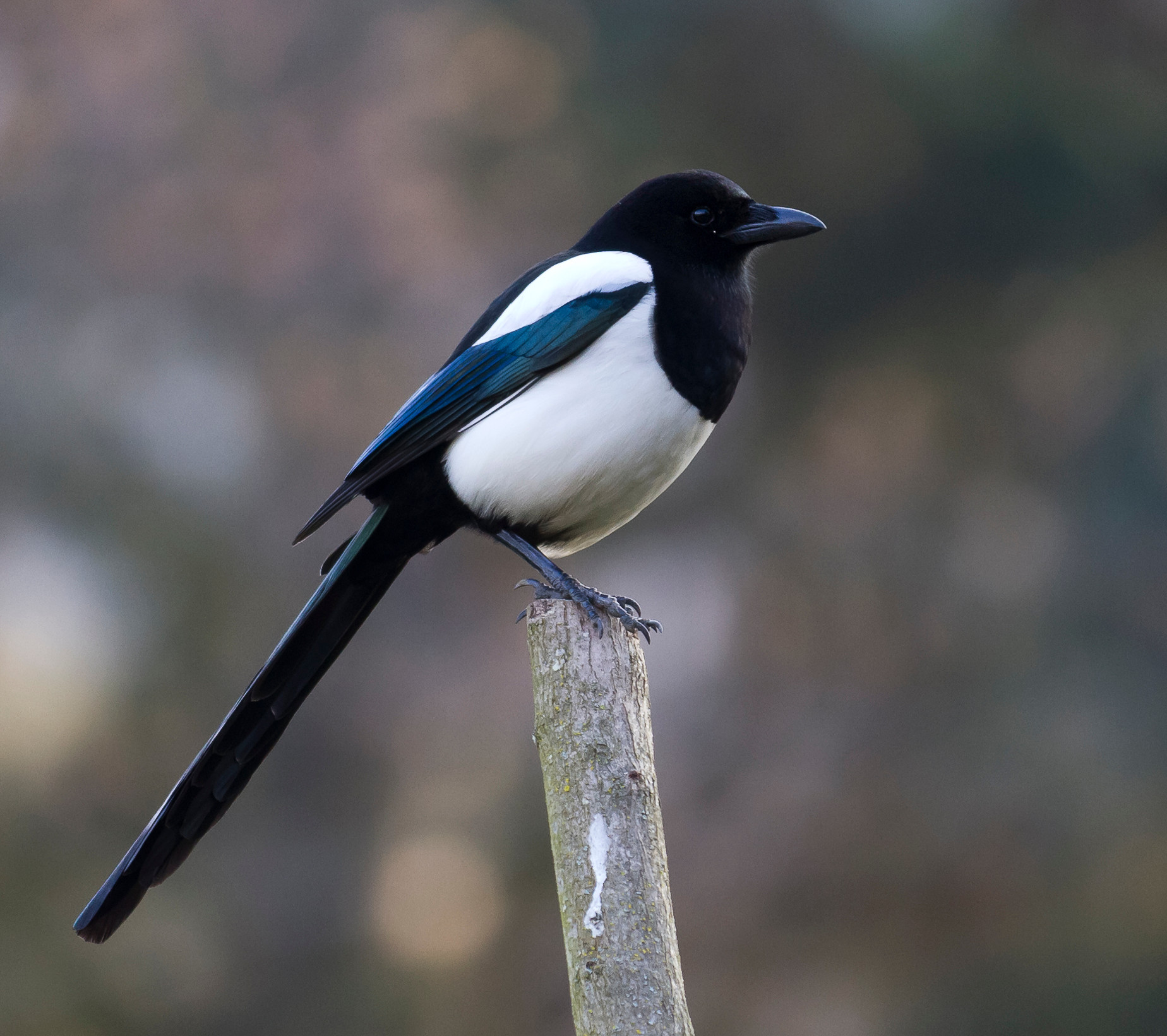
In May 2007, Frieda was planting miniature azaleas when she heard a shrill cry from a baby magpie who had lost his nest in a storm. Next to her feet, she spied a helpless baby bird whose beak held fly eggs and who “looked torn in places, like a bloodied rag.” Beside him lay his two dead siblings. Instinctively, Frieda knew she had to save the bird. Since childhood she had been drawn to “the wounded and the limping” and “wanted to save everything and couldn’t.” She fed the magpie a worm, covered him with her T-shirt, and determined if he survived, she would name him George.
The magpie’s makeshift accommodation was a pink salad bowl, lined with her T-shirt, that she placed in her dogs’ carrier where he let out blood-curdling shrieks to signify his ever-ravenous hunger.He reminded her of a life-size childhood doll who drank from a bottle of water that led it to pee. As the present was not a coveted train set, Frieda dismembered it she had buried in in her Devon backyard. Years after, someone was digging in a flowerbed and screamed as they held a life-sized hand. Her dogs, Widget, Mouse, and Snickers, grew to accept their feathered sibling. George was the child Frieda never had, and he became her “little feathered magnet.” The attachment was mutual: her shoulder became the tree on which he stood for hours. Unlike her previous social life in London, her days consisted of digging for worms; when she had de-wormed her garden, she fed him minced meat. One of her unsavory tasks was picking up projectile poop. Another task was to magpie-proof her house: she never left out keys as they proved an irresistible lure. Another temptation was the plug from the kitchen sink that kept ending up in the front lawn.
Just as new mothers are thrilled when their toddlers take their first steps, Frieda was elated when hers flew for the first time. Another milestone was George’s first bath; she wrapped him in a hand towel until he stopped shivering. A born thief-his favor booty was red rubber bands-Frieda took to eating meals at the same time George ate his lunch so he did not swipe food from her plate. He sipped milk from his very own glass. Frieda learned to make sure the milk was always topped off; once she had let the liquid run low and George stuck his head in the glass so far she thought bird and glass would be forever welded together. However, she could not make her dogs’ food bowls a George-free zone.
Shadowing Frida’s joy was the specter that one day George would literally-and figuratively-fly away. The premonition was especially strong when George sat by the window. In her book, George: A Magpie’s Memoir, (2023)-filled with her illustrations- that bore the Dedication: To George and his children. She wrote of her mixed emotions of the day George first ventured forth. Leaving his nest filled her with unbearable anxiety; inside he was an overwhelming presence, outside he appeared small and scarred. The frantic surrogate mother kept telling herself, “Let him go; he’s only a bird” but he had become so much more. Elated at his return, “I had no idea how much I was going to fall in love with that bird.”
In contrast, not everyone was in Camp George. Annoyed when George dropped by-he viewed head as makeshift nests- a neighbor told Frieda she would open a bottle of wine when George was gone for good. Fearful of her head serving as a perch, she took to wearing a hat. Another who did not care for George was Frieda’s cleaning lady, Mary. A preferred pastime was landing on her foot and pecking it with ferocity. In the belief that dealing with a crazed magpie was not part of her job description, Mary headed for her car. When George followed and planted himself on her windshield wipers, Mary’s expressed her feeling she was in a mini-magpie horror flick.
Another one who felt life sans George would be better was László who felt it was emasculating to play second-fiddle to a magpie. A further blow to his pride was Frieda’s column in The Times made her the breadwinner, and her paintings-unlike his-garnered sales. In addition to her disintegrating marriage, in her memoir she referred to Lászlo as “The Ex,” she was grappling with chronic fatigue and agonizing back pain, (the result of a car accident.) Another heartbreak awaited. In an echo of her youth, Nicholas, who had earned a doctorate and was working as a fish biologist in Alaska, hung himself. Her brother’s suicide left her the sole survivor of her nuclear family; Ted had passed away from cancer when she was thirty.
The baby magpie proved a spirit-saving diversion; Frieda was amused over his playful antics such as cavorting with her dogs. László was not similarly amused. In contrast, when Frida’s friends paid a visit, they were intrigued at the unusual pet and took dozens of photographs of George sitting on Frida’s head, of nibbling at her eyelashes. As her attachment for George grew, so did her apprehension when she foresaw him one day flying off to the wild, leaving her an empty nester. Her fear factor was on high alert. What if a farmer shot him for sport, for the magpie’s superstitious associations? After all, a group of magpies are called mischief. She also feared a scenario chronicled by Jewish-Polish writer Jerzy KosiÅ„sky. In his 1965 novel, The Painted Bird, the protagonist struggled to survive in World War II Europe. The title derived a scene where a man painted a bird before setting it free. Members of his flock, fearful of its unfamiliar colors, tore it apart. However, Frida understood he needed the sky as his playground. Even a paradise could be a prison. The old nursery rhyme about how a magpie serves as an omen of good or bad fortune permeated the Hughes’s home, “One for sorrow, two for mirth.” Because of George, because of Ted and Sylvia, Freida experienced the emotions on both ends of the spectrum.
The third time George took off did not prove the proverbial charm as it left Frieda incapacitated with grief. In denial, for days she left him food and milk, and called out to the skies to beckon him home. Every time she went out, she filled her pockets with his favorite doggy snack, HiLife nibbles. The window remained open until winter arrived, until reality set in. George’s Houdini act left a magpie-sized hole in Frieda’s soul. In her memoir she the memory of her magpie played itself like the pages of a scrapbook and how she missed their tug of war as he tried to untie her shoelaces, his face at the kitchen window begging to be let in, his head bobbing up and down as he contemplated his next prank. Her waking fantasy was to find George had come home. However, he had found another-the one he was born into. She wept her loss.
In one of the most heart-rendering passages, Frieda wrote that one evening, as she sat at her kitchen table, she heard a glass shattering. The day before she had washed Geoge’s milk glass; unable to accept her magpie was gone for good, she had refrained from placing it back in her cupboard. However, for some reason, the glass had shattered, “It seemed to be a sign that George wouldn’t need it anymore.”
When a Towel of Babel communication barrier arose between László, he became The ex The-Ex qho left for the Land Down Under, leaving Frieda with her three canine companions. Desperate for another pet, cats were not an option: she had taken in thirteen kittens until she realized that “they killed things” she took in Shirley, a snake, Socks, a ferret, Samson and Delilah, ducklings, and six chinchillas. But her heart lay with birds and the first to move in was Oscar, a crow, followed by Wyddfa, an owl. Fourteen more owls that made Frieda the Wales’s version of the “crazy cat lady.” The poem by American Emily Dickinson relates to her fellow British poet, “Hope is the thing with feathers/That perches in the soul.”

To pre-order my newest book, The World's Wealthiest Women: Fascinating Biographies of Heiresses, Royals, Entrepreneurs, and Entertainers, please click one of the links below.
- Amazon.com: amazon.com
- IndiePubs: indiepubs.com
- Bookshop: bookshop.org
- Amazon.co.uk
- Amazon.ca
- B&N: b&n.com
- Chapters Indigo (CA): indigo.com
- Books That Save Lives