The Big Brown Bag (1922)
“Real style comes from within.” –Betsy Bloomingdale
The Bloomingdale brothers might have christened their store after their surname because of the positive connotation of the word “bloom.” The adjective also applied to queen bee Betsy Bloomingdale who did not wilt even when a treacherous thorn protruded.
In the 1970s, at the April in Paris Ball, after an introduction to Andy Warhol, Betsy exclaimed, “I didn’t really think there was an Andy Warhol!” to which he replied, “I didn’t really think there was a Betsy Bloomingdale.” Betsy not only existed–she was larger-than-life.
An only child, Betty Lee (Betsy) was born in Beverly Hills to Australian émigré parents, Vera and Dr. Russell Lee Newling, a Harvard-educated orthodontist. Due to Dr. Newling’s prominence, Betsy moved amongst the firmament of Hollywood stars such as Merle Oberon, Cary Grant, and James Stewart. She attended the exclusive Marlborough School in Hancock Park in Los Angeles and Bennett College in Millbrook, New York. After graduation, Betsy was a bridesmaid at Gloria Vanderbilt’s wedding to Pat di Cicco, a Hollywood agent and alleged mobster. Her aspiration was to marry a doctor.
Instead of a physician, Betsy landed one of America’s biggest fish: Alfred Bloomingdale, who had arrived on the West Coast to produce movies. Hell-bent handsome, Alfred had also inherited a fortune as the grandson of a founder of Bloomingdale’s-Bloomie to its fans. If his coffers were not overflowing enough, in 1950, he came up with Dine and Sign, one of the first credit card companies. A year later, his business merged with the Diners Club in which he served as chairman. The Bloomingdales’ 1946 marriage conferred on Betsy an alliterative name, a fabulous fortune, and a niche in high society. She also carried clout with her husband who claimed his wife had converted him “from a Jewish Democrat to a Catholic Republican.” They had children Geoffrey, the owner of an exotic fruit ranch, Lisa Bell, an artist, and Robert, a film producer, who gave them eight grandchildren. Neighbors throughout the years were Barbara Stanwyck, Jack Benny, Bing Crosby, Frank Sinatra, Michael Jackson, and Barbra Streisand. As America’s aristocracy, the Bloomingdales were known as “Queen Bette” and “King Alfred.”
The couple’s Holmby Hills estate, situated near Sunset Boulevard, included an outdoor atrium living room, a swimming pool, and a garden of cypress trees. Their entrance courtyard had a nineteenth century sundial that carried the inscription, “Let others tell of storms and showers-I’ll only count your sunny hours.” 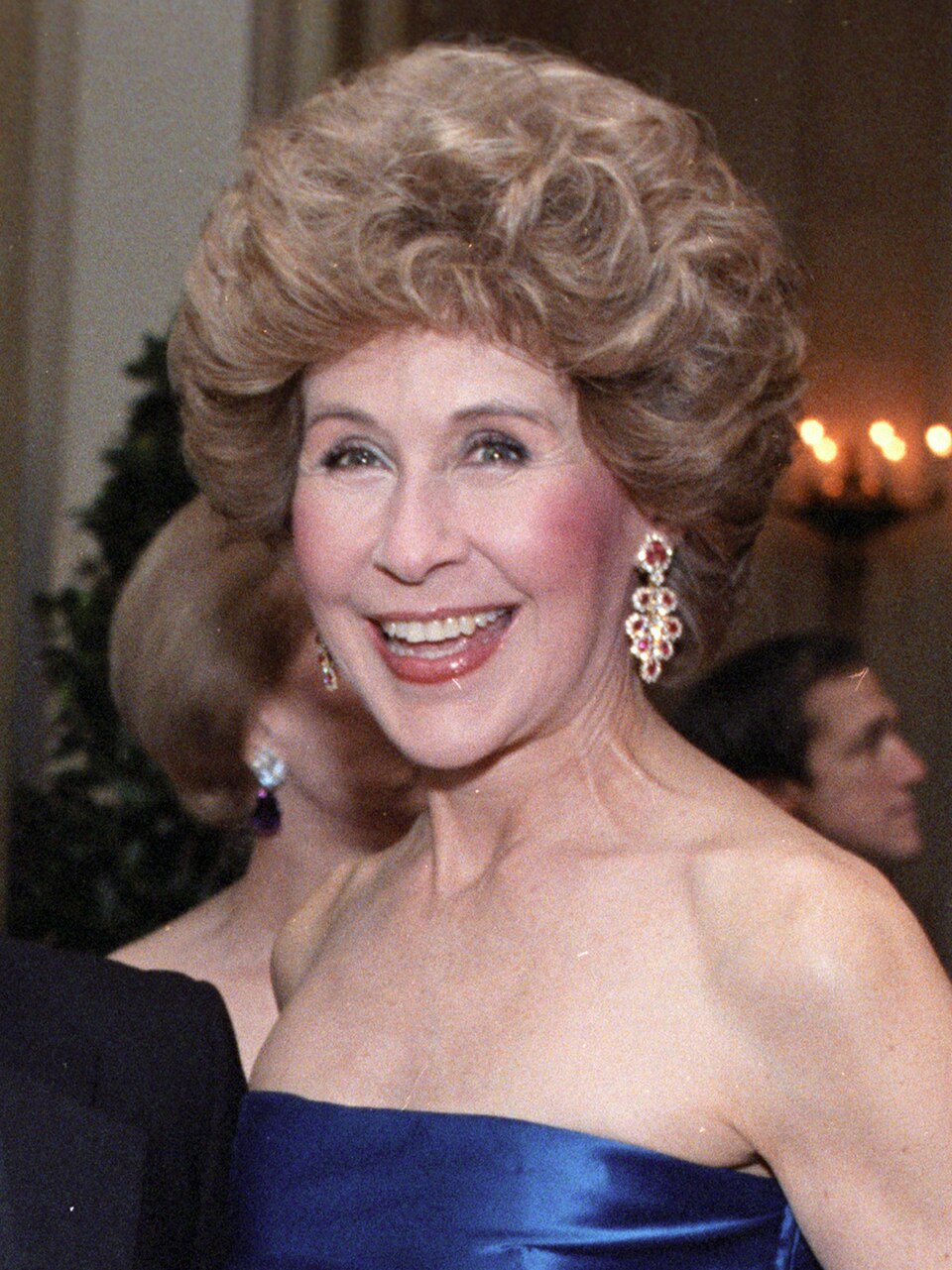
Not only did Alfred provide a carte blanche at Bloomingdales, he also encouraged Betsy to visit Parisian fashion houses Chanel, Dior, and Givenchy where she shelled out $20,000 for haute couture gowns. The women from Betsy’s old Beverly Hills zip code rued they had not snared Alfred Schiffer Bloomingdale.
In 1964, Betsy Bloomingdale’s name was on Vanity Fair’s International Best-Dressed List; fortunately, the Holmby Hills home had eleven closets to hold her fabulous finery. Betsy kept meticulous notes as to when she had worn each gown and with which earrings, bags, and hosiery, so as not to repeat a look. Betsy donated sixty of her outfits to the Fashion Institute of Design & Merchandising. For inspiration, she kept a journal of the menus and furnishings of the Rothschilds and of Princess Ghislaine de Polignac.
For five decades, Betsy travelled extensively that led to the 1966 Women’s Wear Daily column that gushed, “Betsy Bloomingdale’s black-and-white tweed luggage never seems to cool off. She’s always off to New York, Honolulu, Europe…” She jet-setted with the Kissingers, the Cronkites, and Malcolm Forbes on Rupert Murdoch’s yacht, moored in Morocco. Other travel companions included Elizabeth Taylor, Princess Caroline, Ivana Trump, Kirk Douglass, and Karl Lagerfeld. The hostess with the mostest threw dinner parties with glitterati guests Prince Rupert Lowenstein, Joan Collins, Merv Griffin, Katherine Ross, Walter and Lee Annenberg. Betsy recorded seating arrangements, menus, wines, and flowers to prevent a déjà vu dinner. As presentation was a pressing concern, centerpieces of dahlias and zinnias came from the Bloomingdale garden. When taking coffee and cordials, the dinner party retired to the dining room that held white orchids in Chinese vases displayed upon the baby grand piano. To share entertaining tips, in 1994, the arbiter of “the best of everything” collaborated on the publication of Entertaining with Betsy Bloomingdale: A Collection of Culinary Tips and Treasures from the World’s Best Hosts and Hostesses. Along with recipes, Betsy philosophized, “It’s not what you put on the table, it’s what you put in the chairs.” Of the art of entertaining, she wrote, “Giving a party or hosting a dinner is in many ways like a performance. You are the producer, director, stage manager and finally the actor.” There were also chapters dedicated to theme parties such as one that centered on the dance craze, The Twist.
While the 1968 film Guess Who’s Coming for Dinner? revolved around a daughter bringing her black boyfriend to meet her parents, the Bloomingdales’ 1980s dinners centered on entertaining the powerful. Alfred had been one of the “kitchen cabinet,” a group of wealthy Californian businessmen who had helped propel Ronald Reagan to the White House. Their impeccably turned-out wives, known as The Group, had befriended Nancy Reagan. Each summer the two power couples drove to the Reagan ranch in Santa Ynez mountains north of Los Angeles to help Nancy celebrate/endure another birthday. The Bloomingdales were present in 1980 when Reagan won the White House and joined in the triumphant drive to a victory party at the Century Plaza Hotel in Los Angeles’ Century City. During the Inauguration, the Bloomingdales enjoyed ringside seats. When the Reagans left Washington, D. C. to attend a Bloomingdale dinner, Betsy laid out the red carpet. As word leaked of the special guests, neighbors lined the street and waved American flags. The whirring of helicopters signaled the Reagans arrival. The considerate hostess served refreshments to thirty Secret Service men. The doctor’s daughter said, “I’d never be blasé about the president coming for dinner.” In turn, the Bloomingdales were regular guests at the White House. As Betsy and Nancy were always celery thin, it is highly unlikely they indulged in the President’s jellybean jar. The women shared such a strong bond the press dubbed Mrs. Bloomingdale: The First Friend. Both held black belts in shopping and subscribed to the Duchess of Winsor’s observation, “You can never be too rich or too thin.” Together, they flew to the wedding of Prince Charles and Lady Diana Spencer. To facilitate their friendships, the Bloomingdales stayed in an apartment at the Watergate complex in Washington, D.C. In her husband’s final days, when Reagan battled Alzheimer’s disease, Nancy leaned on her first friend more than ever. After the presidential funeral, Betsy remarked of the grief-stricken Nancy, “Like any widow, she adjusted. But Nancy missed Ronnie terribly and always.” A staunch philanthropist, Betsy fundraised for the Ronald Reagan Presidential Library. Betsy’s last public appearance was at Nancy’s funeral on the library’s grounds where her burial plot was beside Ronald’s. At age ninety-three, Betsy attended in a wheelchair in the front row, impeccably attired in a black pants suit, one of the few remaining members of the Reagan’s inner circle.
While fashion was one of Betsy’s claims to fame, it also paved the way to scandal. In the 1970s, a custom official caught Mrs. Bloomingdale bringing two Dior garments from France into the States. Upon inspection, it became apparent she had altered the price for the garments to make them appear less expensive. The following year, Betsy pleaded guilty to one count of tampering with an invoice. The result was a hefty fine, and mud on her face. However, what Alfred was doing in his spare time made her offense amateur hour.
As Betsy was aghast at a wrinkle in a tablecloth, one can only imagine her consternation when she discovered her husband’s double life. Although Betsy had been able to convert Alfred from a Jewish Democrat to a Catholic Republican, she had not been able to convert him to vanilla sex. Alfred had met seventeen-year-old Vicki Morgan in 1970 when she worked as an usher at Grauman’s Chinese Theater in Hollywood. He had wooed her with the promise that he would make her a movie star. Although he did not put her on the silver screen, he paid her $18,000 a month for services. She was married with a son who she had conceived out-of-wedlock. He saw her through her divorce and two other weddings and sheddings when the trio of husbands proved problematic. While Alfred was hospitalized with cancer, Betsy, now in charge of finances, discovered Vicky’s existence and terminated payments. After Alfred’s 1982 death, Betsy also adjusted.
The widow was horrified when her name appeared in the papers–and not for spearheading a charitable event or attending a society soiree. Headlines trumpeted, “Bloomie was a sex monster!” While typically the wife cites the other woman, in the Bloomingdale sordid saga the other woman was the one pointing the finger. Palimony super star attorney represented Vicki in her $10 million suit that claimed her lover had promised her lifetime support and a house for services rendered. She claimed Alfred had considered her his “other wife,” and that she had accompanied him on overseas trips. The suit argued Miss Morgan had been Alfred’s “confidante companion, and therapist who helped him get over his Marquis de Sade complex.” There is no mention how Betsy described Vicki. The inscription on the sundial, “storms and showers” had arrived.
Just as it seemed the fallout could not get worse–it did. The deposition brought lurid details of Vicki’s sadomasochistic relationship with her thirty-seven year-older married lover. Some of the tantalizing tidbits was that Alfred had a “Jekyll and Hyde” personality, and Vicki testified she had watched as women stripped, let Alfred bind them with neckties, and rode on their backs as he beat them. Marvin Mitchelson, the celebrity divorce lawyer who filed Morgan’s palimony suit, recalled of his client, “She said she knew political and sexual secrets about this Administration that would make Watergate look like a play school.” The trial proved so sensational that White House aide Morgan Mason asked Mitchelson to tone it down in respect for the widowed Bloomingdale. Vicki’s court confession also embarrassed the White House when she said pillow talk with Alfred included details of campaign contributions for his buddy, Ronnie. Other tidbits that outed: Vicki had also had affairs with actor Cary Grant, Morocco’s King Hassad-who showered her with jewels and an exiled Saudi princess. Time magazine reported that fifteen years earlier, Alfred had doled out $5,000 in blackmail because of his habit of beating up prostitutes. Despite his record, President Reagan appointed him to the Foreign Intelligence Advisory Board. Shortly afterwards, Alfred had become ill.
Betsy contended that the other woman had used sex as a credit card and was thus not entitled to further payment as her services were no longer relevant. Los Angeles Superior Court Judge Christian Markey dismissed most of Vicki’s suit claiming that her relationship with Bloomingdale was “no more than that of a wealthy, older, married paramour and young, well-paid mistress…and was…explicitly founded on paid sexual services.” Ms. Morgan, painted claws still pointing, filed another $1 million suit citing contracts Alfred had signed in which he had promised her half his interest in Show-Biz Pizza franchises.
If the salacious story had not served enough blood to the paparazzi, further revelations reared. Vicki had ended up in rehab where she met Marvin Pancoast, a mentally disturbed, homosexual, cocaine addict with whom she shared an apartment after they checked out of their facility. As Vicki slept, he bludgeoned her to death with a baseball bat. He said his motive was her narcissism, shallowness, and an argument over finances. Marvin said of his victim, “Vicki was special. She had this quality. You just couldn’t get enough of her.” A jury awarded Vicky’s estate $200,000 that went into a trust for her fifteen-year-old son who had been visiting his grandmother at the time of his mother’s murder. Mitchelson said, “She took a lot of secrets to her grave” in reference to his client’s claim that she had procured “entertainment” for high-placed government officials. At the time of her death, Vicki was allegedly negotiating a TV docudrama and a film.
Another torturous twist in the society soap opera occurred during Marvin’s trial when he recounted his confession. His attorney, Arthur Barens, charged that “persons unknown” had committed the murder to suppress videos of Vicki engaging in sex with Alfred and several prominent government officials.
Dominick Dunne based his 1990 roman à clef, An Inconvenient Woman, on the affair, a cautionary tale of the excessively privileged. The White House residents no doubt turned green at their ties to the tabloid tales of kink, greed, and murder.
Betsy Bloomingdale weathered the fallout through attending Mass every morning. She reigned as the doyenne of high society until her death at age ninety-three from a heart condition. Her final hours were in her beloved Holmby Hills estate; its proximity to Sunset Boulevard proved an apt connection as Betsy’s passing marked the demise of the country’s Grande Dame. Though the media had feted the supreme hostess for years, perhaps the greatest compliment appeared in a column in Town & Country that Queen Bette embodied Rudyard Kipling’s ideal, though the pronoun was paraphrased, “Though she walked with kings, she has never lost the common touch.”
While Tiffany’s is associated with blue bags, Bloomingdale’s, though a more subdued color, are similarly iconic. Celebrities who have clutched the bag include Jacqueline Kennedy Onassis, Diane von Furstenberg, Sarah Jessica Parker, Calvin Klein, and Andy Warhol. The classic has made cameos in Friends and Gossip Girl and has appeared in the likeness of a cake, a Limogenes porcelain box, and a diamond pendant. The store has used the image on a pickleball paddle, a Ralph Lauren sweatshirt, and chocolate boxes.
The Bloomingdale totes come in three sizes: the Little Brown Bag for jewelry, the Medium Brown Bag for clothes, and the bag that would be best to hold Betsy Bloomingdale’s biography: the Big Brown Bag.

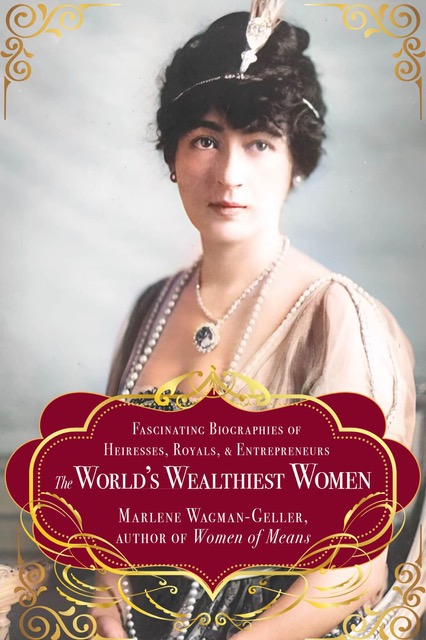
To pre-order my newest book, The World's Wealthiest Women: Fascinating Biographies of Heiresses, Royals, Entrepreneurs, and Entertainers, please click one of the links below.
- Amazon.com: amazon.com
- IndiePubs: indiepubs.com
- Bookshop: bookshop.org
- Amazon.co.uk
- Amazon.ca
- B&N: b&n.com
- Chapters Indigo (CA): indigo.com
- Books That Save Lives