Shambala (1930)
“To Melanie Griffith, and to every single one of my beloved animals, past, present, and future.” Tippi Hedren, from her memoir, Tippi
A branch of Hollywood royalty is the three generations of actresses: grandmother, Tippi Hedren, daughter, Melanie Griffith, and granddaughter, Dakota Johnson. The girl next door was never a term to describe the trio: after all, who has lions for household pets?
The woman who took on the king of the jungle and the king of Hollywood had a life as unique as her name. Natalie Kay was born in Lafayette, (population 200) Minnesota, the daughter of Swedish Lutheran parents Bernard and Dorothea Hedren, younger sister of Patricia Louise. Her father’s term of endearment for his daughter was “Tupsa-” Swedish for “little girl” that morphed into Tippi. During the Great Depression, they did not have a car or indoor plumbing. Bernard lost his general store, and the family relocated to a Minneapolis suburb where Dorothea worked in a department store. A painful childhood episode occurred at age five when Tippi put on a recital of “When the Moon Comes Over the Mountain.” Rather than thunderous applause, her parents’ guests roared with laughter. Tippi fled.
While her friends aspired to be wives and mothers, Tippi’s wish-upon-a-star was to become a figure skater, and she practiced on her frozen Minnesota lake. As her parents could not afford skates, Tippi watched her friends Harriet and Mary during lessons. She felt had her parents had the means, she would, like Harriet and Mary, have performed in the Ice Follies. Another disappointment concerned her first love, Richard McFarland; his pillar of the community parents ended his relationship with the girl from the wrong side of the Midwestern tracks.
At age fifteen, the blonde and beautiful student stepped off a streetcar. Model scout Ella Jane Knott handed her a card and requested she come to Donaldson’s department store to participate in a fashion show. For the first time, Tippi experienced “spending money” and she splurged on cashmere sweaters. When Bernard’s declining health necessitated a move to sunny Southern California, Tippi was devastated. Her only consolation was she could bring along Peter, her adored cat. As Tippi had been beside herself when terrier mix, Corky, had died from distemper because her parents could not afford the vet bill, they knew Peter had to be part of the move. For her first day at Huntington Park High, the teen wore her favorite cashmere sweater, plaid-pleated skirt, white bobby socks, and penny loafers. She stood out like the proverbial sore thumb as the other girls appeared in dresses that showed cleavage, stiletto heels, and sky-high hair. Consolation arrived when the people she had worked with in Minnesota referred her to agencies in Los Angeles. Desperate to become a top model, Tippi called New York’s legendary Ford Modelling Agency where its owner, Eileen Ford, agreed to an interview her at the Barbizon Hotel for Women. The firm paid her $350 a week ($ 3,500 in contemporary currency.) In 1952, Tippi graced the cover of Life magazine under the caption: “Too Much Jewelry?” .jpg)
Modelling segued to a small acting role in The Aldrich Family where she fell off the stage and into actor Peter Grifith’s arms. In her memoir, Tippi, she wrote, ”And just as I had with the first Peter in my life, my dear cat, I fell in love.” The twenty-one -year-old Tippi and the eighteen-year-old Peter married a year later. The newly minted wife decorated their apartment with horse related artwork and bought a red convertible. Her career flourished and she appeared on the covers of Glamour, The Saturday Evening Post, and Seventeen. With the eruption of the Korean War, Peter joined the army and headed overseas. When he was on leave in Tokyo, Tippi joined him and then left for an exploration of India, Egypt, and France. In Paris, a model introduced her to Senator John Kennedy, who was on his own as his wife, Jackie, was recovering from a broken ankle in Italy. The concierge phoned to inform her that Senator Kennedy had sent a car to pick her up. Tippie declined the invitation.
When Peter returned from Korea, they welcomed daughter Melanie. Although Tippi loved motherhood, being a wife had lost its bloom as Peter had become an alcoholic. Insecure as Tippi was the breadwinner, for affirmation Peter began seeing other women. He ended up moving in with his girlfriend, and Tippi filed for divorce. With four-year-old Melanie, their poodle, and kitten, they left for Los Angeles. With the modelling assignments drying up and as a single mother, Tippi considered taking typing classes.
On Friday, October 13th, Tippi picked up the phone and the caller asked, “Are you the girl in the Sego commercial?” The caller explained that a well-known director and his wife were interested in the girl who had made the commercial. He had called the executives at Universal Studios with the directive: “FIND THE GIRL.” When she arrived for her meeting, agent Lew Wasserman unraveled the mystery man was Alfred Hitchcock and offered her a $500 a week salary and a seven-year contract.
Another mystery: Why had the great director chosen an unknown to star in The Birds over A-listers Ingrid Bergman, Grace Kelley, Doris Day? The answer was as creepy as a Hitchcock horror movie. The sixty-something legendary director, self-conscious over his obesity, had confided to production designer, Robert Boyle, “I have all the feelings of anyone encased in an armor of fat.” He also shared he had not been sexually aroused in decades.-until Tippi. He assigned studio personnel to trail her and put out the command to any amorous swains: “Do not touch The Girl!” During production, when Hitchcock’s Rolls Royce arrived at her hotel, he lunged. Rebuffed, Hitch (his nickname) did a switcheroo. The script for The Birds entailed Tippi’s character enduring a brutal attack for which the studio would supply mechanical birds. Bird handlers- in protective gear-arrived with the real thing: seagulls, crows, and pigeons who left the actress bleeding, covered in bird droppings, and in a state of shock.
During Marnie, Hitchcock continued his sexual barrage, and she continued to fend off his unwelcome overtures. Tippi approached Hitchcock’s wife, “Alma, you could stop it. You’re the only one who could.” Alma walked away. The man scorned wreaked another vengeance: he kept Tippi under contract but offered her no further roles. Forever afterwards, Hitchcock only referred to his former star as “The Girl.” To his adoring fans he was Hitch; to Tippi, he was the second half of his surname.
Post Universal Studios, Tippi’s experienced her coup de foudre, and, as he weighed half a ton, he was a lot to love. In 1969, Tippi and her second husband Noel Marshall, were in Zimbabwe where she starred in Satan’s Harvest. She fell for her costar: a lion named Dandylion. After visiting the Gorongosa reserve in Mozambique, Noel and Tippi decided to make a movie that starred the king of the jungle. Although Tippi had no directing experience that did not deter her as she had become a leading lady with no acting credentials. She also figured as she had survived attacks by vicious birds, she could handle big cats. Since Noel had been produced The Exorcist, he planned on using his demon-bred money for financing.
Rather than a documentary in the vein of National Geographical, Tippi wanted to make a plea for wildlife conservation that would counteract animals incorporated as furs, rugs, and wall trophies, a trend that enriched poachers. The Marshalls’ task was to train fifty hirsute actors without the use of whips and chains. In his Soledad Canyon, California preserve, trainer Ron Oxley introduced them to African-born Neil, a nine-foot, 500-pound lion. Several times a week, Ron brought Neil to their Sherman Oaks, residence where he had the run of the house except for the room where they regulated dog and cat, Partner and Puss. Neil communicated thirst by standing at the kitchen sink, and hunger by standing at the fridge. Because of their home’s seclusion, there were no nosy neighbors- until Neil roared. An alarmed Mrs. Marshall phoned, and Tippi reassured her that the sound was a revving motorcycle. The news of the unique residence outed after Life Magazine took a series of a variation of a Norman Rockwell painting: Neil sleeping with Melainie, holding Melanie’s head down as she exited the swimming pool, eyeballing the maid, Emily Henderson, as she cleaned the kitchen. When Neil jumped on the dining table to devour a chicken dinner, the table broke and Wedgwood dishes, glass, and cutlery went flying. The journalists -not keep on being on Neil’s menu- beat a hasty retreat. The couple rehomed lions, one of which was Casey who escaped during rush hour traffic. Thankful for Hitchcock’s acting lessons, Tippi pretended to be injured as cubs are drawn to the weak. When animal control officers informed her that it was illegal to keep lions within the city limit, Tippy relinquished her five cubs and Neil. Noel bought Soledad Canyon and designed it to resemble an East African landscape. Their animals grew to include twenty-five lions. Joining the menagerie was Timbo, a ten-thousand-pound elephant, and a leopard, Cleopatra. Italian legend Sophia Loren visited the enclave and took a photograph with Tippy and Timbo.
At this juncture, Tippi began to work in the film, The Harrad Experiment, co-starring Don Johnson. Fifteen-year-old Melanie joined the crew as an extra and moved in with Don. Three years later, they eloped to Las Vegas, only to annul their marriage a few months later. They ultimately remarried and had daughter Dakota. Although Tippi waxed eloquent over her granddaughter’s acting skills, she never watched 50 Shades of Grey. Her grandchildren call her “Mormor,” Swedish for grandmother.
In 1981, after six years of filming, at a cost of $17 million, Roar was ready for release. While audiences were cognizant that the young Suraj Sharma was never near a real uncaged tiger while shooting Life of Pi, the same did not apply to Roar. The movie opened with a title card that stated, “No animal was harmed in the course of its production.” What it omitted to mention was the cast did not did fare as well. There were so many accidents that the movie seemed like a remake of The Birds-except with wildcats: Tippi broker her leg, Melanie needed facial reconstructive surgery, Noel contracted gangrene, and cinematographer Jan de Bont underwent 200 stitches on his scalp. Seventy members of the cast and crew could have sported t-shirts: I Survived Roar. Despite the bloodshed, the message is that animals are only dangerous when they are subjected to savagery. In every scene Tippi’s love of her animals comes through-an emotion that did not require acting. A year later, no exorcism could salvage the Marshall marriage, and on Tippi’s January 19th birthday they divorced.
In 1983, Tippi established the non-profit Roar Foundation dedicated “to exotic felines.” Her tigon, Noelle, served as its mascot. She also fell in love with Luis Barrenechea who became husband number three. The problem was she had married a “used to be drinker;” after eight years, he fell off the wagon and Dr. Jekyll transformed to Mr. Hyde. Following their divorce, Tippi focused on her “True North-” her animals. Her bed partners were her cats she christened after her co-stars: Rod Taylor, Sean Connery, Marlon Brando, Antonio Banderas, and Melanie Griffith. Another was her potbellied pig, Winston Churchill.
Tippi directed her energies to animal activism and lobbied for the government to make the sale of dangerous animals illegal; she did not want others to fall into her erstwhile dangerous footsteps. She co-authored a bill, the Big Cat Public Safety Protection Act, aimed to curtail the practice. She also became engaged to veterinarian Dr. Marty Dinnes who gifted her a gargantuan engagement ring. At that juncture, Tippi worked on legislation to make it illegal to declaw cats. What hampered domestic tranquility: Marty was in favor of the procedure and had declawed countless wild cats. The dealbreaker occurred after Marty wrote an eleven-page letter to Washington advocating his perspective-an action he hid from his wife. The engagement ended, and Tippi acquiesced when Marty demanded the return of the whopper-sized diamond ring. He mentioned he was boarding a kangaroo and walked out of her life.
In her memoir Tippi wrote that for a small-town girl from Minnesota whose only dream had been to be a figure skater, she had led a remarkable life. Currently in her nineties, Tippi lives on her 40-acre home from whose wall-to-wall windows she watches tiger Mona, and the two tigers-Thriller and Sabu-who came from Michael Jackson’s Neverland Ranch. (She said he never called to check up on them or pay for their upkeep.) In the nights, her childhood rendition of “When the Moon Comes Over the Mountain” holds true. Her friend, Elaine Newman, suggested the name of the sanctuary-Sanskrit for “a meeting place of peace and harmony for all beings, animal and human:” Shambala
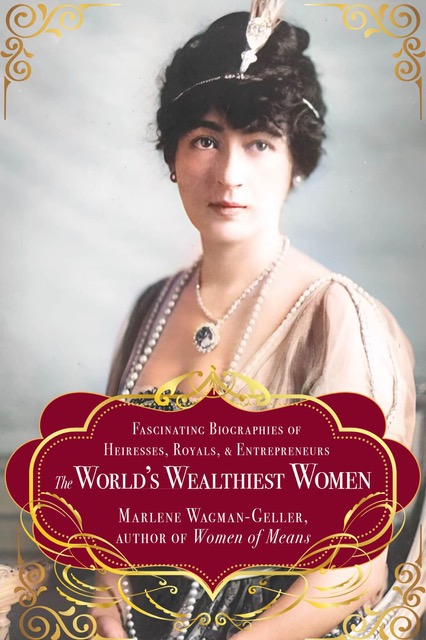
To pre-order my newest book, The World's Wealthiest Women: Fascinating Biographies of Heiresses, Royals, Entrepreneurs, and Entertainers, please click one of the links below.
- Amazon.com: amazon.com
- IndiePubs: indiepubs.com
- Bookshop: bookshop.org
- Amazon.co.uk
- Amazon.ca
- B&N: b&n.com
- Chapters Indigo (CA): indigo.com
- Books That Save Lives