France's B. B. Gun
“I gave my beauty and my youth to men, and now I am giving my wisdom and experience, the best of me, to animals.” ~Brigitte Bardot
Cinema’s sex kitten (more of a panther) turned kitten lover-and all other felines as well-when Brigitte Bardot turned her back on the camera. While her breakthrough role was And God Created Women, (in which she emerged from the Mediterranean wearing a soaking white dress,) her second great act was to campaign on behalf of God- created animals.
The blonde bombshell Brigitte personified her country: In 1970, artist Aslan immortalized her as Marianne, the symbol of the French republic. In a television special, she appeared wearing thigh-high boots, holding the Tricolor flag, to the accompaniment of the Marseillaise. Marianne was a classical goddess, beautiful and bare breasted, who epitomized the Revolution’s ideals of liberty, equality, and fraternity. Later in life, these were the aspirations Brigitte demanded for animals. 
Known as B. B. (pronounced bébé,) Brigitte was the eldest of two daughters of Anne-Marie, a former actress and dancer who owned a dress shop, and Louis Bardot, an industrialist engineer. She was born into a world of privilege: The Bardot residence was a nine-bedroom apartment on Rue de la Pompe, “the heart of bourgeois Paris,” in proximity to the Eiffel Tower. The family vacationed in her grandparent’s chalet-imported from Norway-in a town near Versailles.
Despite the affluence, Brigitte’s strict Roman Catholic parents were emotionally distant, and left daughters Brigitte and Marie Jeanne in the care of governesses. When the sisters broke a valuable vase, their father whipped them. Her wire-rimmed glasses and braces left Bridgitte self-conscious over her looks. In an interview for British journalist Peter Evans she remarked, “I knew I was ugly as a child. I said to myself: ‘Well, I am ugly, so I must at least be bright and funny and have other things to compensate. I knew I wanted the world to know about Brigitte Bardot.’” She received her wish; her last name became as famous as Marilyn Monroe’s first.
After years of training in classical ballet, the prestigious Conservatoire de Paris accepted the thirteen-year-old Brigitte as a student. Having transformed into a teenaged swan, after dancing while wearing clothes from her mother’s shop, at age fifteen she landed on the 1950 cover of Elle magazine. With her trademark tousled bun, cat eye liner, and pouty lips, her sex appeal left viewers immersed in thoughts of horizontal positions. A teenaged John Lennon placed her poster on his bedroom wall.
Through her Elle cover, Roger Vadim, a Paris Match photographer, located the living Lolita. Smitten, the sixteen-year-old model attempted suicide to blackmail her parents into giving consent to their marriage. They did not, and when she was eighteen, they tied the knot. Her husband doubled as her Svengali who publicized their nuptials in a ten-page spread in Paris Match. He enrolled her in acting classes, convinced her to become a blonde, and heralded his wife as “sex on legs.” The newlywed’s home was a miniscule two-room apartment owned by her father. The bride and groom slept on a mattress on the floor and acquired furniture from secondhand stores and flea markets. To keep his wife company while he was at Paris-Match, Roger gifted his wife a black cocker Spaniel she named Clown. She also had an extensive collection of stuffed animals.
After transitioning from photographer to director, his wife doubled as his cinematic leading lady. Roger capitalized on her sex-kitten persona in the Girl in the Bikini that popularized the two-piece swimsuit. His 1956 Et Dieu… créa la femme, And God Created Women (the tagline for its American release was, “But the Devil invented Brigitte Bardot.”) The movie’s raw sexuality outraged not only her parents, but her Catholic, conservative country. Of the international outrage, Roger stated, “I wanted to show a normal young girl whose only difference was that she behaved in the way a boy might, without any sense of guilt or a moral or sexual level.” With their newfound wealth, the couple purchased a terraced, top-floor duplex near the Trocadéro, in proximity to her childhood home. A wall held the star’s portrait by Charles Kiffer who had made iconic paintings of Édith Piaf, and Josephine Baker. Bardolatrie swept both sides of the Atlantic and legions of women copied her messy hairstyle, cat-eyeliner, and off the shoulder tops. After she requested designer Rose Repetto to make shoes as light as dance slippers, the ballerina flat became a classic. Writer Simone de Beauvoir remarked, “Bardot is as important an export as Renault automobiles.” France awarded her the Légion d’ honeur as the First Lady of French cinema. Andy Warhol immortalized her in a pop art portrait; Bob Dylan wrote his first song, the never-released Song for Brigette. Nota fan of the French vamp, the Vatican pronounced her Satan incarnate.
Following the collapse of her relationship, in 1959, pregnant with actor Jacque Charrier, (her first two pregnancies ended through abortion) they wed in her grandparent’s extensive garden. In her 1996 memoir, Initiales B.B. Mémoires, she revealed her efforts to abort her baby. Despite self-harm, Nicholas, her only child, was born. Miserable as a mother, she likened her son’s existence to a “cancerous tumor.” Brigitte had no issue with relinquishing Nicholas in the divorce, “I was not made to be a mother.”
A third walk down the aisle was with millionaire playboy German industrialist Gunter Sachs who had proposed weeks after they had met by showering her home with 1,200 roses petals dropped from a helicopter. Despite the romantic gesture, the sexual free spirit had an affair with pop star Serge Gainsbourg. They released a steamy duet, replete with moans that simulated orgasm, for his song, “Je T’Aime,,,Moi Non Plus.” At her husband’s request, she requested the song to remain private. Serge obliged, but then rerecorded it with his new lover, British actress Jane Birkin, that became a hit. Donna Summer retitled the song as “Love to Love You Baby.” Serge described Birgitte, “She wears nothing other than some essence of Guerlain in her hair.” Guerlain, the cosmetic and fragrance house, used his words in a commercial.
Birgitte’s final single was “Toutes Les Bêtes Sont à Aimer” (“All Animals Are to Be Loved.) By 1960, Brigitte had obtained a divorce; her third husband was Bernard d’Ornale. Part of Berbard’s credential was he “accepts three or four animals sleeping on our big bed. If her refused, he would not be my companion.”
During her sexual odyssey, Brigitte was romantically linked with paramours ranging from Warren Beatty to Jimi Hendrix. Disguised as a chambermaid, she entered Marlon Brando’s hotel room but fled due to the room’s smell and slovenliness. Thumbing her nose at contemporary mores, Brigitte became synonymous with tight sweaters and loose sexual morals. When a journalist asked her to cite the most memorable day of her life, she purred, “It was a night.” Of her innumerable seductions, the disenchanted Brigitte remarked, “Animals, unlike men, have never betrayed me.”
The star’s Eureka moment occurred during her final film, The Edifying and Joyous Story of Colinot. During the production, she discovered one of the extras had a goat destined for the barbeque. Appalled, Brigitte bought the animal that segued to her turning from an actress to ctivist. In a 1994 interview with The New York Times, she explained she had always adored animals, “But when I was making films, I discovered that there was a difference between loving animals and fighting for them-and I didn’t have time to fight for them. So that’s why I gave up cinema. I stopped making films to look after animals.” Rather than laud her talent, Brigitte said of her cinematic career, “I started out as a lousy actress and have remained one.”
Convinced of the righteousness of her crusade, Brigitte left for St. Tropez where she owned two properties. While once she had lived for dance, film, and romance, she devoted herself to her cause de celebre. Of her newfound passion she stated. “I only live in the world of animal protection. I speak only of that. I think only of that. I am obsessed.” Animals saved Brigitte; she said if not for them she would have committed suicide. Despite relinquishing her career, she continued to be paparazzi catnip.
The retired sex kitten helped found the Brigitte Bardot Foundation, an animal protection nonprofit. To raise the requisite $500,000 start-up, she auctioned the poster of her in a bikini on the beach in St. Tropez, the red Spanish dress she wore in A Woman Like Satan, an 8.36-cara diamond from her third husband, and diamond Cartier bracelet. A high point was the bidding battle for the plaster bust of Brigitte as Marianne. Other items on the block were photographs of her with a baby seal, a fawn, and hugging two Dalmatians. She also donated La Madrague, her beachfront home in St. Tropez. Brigitte explained, “I separate myself with joy from what I have loved most because nothing has more value than the life of an animal.” At the close of the evening, the auctioneer announced he was selling his gavel as it was made of ivory and whalebone. The actress turned auctioneer: she sold the gavel that for $2,800. When the bidding ended, Birgitte shouted, “Long live the foundation! Long live the animals!” The woman of the evening also gave up meat; she said those who ate it were cannibals. Her St. Tropez closets did not hold her former zebra skin coat, and other fur jackets, as she did not believe in wearing anything that once had parents. An indulgence she held onto was champagne. Her customary toast: “To the animals.”
Upon occasion, her activism came with a collateral cost. After she made a plea to her countrymen to stop eating horse meat, she received death threats from butchers. Her battle to save animals was akin to Hercules’s hydra: for every neck he slew, seven grew back. She combated the Japanese and Norwegians for hunting whales; the Spanish for fighting bulls; the Russians for killing baby seals, the Filipinos for consuming dogs; the Chinese for poaching elephant tusks; and furriers. Frantic over the plight of the baby harp seals, hunted for their pelts, trailed by photographs, she left for Canada. A Greenpeace photograph shows her lying on the ice in Canada with a baby seal. Due to her efforts, in 1977, the French government prohibited the import of sealskin. When Italian actress Sophia Loren appeared in a fur advertisement, Brigitte remarked she was “wearing a cemetery on her back.” She threatened to move to Rusia if the French authorities allowed the euthanasia of two circus elephants suspected of having tuberculosis. Her efforts prevented the death of the pachyderms. An anti-whaling ship bore her name.
The foundation earmarked $200,000 to sterilize cemetery-dwelling feral cats. In a public letter to Choupette, designer Karl Lagerfelt’s white Persian, she urged her to make a plea to her owner to stop using furs in his fashion. A French variation of the “crazy cat lady” Brigitte kept sixty cats in her St. Tropez home who lived alongside fifteen dogs, sheep, goats, a horse, and a donkey. She explained her preference for the animal kingdom over the human one, “I do not want to be a part of the human species. As long as the animal is considered an inferior species, as long as we kill them for our own needs, leisure, and pleasure, I will not be part of this arrogant and bloodthirsty race.” Unlike other iconic beauties who desperately seek their youthful beauty, Brigitte felt to need to fight the ravages of time. She explained that her dogs did not give a whit what she looked like, unlike men. She elaborated, “Dogs don’t move out if your hair starts thinning or snarl at you if your ears protrude. Unlike human beings, they don’t judge us by our looks; they love us for who we are.” For this same reason, she despised dogs shows where humans judged breeds by their appearance. She also railed against selective breeding that led to abnormalities.
The blonde goddess reputation tarnished when the former sex kitten’s claws came out. In equal measure to her love of animals was the vitriol she spread against Muslims. Her ire stemmed their ritual slaughter of sheep during the Muslim festival of Eid-al-Kabir. She was also not a fan of immigrants, kosher butchers, and homosexuals. Nevertheless, her loyal fan continued to be bewitched by Bardot.
At age ninety-one, Brigitte passed away in her home, La Madrague, in St. Tropez. Her final words were an endearment to Bernard, “piou, piou.” Residents of her Riviera community laid floral tributes outside her villa. In William Shakespeare’s play, Prince Hamlet of Denmark stated of his deceased father, “He was a man, take him for all in all/I shall not look upon his like again.” The self-same words can be said of the Parisienne cinematic queen, France’s B.B. gun.

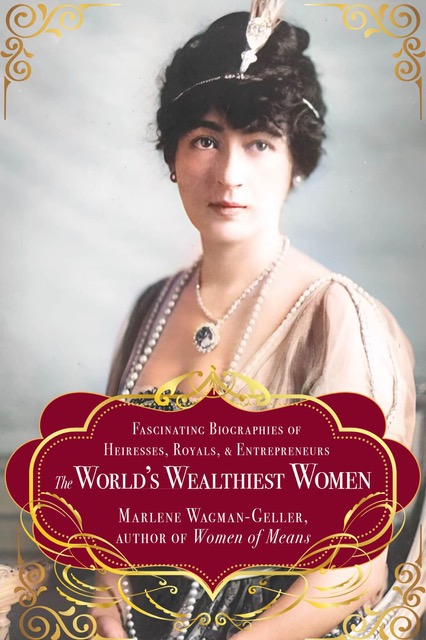
To pre-order my newest book, The World's Wealthiest Women: Fascinating Biographies of Heiresses, Royals, Entrepreneurs, and Entertainers, please click one of the links below.
- Amazon.com: amazon.com
- IndiePubs: indiepubs.com
- Bookshop: bookshop.org
- Amazon.co.uk
- Amazon.ca
- B&N: b&n.com
- Chapters Indigo (CA): indigo.com
- Books That Save Lives