John Lennon and Yoko One
John Lennon, whose 1960s mantra was to give peace a chance, lost his life through a random act of madness. The world mourned his passing, but none more than the woman with whom he had helped define an era.
John Winston Lennon was born on 1940, a night when the Germans dropped bombs on England. When his sailor father returned and found his wife pregnant by another man, he took off, and custody was ultimately regulated to his Aunt Mimi. However, John stayed close to his mother Julia and was devastated when she was killed in a car accident when he was seventeen. He met his wife Cynthia when both were enrolled in the Liverpool College of Art. Eventually his group, the Beatles, afforded him superstardom, though happiness eluded him.
John’s destiny, Yoko Ono, was born in Japan to a wealthy banking family with imperial ties. She survived the bombing of Tokyo when her family sheltered in a special bunker. After a failed first marriage she wed Anthony Cox, who tracked her down to a Japanese mental institution, where her family had placed her after a suicide attempt. Their union disintegrated and the couple threatened one another with kitchen knives; however, they stayed together for the sake of their careers and daughter Kyoko.
The first time John met Yoko was on November 9 when Lennon went to the London based Indica Gallery to view an avant-garde exhibit. When John entered, Yoko Ono passed him a card which bore one word: Breathe. One exhibit was a white board with a sign which invited visitors to hammer an illusory nail in its surface. Yoko Ono told John Lennon that he could hammer in a nail for five shillings. John then responded with his first words to the woman who would become his last love, “I’ll give you an imaginary five shillings if you let me hammer in an imaginary nail.” Their connection was instantaneous.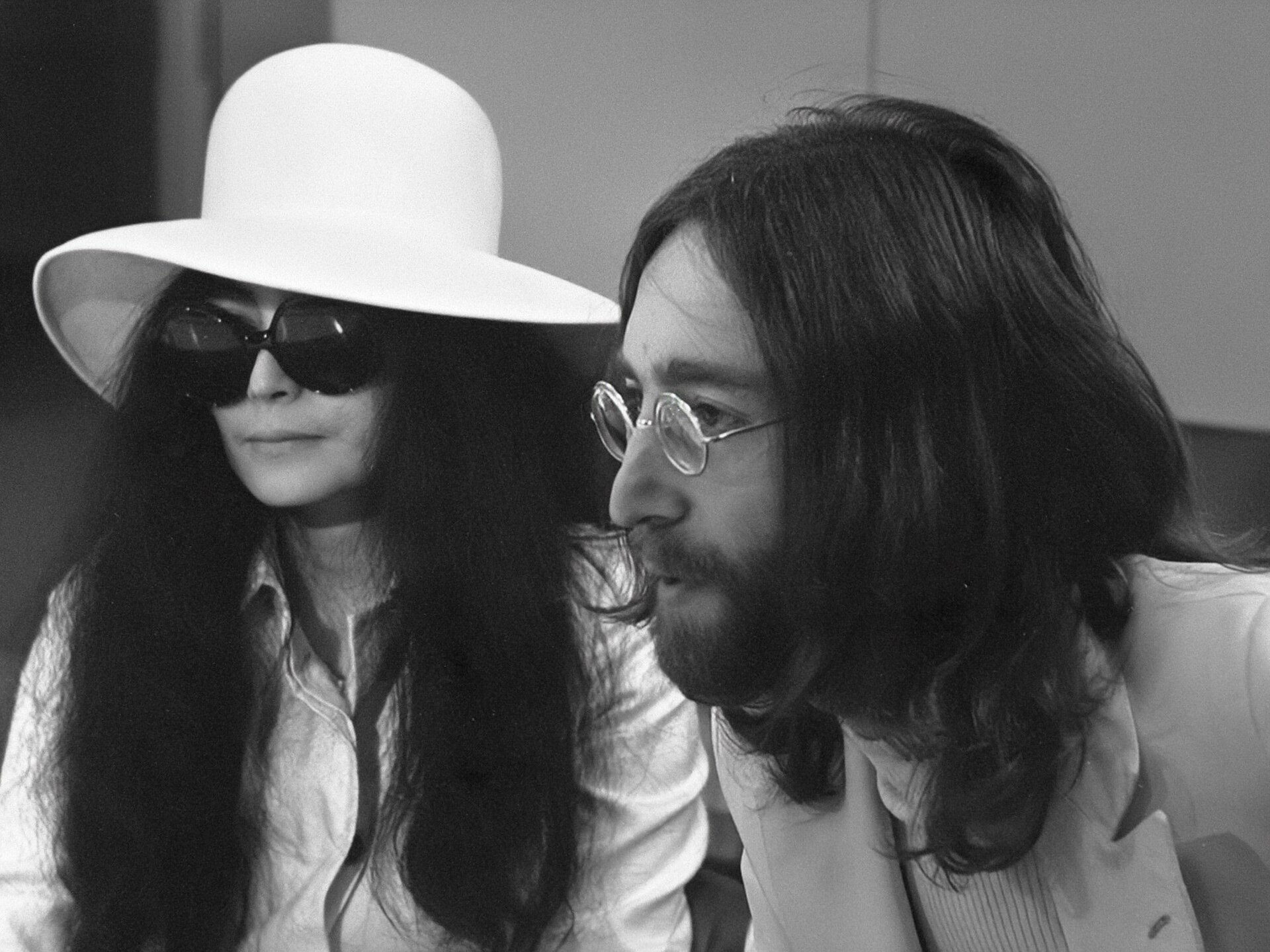
One of the main impediments with John and Yoko having a relationship were their respective spouses and children. Nevertheless, John felt, from the onset, their love was preordained. In 1980, in an interview with Playboy Magazine, he explained when he wrote Lucy in the Sky with Diamonds his mind harbored “the image of the female who would someday come save me-a ‘girl with kaleidoscope eyes.’ It turned out to be Yoko, though I hadn’t met Yoko yet.” John and Yoko decided to be together, despite all marriages.
In May 1968, John treated his wife Cynthia to a vacation in Greece. On the night before her return he invited Yoko to his country home in Weybridge. They talked for hours and made an experimental recording which would later be released under the title Unfinished Music No. 1: Two Virgins. It was thus christened because they considered themselves virgins emotionally and physically, until they had met one another. Its cover depicted the couple, sans clothes, from the back. At dawn they consummated their union. When Cynthia returned home, she found her husband and Yoko sitting together in robes (Yoko was wearing Cynthia’s), drinking tea, sharing an undeniable aura of intimacy. Cynthia stated of her reaction to the tableau, I was absolutely shattered…I felt I had to get out of there immediately.” After a brief reconciliation, the couple divorced and Cythia received custody of the five-year-old Julia. Paul McCarney penned “Hey Jude” for Julian to help soften the pain of his father’s desertion. At a later date, Cynthia stated, “john is neither a saint or a sinner. He was just human, like the rest of us.” In the same interview, when asked about her relationship with Yoko, she responded, “A freezing day in Moscow, before the Cold War ended.”
Lennon moved to a London flat owned by Beatle drummer Ringo Starr. He later said of this ‘summer of love,’ “It was a strange cocktail of love, sex and forgetfulness. When we weren’t in the studio we were in bed.”
It was in the studio where, partially because of John’s consuming relationship with Yoko, problems arose between him and the other Beatles. Not willing to be apart from the woman he loved, Yoko began accompanying John to recording sessions; at the time the Beatles were working on The White Album. Ono, never one to keep her strong opinions to herself, wasn’t shy about offering musical suggestions, which served to exacerbate tensions that were already simmering. Lennon felt his band mates and others at Apple Studio disliked Yoko because she was strong-willed and Japanese; he said they judged her “like a fucking book.” Ono said of the situation, “I sort of went to bed with this guy that I liked, and suddenly the next morning I see these three in-laws standing there.”
In October, more trouble followed when John was arrested for possession of an illegal drug. Although it did not seem significant at the time, it was to later pose grave problems. By 1970 the in-laws had gone their own ways and John embarked on a solo career. In 1973 he penned his immortal Imagine, his vision of a utopian world.
On March 20, 1969, John Lennon and Yoko Ono were married at the British consulate on the Rock of Gibraltar in a ten minute ceremony. In deference to Yoko, the adoring husband legally changed his name to John Winston Ono Lennon. The Lennon’s unconventional honeymoon became an integral part of the Beatle’s mythology. While it is not unusual for newlyweds to spend an inordinate amount of time in bed, the Lennons spent seven days in theirs. They booked room 902, the presidential suite in the Amsterdam Hilton, in what they termed a ‘Bed-In.’ The press excitedly pursued them, assuming the famous nudists would provide a provocative peep show. Instead, the pajama-clad newlyweds spoke out for international peace. It was the honeymoon as performance art: its theme a protest against the Vietnam War.
In May they staged a second weeklong bed-in in Montreal, at the stately Queen Elizabeth Hotel, where they recorded their famous pacificist anthem. John and Yoko, along with Dr. Timothy Leary, Montreal Rabbi Abraham Feinberg, Petula Clark, and members of the Canadian Radha Krishna Temple sang the chorus for Give Peace a Chance. While the hippies embraced the song, Lennon did the same with his dearly beloved, “When I fell in love with Yoko, I knew, my GOD, this is different from anything I’ve ever known…This is more than a hit record, more than gold, more than anything.”
Unfortunately, even a honeymoon which consisted of a bed-in, has an expiration date. The fabric of their relationship began to tear when John was threatened with deportation from the States because of his earlier drug arrest, and Yoko could not move to Britain as she was sharing parenting of Kyoto in New York City. Then, in 1971, Cox kidnapped their eight-year-old daughter and disappeared into a cult: the Church of the Living Word. He changed his daughter’s name to Rosemary.
As a refuge from their troubles, John began to find solace in alcohol and by 1973 the couple’s relationship went the way of the Beatles. John moved to Los Angeles where he started living with Yoko’s former assistant, May Pang. It soon became apparent that he was miserable without Yoko. He later told Playboy that without Yoko, “I was on a raft alone in the middle of the universe…It was the lost weekend that lasted 18 months. I’ve never drunk so much in my life. I tried to drown myself in the bottle.”
He begged his wife for another chance; she relented and he moved back to their New York City home in The Dakota. Realizing Yoko was central to his life he penned God in which he wrote he didn’t believe in any ‘ism.’ All he believed in was “Yoko and me.”
In 1975, after several miscarriages, at age forty-two, Yoko became pregnant. John, who had not been very involved in Julian's life, and Yoko, who had lost Kyoto, decided their baby would be the focus of their lives. Yoko offered John a deal which he readily accepted: “I am carrying the baby nine months, and that is enough. You take care of it afterward.” Sean Taro Ono Lennon was born on his father’s thirty-fifth birthday; John was only too happy to be a stay-at-home dad. He retired from performing and Yoko managed their $200-million portfolio as if it were her new art form.
After years in seclusion, John decided to make a musical comeback. On December 1980, he and Yoko spent the evening recording Walking on Thin Ice; they were elated John’s latest album had gone gold that day. When they returned to the Dakota, Mark David Chapman approached John and fired five shots. One shatted a window in the Dakota, and the other four inflicted fatal injuries.
The following day, before Yoko went into an extended period of seclusion, she issued the following sentence, “There is no funeral for John. John loved and prayed for the human race. Please pray the same for him.” The love story that had begun on an imaginative note had ended on a tragic one.
POSTSCRIPT
~ Lennon’s ashes remained with his grieving widow. Yoko’s ex-husband, Anthony Cox, as well as the seventeen-year-old Kyoto, sent a message of condolence though they remained in hiding.
~Thousands gathered in Central Park; his songs were played. One grieving fan held up a sign with John’s photograph, the peace sign, and the single word: WHY?
~On December 14, millions of people around the world responded to Yoko’s request to pause for ten minutes of silence in remembrance. Thirty thousand gathered in Liverpool; a hundred thousand converged in Central Park.
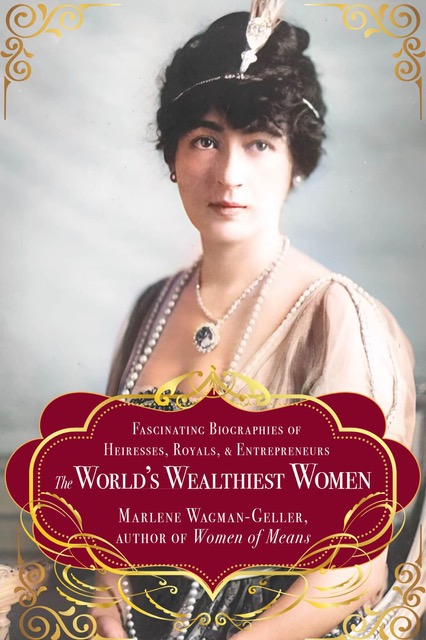
To pre-order my newest book, The World's Wealthiest Women: Fascinating Biographies of Heiresses, Royals, Entrepreneurs, and Entertainers, please click one of the links below.
- Amazon.com: amazon.com
- IndiePubs: indiepubs.com
- Bookshop: bookshop.org
- Amazon.co.uk
- Amazon.ca
- B&N: b&n.com
- Chapters Indigo (CA): indigo.com
- Books That Save Lives