Polynesian Paradise
Margaret Mead: 1901-1978
FIX18 West 10th Street: Years in the Village: 1883-1887
“Oh, Piffle'” (her habitual response to criticism)~ Margaret Mead
Wherever Margaret Mead found herself-in Samoa, Bali, or Greenwich Village- as anthropology was her consuming passion, she observed those in her milieu as case studies.
One of the most iconic literary friendships was between Harper Lee, author of To Kill a Mockingbird, and Truman Capone, author of In Cold Blood. As children, Harper and Truman lived next door to one another in the town of Monroeville, Alabama. As an adult, Harper lived in 751/2 Bedford Street, the home where acclaimed poet, St. Edna Vincent Millay, had once lived.
The world’s most acclaimed anthropologist was born in Philadelphia, the daughter of Edward and Emily Mead whose Mid-West forebears reached back ten generations on American soil. Her father was an economics professor at the University of Pennsylvania; her mother was a sociologist. Edward had told the young Margaret, "It's a pity you aren't a boy; you'd have gone far." She was the eldest of five children, the third of whom had died in infancy. Until age twelve, Margaret received her education from her paternal grandmother, teacher Martha Ramsey Mead, who lived with the family. An unconventional educator, Martha stated that “arithmetic is injurious to young minds.” Margarete described her grandmother as “the most decisive influence in my life.” Her stories of life during and post-Civil War whetted Margaret’s interest in history.
After attending Pennsylvania’s Doylestown High School and the New Hope School for Girls, Martha left for Greencastle, Indiana, to study English at De Pauw University. While she excelled academically, she did not fare as well socially. The Kappa Kappa Gamma Sorority did not bother to inform the dowdy-dresser Margaret what to wear for a 1919 university party. She served as the De Pauw pariah for the 1919 semester. After her freshman year, Margaret transferred to her father’s ala mater, Barnard, named after Frederic Barnard, the 10th president of Columbia. While her Indiana classmates did not mock her attire, she felt as if she were a “religious reject;” unlike most of the student population, she was Episcopalian rather than Evangelical. Her Pennsylvania dialect also made her stand out: her accent led her to pronounce “been” as “bean.” In her senior year, Margarete took a course in anthropology from Professor Franz Boas, a scholar in the field. A smitten Margaret was anxious to begin field work as remote civilizations were facing dilution from the Western world. She recalled, “As a graduate student I used to wake up saying to myself, ‘The last man on Raratonga who knows anything about the past till probably died today. I must hurry.” After graduating Phi Beta Kappa, the young woman became one of of Franz’s four graduate students at Columbia. In 1920, she received her doctorate. Away from academia, Margaret had a relationship with the unhappily married Dr. Ruth Benedict, one of her professors. Franz and Ruth discouraged Margarete from living among isolated communities.
One who knew better than try to put the reins on Margaret was seminarian student, Luther S. Cressman. They had fallen in love when Margaret was sixteen and had married six years later. Not a fan of following societal norms, she kept her maiden name. On her wedding night, she insisted her groom sleep in a separate room as “I have a seminar paper to write.” Luther often remarked he had to make an appointment to see his preternaturally busy wife. 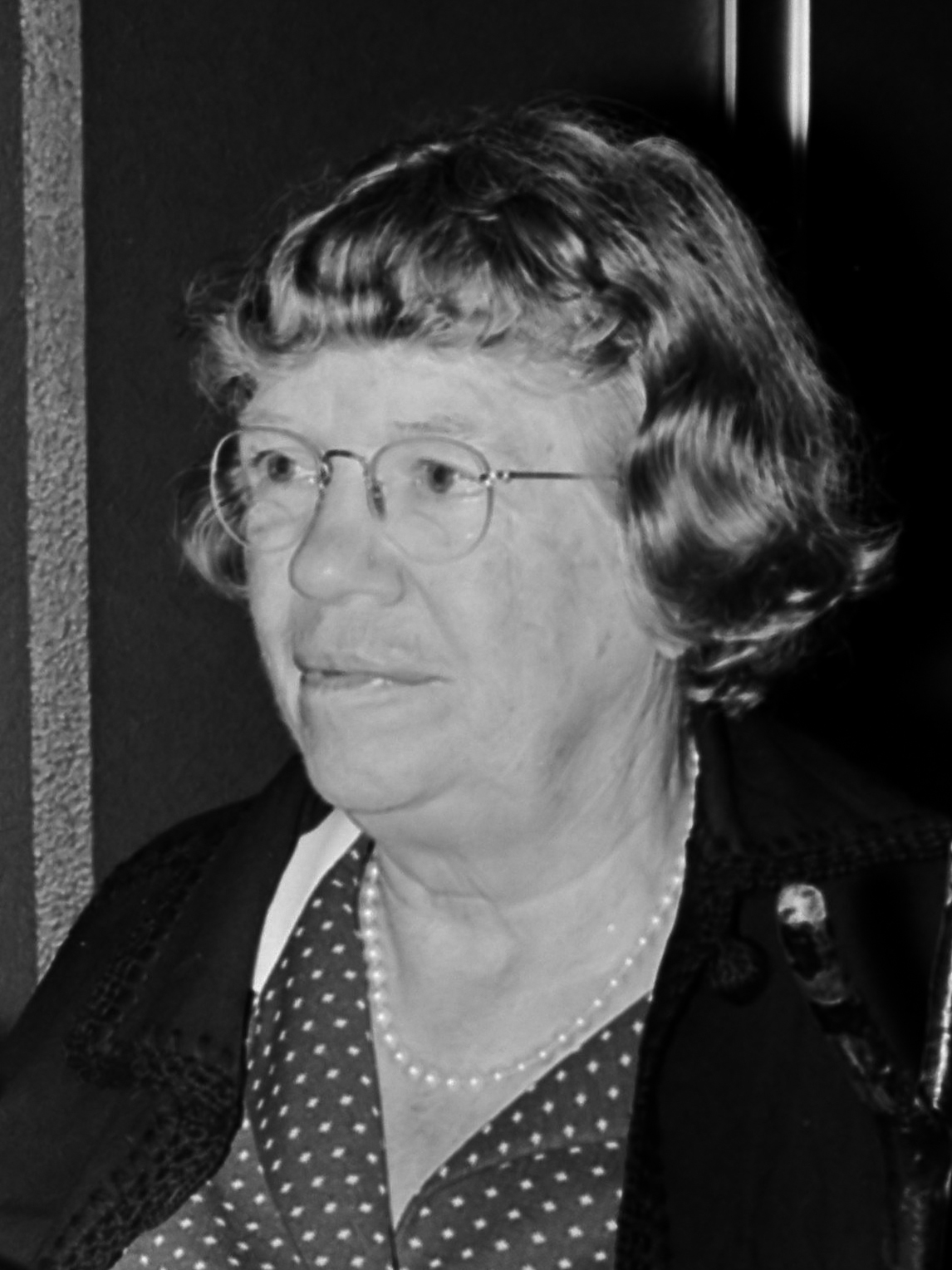
A year later, Margaret received a National Research Council fellowship and became an associate at the B. P. Bishop Museum in Honolulu. In 1925, she boarded a steamer in San Francisco; her luggage consisted of a typewriter, flashlight, a change of clothing, and a metal strongbox. She headed to her first field of study in the Samoan Islands. For six weeks, the young anthropologist lived in the ramshackle hotel-the setting of Somerset Maugham’s short story, “Rain.” Any romantic notions ended as she endured a hurricane, contracted conjunctivitis that led to years-long eye issues. The central focus of her research was the erotic life of adolescent tribal girls. In a nod to the irony file, the midwestern Episcopalian became the world’s foremost expert on sex. Her research led to the publication of Coming of Age in Samoa. Some of the shocking data: virginity was not a prized possession, same-sex relationships did not raise eyebrows, monogamy in and outside marriage was not a priority. The book helped promote the mid-century sexual revolution that loosened the corset of the Victorian mindset.
With her metal strongbox filled with notebooks regarding the neurotic-free eroticism of Polynesia, Margaret set sail for home, On the six-week voyage to France, where Luther was awaiting their reunion after nine months of separation, she had a shipboard romance with Reo Fortum, a New Zealand anthropologist. A damper on the husband wife reunion was Margaret informed Luther she was in love with another man. She also came clean to Ruth who was en route to Europe to spend two months with her lover. In New York, Margaret divorced Luther, and married Reo. She also had a lengthy liaison with anthropologist Rhoda Metraux.
Coming of Age in Samoa had garnered world-wide acclaim and the media dubbed the feminist heroine the Flapper of the South Seas. Margaret received a position as an assistant curator of ethnology at the American Museum of Natural History in New York. Dr. Mead later became the museum’s curator emeritus, and adjunct anthropology professor at Columbia.
Two years later, the diminutive giant-she was just over five feet- undertook an even more arduous adventure in the Admiralty Islands, off the course of New Guinea, where she suffered from malaria. For the next eight months, alongside the indigenous population, Maragret ate boar, pigeon and dried fish. Her wall-less house served as her observation deck. The subject of her research was the sexual relationship of the Manus, a loin-clad fishing tribe. Her experience led to the publication of Growing Up in New Guinea. On a subsequent trip to New Guinea, she observed the Mundugumor-a tribe of headhunters and cannibals who practiced polygamy. When she returned for a th ird time to New Guinea, she encountered a society in which females occupied the dominant positions while males spent their time primping. The follow-up book, Sex and Temperament, served as a cornerstone of the feminist movement.
Another offshoot of her field work in the Admiralty Islands was Margaret and Reo encountered Dr. Gregory Bateson, a British anthropologist. Margaret divorced Reo and wed her third-and final-husband. During their years in Bali, they took and annotated 25,000 photographs. Although doctors had told Margaret she could not get pregnant, at age thirty-eight she had their only child, Mary Catherine, became the dean of social sciences at Raza Shah University in Iran. Their union imploded when Gregory left his family to embark on an affair with a dancer from Staten Island. In 1949, he moved to San Francisco and instituted a divorce. In an interview in Redbook, Margaret expounded on her marital philosophy: marry someone whose interests were the same as your own. “I always did that and all my marriages were great success.” For sixteen years, Margaret had a monthly column in the magazine that garnered an audience of millions. of subscribers. Proof of her celebrity status: Johnny Carson had her as a guest on the Tonight Show. The forward-thinking Margaret appeared on the 1969 cover of Time with the caption: Margaret Mead Today: Mother of the World.
Unsurprising, the mother of unconventionality made her home in Greenwich Village. In the 1930s, Margaret lived at 75 1/2 Beford Street with her sister, Elizabeth, and brother-in-law-author of the book Shrek-the basis for the film of the same name. A long-term residence was on 193 Waverly Place, an old-fashioned pink brick house. She rented the lower two floors from Dr. Rhoda Metraux. As Margaret loved cooking, she was thrilled the residence had two kitchens. Her specialty was Indonesian rice dishes; Rachel and Margaret often opened their home to friends and students. Surprisingly, the anthropologist’s décor-rather than comprising souvenirs from her extensive travels-had a nondescript New England seascape painting over the fireplace, a reproduction of a Holbein portrait of a woman, and family photographs. In her home, Margaret indulged in drinking Scotch and smoking cigarettes. However, she drew the line at obscenities. Her strongest one: “Fiddlesticks!”
Margaret lived in the home for eleven years; before she and Rhoda moved, they threw their home a farewell party. The invitation read: Rhoda Metraux and Margaret Mead invite you to a house cooling at 193 Waverly Place, June 11, at eight.
A Village eccentric, because of an ankle injury that never fully healed, Margaret walked the winding streets of the Village, in her trademark capes and sandals. She used a forked walking stick that she called a thumb stick. Over her trademark drab dresses-she always wore a large crystal pendant on a chain around her neck, and a silver ring with a star sapphire from Bali. She had a passion for theater and often saw forty shows in a single season. On a visit to Vienna, Margarat attended two performances of Mozart’s Don Giovanni in the same week. Part of her interest was professional, “The whole world is my field. It’s all anthropology.”
When not oft to foreign climes, Margaret was an in-demand lecturer. She once mixed up her audience and spoke of the sex deviations among the Tchambuli, not realizing her audience was comprised of theologians. The woman who never let grass grow under her feet established a hall of the Peoples of the Pacific at the American Museum of Natural History where she was curator of ethnology. While South Sea tribesman had called the Western woman “Miss Mark-it Mit” former governor Claude Kirk referred to her as a “dirty old lady” after she appeared at a Senate committee hearing where she advocated for the decriminalization of marijuana. Conservative academics were likewise in Dr. Mead’s camp, and members called her an “international busybody.” An avowed feminist, she stated that “to argue for a woman’s right to abortion is absurd. Women have a right to institutions which will see to it that they never have an unwanted child.”
At age seventy-two, the American Association for the Advancement of Science elected her as its president. She was the second woman to head the group. Margaret stated one of the most often asked questions she received was if she had to live her life over again, what would she choose to do. The invariable answer, “About this there is no doubt in my mind. I would elect to be an anthropologist.”
The woman who had survived malaria, three broken marriages, and decades dwelling in primitive conditions remained the world’s spryest septuagenarian. At age seventy-five, after a cancer diagnosis, she said, “I know I can’t live forever. I’m just not ready to go yet.” Margaret hoped to attend an international symposium on children in Athens, Greece, but her disease dictated otherwise. The following year the Grim Reaper caught up with the woman who was always in motion; Margaret passed away at New York Hospital after a yearlong battle with cancer. Although she had made her home in many countries, and whose home base was Manhattan, she directed her final resting place would be in Buckingham, Pennsylvania.
Of Dr. Margaret Mead’s passing, President Jimmy Carter stated that she had “brought the humane insights of cultural anthropology to a public of millions." The following year, Carter awarded her the Medal of Freedom. The President of the American Anthropological Association, Paul Bohannan, stated, “Margaret Mead was, in fact, a centipede; she had that many shoes.” Other tributes arrived from Kurt Waldheim, Secretary-General of the United Nations; from Mayor Koch; the Smithsonian Institution; Edward J. Lehman, the executive director of the American Anthropological Association, and Faye Wattleton, president of the Planned Parenthood Federation.
No doubt Margaret is observing the angels, and that heaven is a variation of a Polynesian paradise.
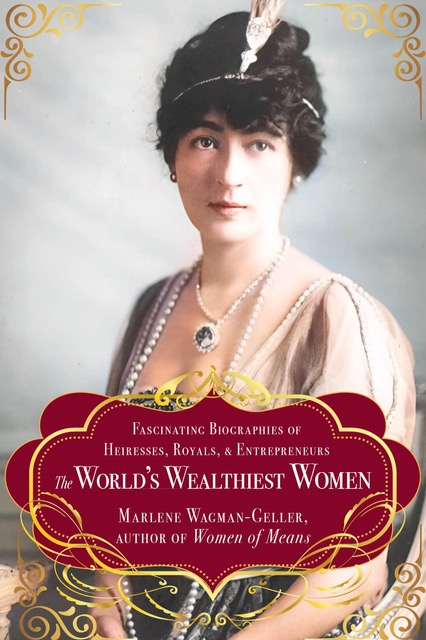
To pre-order my newest book, The World's Wealthiest Women: Fascinating Biographies of Heiresses, Royals, Entrepreneurs, and Entertainers, please click one of the links below.
- Amazon.com: amazon.com
- IndiePubs: indiepubs.com
- Bookshop: bookshop.org
- Amazon.co.uk
- Amazon.ca
- B&N: b&n.com
- Chapters Indigo (CA): indigo.com
- Books That Save Lives