The Pink Pussycat Club
“Racism and sexism in America were equal parts in my oppression.”
In 1968 the Beatles sang, “You say you want a revolution…” A fist-raised woman would have been in agreement with the British boy band’s lyric. The black activists of the 1960s civil rights era were male; their wives were expected to serve as handmaidens-or widows- to their cause. Thus it was all the more shocking when a female rebel-rouser assumed control of the most misogynistic arms of the Movement. 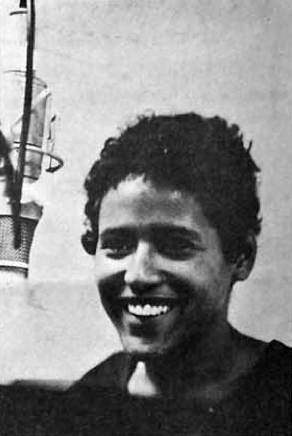
The word that defined Elaine Brown’s childhood was nothingness. Her father, Dr. Horace Scott, a prominent member of Philadelphia’s black middle class, was married, with an adopted daughter, and he never acknowledged Elaine as his child. Her mother, Dorothy Brown, was miserable with her lot as a single mother, stuck in a dead-end clothing factory from where she sometimes stole a dress for her child. Elaine recounted of her childhood, “In the silence of our nights my mother would summarize her days: ‘They treated me like I was nothing. They must think I’m nothing.’ In our room was complete darkness, and the recognition of nothingness, accompanied by the magnified sounds of mice scurrying and hearts beating in fear.” Determined her gifted daughter deserved more than local education, Dorothy solicited support, and with it, she enrolled Elaine in a private school. The illegitimate, black student from the wrong side of the tracks was far different from her wealthy, Jewish classmates. After high school, self-esteem went even further south as the result of a failed, interracial love affair. An additional trauma was her narrow escape from a gang rape.
Desperately desiring escape, Elaine took off for California in 1965, hopeful a record company would buy her songs. Streetwise savvy but politically naïve, Elaine was unaware President Lyndon Johnson had just signed the Voting Rights Act and that the Watts Riot had recently erupted. With her $300.00 depleted, Elaine found work in Hollywood’s Pink Pussycat Club, a bar and strip joint where she was the only black cocktail waitress.
One evening, Frank Sinatra, a Pink Pussycat patron, invited her to a party where she was to be the date for his friend, Jay Kennedy, a screenwriter and Harry Belafonte’s former manager. Elaine and Kennedy had an actual date the following evening at the Beverly Hills Hotel, where Kennedy asked if she had attended the March on Washington two years earlier. Apolitical, she replied she could not fathom why anyone would willingly expose themselves to police hosing and bites from vicious dogs. By the end of the meal, Elaine understood the civil rights movement; she also understood she was in love with Kennedy. They embarked on an affair with weekends spent at the Sinatra estate or in suites at the Beverly Hills Hotel. Kennedy never invited her to his home on the East Coast as he shared it with his wife and daughter. After two years of empty promises to end his marriage, she told him that there was no place for her in his world, that he did not belong in hers.
During the time Elaine was the other woman, Huey Newton and Bobby Seale organized the Oakland-based Black Panther Party. Dedicated to improving the lives of blacks, (they popularized the slogan, “Black is Beautiful,”) the group involved itself in a number of community projects. The men with the black berets, raised fists, shaped by childhood ghettoes and the jungles of Vietnam, sent chills down the spine of conservative America. As a result, the Black Panthers came under the radar of J. Edgar Hoover, the dreaded FBI director, who warned, “The Black Panther Panthers, without question, represents the greatest threat to the internal security of the United States.” Enveloped by the familiar sense of nothingness after parting from Kennedy, and with her newly awakened political consciousness, Elaine joined the revolutionaries. The Black Panthers provided Elaine with purpose, guiding principles, and a surrogate family. They also provided Elaine with sexual partners; she was hypnotically attracted to dangerous men, something never in short supply within the Party’s members. With the Panthers, sex was just another way of saying hello. One of those to whom Elaine said hello was Newton who had first heard her songs while doing time. He had landed in prison after his conviction for killing an Oakland police officer at a traffic stop confrontation, a charge later overturned. In a stand-by her man gesture, in order to rent a penthouse for Newton after his release, she turned to producer Bert Schneider for money. After he gave her $12,000, Elaine recalled, “I brashly brushed my hand along the front of his pants. ‘Let’s just say that you defy the cherished myths about black men.’” The fly in their romantic ointment was Newton’s cocaine and cognac addiction. Life in the movement was never dull: she was at UCLA when a shootout between the Panthers and Ron Karenga’s US organization resulted in the deaths of Panther Bunchy Carter and John Huggins. Jail was also added to her life’s resume when 150 cops descended on the communal house where she lived.
Although women had been a pivotal force in the struggle for racial equality, their efforts had always been overshadowed by men. No female had ever been at the helm of the NAACP, the Southern Christian Leadership Conference, or the Student Non-Violent Coordinating Committee. The paradigm shifted in 1974 when Newton fled to Cuba after the accusation he had killed a seventeen-year-old Oakland prostitute and designated his lover as the new leader. Brown became the first and only female to head the Black Panthers. Her initial speech opened with the same words that she would use in the beginning of her autobiography A Taste of Power, “I have all the guns and all the money. I can withstand challenge from without and from within. Together we’re going to take this city. We will make it a base of revolution.” A show of support came from Larry, a bodyguard who held a .45 automatic pistol under his jacket.
Elaine Brown became a rebel with a cause. In order to solidify her position, she chose as her lieutenants those whose staunch loyalty to Newton would protect her position. She enlarged the free-breakfast program, created the Oakland Community Learning Center, a much-needed oasis in one of California’s poorest neighborhoods. Ms. Brown also ran twice (unsuccessfully) for the Oakland City Council, and with the backing of the party, she cut a deal with state officials on the construction of the Grove-Shafter Freeway extension that helped revitalize the city’s downtown and created hundreds of jobs. Under her leadership, the party registered nearly 100,000 new voters for the 1977 election that made Lionel Wilson the first black mayor of Oakland. Brown was by his side during his victory speech. One of her many hats was she served as a member of the Party’s central committee as minister of information, replacing the expelled Eldridge Cleaver. Channeling her musical talent, Elaine created the album, “Until We’re Free,” wrote the Panther national anthem, and edited its newspaper. One was for the Black Forum label, a short-lived subsidiary of Motown Records. Through her recordings, Suzanne de Passe, a Motown vice-president, became a life-long friend. Although it evoked outrage, Brown installed several women in key positions, an act viewed as eroding black manhood. One member groused at a Brown rule, “I hear we can’t call them bitches no more.” Stokely Carmichael commented, “The only position for women is prone.” In her book, Elaine wrote, “A woman asserting herself was a pariah. A woman attempting the role of leadership was, to my proud black brothers, making an alliance with the ‘counterrevolutionary, man-hating, lesbian, feminist white bitches.” Unlike the girls from her neighborhood who never travelled far afield from their Philadelphia tenements, as a representative of the Marxist indoctrinated foundation, Elaine travelled to North Korea, China, Cuba, Russia, and Vietnam. Brown became the new black, a woman at the pinnacle of a male-dominated hierarchy. With her myriad duties, she did not have much time for her daughter, Erika, a product of an affair with Panther Raymond (Masai) Hewitt. Hewitt later became a pawn in an FBI plot to target actress Jean Seberg, a prominent supporter of the Party, when federal agents planted rumors she had become pregnant with his baby. His neglect of Erika was a sad echo of her own father’s abandonment. Erika’s childhood consisted of men who carried loaded guns and a bodyguard who trailed her even when she went to buy a treat from an ice cream truck.
The old feeling of nothingness returned when Newton returned from Cuba and resumed leadership of the Panthers. During her tenure, Elaine had struggled to curb the criminal impulses of the Party, a trend Newton did not emulate. In 1977, after he authorized the beating of Regina Davis, (she suffered a broken jaw,) a woman Elaine had appointed to a key position, Brown knew it was time to escape with seven-year-old Erika.
For a time, Elaine lived with her mother who had relocated to Los Angeles, then she stayed in an apartment owned by Suzanne. As a single mother without alimony, money was in short supply. After all, Black Panther leader on a resume would have served as an impediment for potential employers. A job selling newspaper advertising ended when she threw her beeper at her employer. Her position as a paralegal did not pan out; during a confrontation at her office, she swept everything off her desk onto the floor. Jay Kennedy came to her rescue by introducing her to therapist Kay Levatter, who helped her overcome her depression and crippling rage. With her support, Elaine enrolled in law school at night. However, fellow students included police officers who remembered her Panther past and subjected her to harassment. She also had problems with a professor, a former FBI agent, who gave her unmerited low grades. She dropped out of school after two years, a decision she felt at peace with as she realized she still did not honor the laws of a racist country.
In 1990, with her autobiography almost completed, and with Erika studying at Spelman College in Atlanta, Elaine found herself without direction. At this juncture, Suzanne invited Brown to a Hollywood party where she met Pierre Elby, who, she said was the only interesting person in the room. When he told her about his youth in France where his family lived in a chateau with 132 rooms, Elaine responded that there wasn’t even 132 rooms in York Street, her childhood address in Philadelphia. Despite their incongruent backgrounds, sparks flew. His friends told him he was out of his mind; how could he considering dating a former leader of the Black Panthers? Elby did not see her past as a barrier. The couple moved to Paris where Elaine said she enjoyed an “oasis of happiness;” she felt she had earned it after a tempestuous life.
Until she wrote A Taste of Power, Elaine said she never realized how much she had loved Huey Newton, who she only saw once after her escape. In 1989, after she received a call that Newton was dead, felled by bullets during a suspected drug deal in Oakland, Elaine attended the funeral and explained, “I owed him that.” In Los Angeles, Brown said she planned to contribute a third of the money she made from her book to build a school in South-central Los Angeles-at 41st Street and Central Avenue, where the Southern California Panther headquarters once stood. Elaine’s life is an extraordinary one, bookended by the Panthers and the Pink Pussycat Club.

To pre-order my newest book, The World's Wealthiest Women: Fascinating Biographies of Heiresses, Royals, Entrepreneurs, and Entertainers, please click one of the links below.
- Amazon.com: amazon.com
- IndiePubs: indiepubs.com
- Bookshop: bookshop.org
- Amazon.co.uk
- Amazon.ca
- B&N: b&n.com
- Chapters Indigo (CA): indigo.com
- Books That Save Lives